
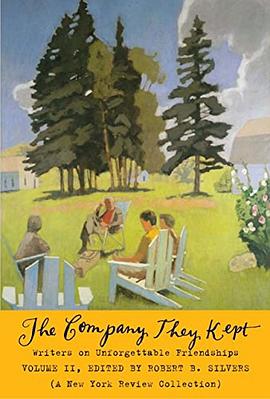

具体描述
Anna Akhmatova on Osip Mandelstam • Virgil Thomson on Gertrude Stein • Jonathan Miller on Lenny Bruce • Robert Lowell on John Berryman • Stephen Spender on W. H. Auden • Mary McCarthy on Hannah Arendt • John Thompson on Robert Lowell • James Merrill on Elizabeth Bishop • Isaiah Berlin on Boris Pasternak and Anna Akhmatova • Joseph Brodsky on Nadezhda Mandelstam • Arthur Gold and Robert Fizdale on George Balanchine • John Richardson on Douglas Cooper • Hector Bianciotti on Jorge Luis Borges Gore Vidal on Dawn Powell • Bruce Chatwin on George Ortiz Philip Roth on Ivan Klíma • Elena Bonner on Andrei Sakharov Elizabeth Hardwick on Murray Kempton • Aileen Kelly on Isaiah Berlin • Murray Kempton on Frank Sinatra • Adam Michnik on Zbigniew Herbert • John Updike on Saul Steinberg Jonathan Mirsky on Noel Annan • Alison Lurie on Edward Gorey Ian Buruma on John Schlesinger • Darryl Pinckney on Elizabeth Hardwick • Colin Thubron on Patrick Leigh Fermor
TWENTY-SEVEN MEMOIRS OF TRANSFORMING PERSONAL AND INTELLECTUAL RELATIONSHIPS AMONG WRITERS AND ARTISTS FROM THE PAGES OF THE NEW YORK REVIEW OF BOOKS
A sense of the intimacy and verve of the memoirs is captured in Darryl Pinckney’s description of the premises of The New York Review of Books itself, from whose offices these writings were edited and in whose pages they first appeared: “Books were streaking across the ocean and galleys were zooming in from the West Coast or the East Side, nearly all by messenger, by overnight delivery, because everything was urgent, every contributor was at the center of a drama called his or her ‘piece.’ Incredible battles went on during press week as indescribable things rotted in the office refrigerator. Someone’s laughter in the typesetting studio would provoke to fury someone doing layout next door and the storms, the slammed doors. It was a family.”
The New York Review of Books , with an international circulation of more than 130,000, began during New York’s 1963 newspaper strike when the present editor, Robert B. Silvers, and founding co-editor Barbara Epstein, along with Jason Epstein, Elizabeth Hardwick, and Robert Lowell, decided to create a new kind of magazine—one in which the most interesting and qualified minds would discuss current books and issues in depth. Since then, every two
weeks, The New York Review has continued to be the journal where the most important issues in American life, culture, and politics are discussed by writers who are themselves a major force in world literature and thought. “The secret of its success, The New York Times wrote, “is this: Its editors’ ability to get remarkable writers and thinkers, many of them specialists in their fields, to write lucidly for lay readers on an enormous range of complex, scholarly and newly emerging subjects, issues and ideas.”
Many of the contributors to The New York Review of Books have written about deep and abiding relationships— both personal and intellectual—with fellow poets, writers, and artists. The Company They Kept, Volume II is a collection of twenty-seven accounts of these friendships that were always stimulating, often inspiring, and sometimes vexing (as Robert Lowell writes about John Berryman: “Hyperenthusiasms made him a hot friend, and could also make him wearing to friends—one of his dearest, Delmore Schwartz, used to say no one had John’s loyalty, but you liked him to live in another city”).
There are historic moments—Isaiah Berlin’s conversations with Boris Pasternak and Anna Akhmatova, Hector Bianciotti’s account of the death of Borges—as well as lighthearted ones—Bruce Chatwin’s hilarious drunken evening with George Ortiz, and Arthur Gold and Robert Fizdale’s subway ride with George Balanchine (“…like a mythical guide he made the dingy steps, the sinister train, the underground arrival at the State Theater a Tiepoloesque flight into heaven”).
Many of the portraits include vivid images that otherwise would have been lost forever: the poet Osip Mandelstam, whom Anna Akhmatova first glimpsed as “a thin young boy with a twig of lily-of-the-valley in his button-hole”; the young Gore Vidal in Dawn Powell’s living room suddenly realizing “this is a ménage à trois in Greenwich Village. My martini runs over”; twelve-year-old aspiring cartoonist John Updike writing Saul Steinberg to ask for a cartoon (Steinberg sent one, and another, nearly fifty years later, when Updike turned sixty). Each portrait is written with feeling and fullness of heart.
作者简介
目录信息
读后感
评分
评分
评分
评分
用户评价
我必须承认,这本书的对白处理达到了一个令人望而生畏的高度。它不是那种为了推动情节而堆砌的空洞对话,而是充满了言外之意和微妙的心理博弈。角色们之间的交流,往往是冰山一角,水面之下隐藏着巨大的暗流涌动。你会发现,有时候角色们说了什么并不重要,重要的是他们“没有说什么”,或者他们用何种语气、眼神、停顿来传达那些未说出口的想法。这种高密度的信息传递,使得每一次阅读都像是在进行一场精妙的侦探工作。那些看似日常的寒暄,实则暗藏着权力斗争、情感试探或是对过去事件的回避。特别是几场关键性的冲突场景中的对话,其张力之强,令人屏息。作者精准地捕捉了人类沟通中的那些不完美、那些误解与那些试图跨越鸿沟的努力。这不仅仅是文学性的对话,更像是一份对现代人际交往复杂性的深刻社会学观察报告,犀利而又充满洞察力。
评分这本书的叙事结构简直是匠心独运,它采用了非线性的叙事方式,将时间线巧妙地打碎、重组,像一个巨大的、精密的万花筒。初看之下可能会略感费解,但一旦适应了作者的节奏,你就会惊叹于这种结构带来的叙事张力。不同时间点、不同视角的片段如同散落的珍珠,被作者用一种近乎完美的逻辑串联起来,最终汇聚成一幅宏大而清晰的图景。这种叙事手法极大地增强了悬念感和代入感,读者需要主动参与到故事的构建中去,去填补那些看似留白的地方。这种阅读体验,对于那些厌倦了传统线性叙事的读者来说,无疑是一种极大的享受。它挑战了我们对“故事”的传统认知,迫使我们以一种全新的角度去审视人物的关系和事件的因果。更值得称道的是,即便叙事如此复杂,作者也始终保持着对情感核心的精准把握,使得故事在智力游戏之外,依然充满了人性深处的温度与共鸣。这种结构上的创新与情感表达的深度完美结合,是这本书最令人印象深刻的特点之一。
评分这本书的世界观构建得极为扎实且富有层次感,它没有采用宏大叙事中常见的奇幻设定,而是将“真实”建立在一种近乎无可挑剔的逻辑之上。作者对于所描绘的那个特定社会环境、其运作规则、以及其中的阶层差异,都进行了深入细致的挖掘和呈现。你不会觉得这是虚构的背景板,而更像是作者从现实中提炼、升华而成的镜像世界。那些关于制度、关于传统、关于个体在庞大体系下的无力感,被描绘得淋漓尽致。它引发了我对我们自身所处环境的深刻反思:我们遵循的规则有多少是自然而然的,又有多少是人为构建的枷锁?这种对“环境决定论”的探讨,是这本书深层魅力所在。而且,作者处理背景设定的方式非常高明,不是用大段的说明文来灌输信息,而是将这些规则、历史、社会结构,潜移默化地融入到角色的日常生活和决策之中,让读者在跟随人物命运的同时,自然而然地吸收了构建世界的细节。
评分这本书的书名实在是引人遐思,初读之下,我被深深地吸引了。它仿佛是一把钥匙,开启了一扇通往未知世界的大门。故事的开篇处理得极为巧妙,没有急于抛出核心冲突,而是用一种近乎散文诗般的笔触,缓缓地描摹着主要人物所处的环境与心境。那种细腻入微的心理刻画,让我仿佛能身临其境地感受到角色内心的波澜与挣扎。作者对细节的把握令人称奇,无论是环境的描写还是人物一个不经意的动作,都充满了隐喻和深意。我尤其欣赏作者在叙事节奏上的控制,张弛有度,时而如高山流水般一泻千里,时而又像深潭静水般引人深思。阅读的过程中,我常常需要停下来,回味那些精妙的措辞和那些似乎藏着千言万语的留白。它不是那种让你一口气读完的爆米花小说,而更像是一杯需要细细品味的陈年佳酿,每一次回味都会有新的感悟。那种淡淡的忧伤,又夹杂着对生活某种坚定信念的坚守,让人在阅读结束后仍然久久不能忘怀,心里被一种复杂的情绪所占据。这本书的文字本身就具有一种难以言喻的音乐性,读起来朗朗上口,却又暗藏玄机,绝非等闲之辈所能及。
评分这本书的魅力,很大程度上源于它对于“道德模糊地带”的勇敢探索。它拒绝给你简单的善恶标签,强迫你去直面人性的灰色地带。故事中的每一个重要角色,都有着其无可辩驳的动机和难以指摘的缺陷。你可能会在阅读过程中不断地对自己产生疑问:如果是我,我会做出同样的选择吗?这种代入感带来的认知冲突,远比任何惊心动魄的情节设置都要来得震撼。作者的笔触是冷静的、克制的,但其所揭示的人性真相却是炙热的、刺痛人心的。它探讨的不是宏大的道德审判,而是个体在极端压力下、在利益权衡中,那些最真实、最脆弱的挣扎。读完之后,你会发现自己对身边的人和事有了一种更深层次的理解和包容——不是纵容,而是理解了复杂性本身。这无疑是一部深刻探讨“人之所以为人”的作品,它的后劲十足,值得反复咀嚼和品味,其思想的深度远超一般的文学作品。
评分因为查一句话重读了这本书。推荐给所有人。书不厚,每个回忆录都不厚,但是是诗人的朋友谈诗人的真切回忆,好读物。最感人的是阿赫玛托娃回忆曼德尔施塔姆的,一个恐怖的时代诗人所遭遇的恐怖其中可叹的伟大的人性。
评分因为查一句话重读了这本书。推荐给所有人。书不厚,每个回忆录都不厚,但是是诗人的朋友谈诗人的真切回忆,好读物。最感人的是阿赫玛托娃回忆曼德尔施塔姆的,一个恐怖的时代诗人所遭遇的恐怖其中可叹的伟大的人性。
评分因为查一句话重读了这本书。推荐给所有人。书不厚,每个回忆录都不厚,但是是诗人的朋友谈诗人的真切回忆,好读物。最感人的是阿赫玛托娃回忆曼德尔施塔姆的,一个恐怖的时代诗人所遭遇的恐怖其中可叹的伟大的人性。
评分因为查一句话重读了这本书。推荐给所有人。书不厚,每个回忆录都不厚,但是是诗人的朋友谈诗人的真切回忆,好读物。最感人的是阿赫玛托娃回忆曼德尔施塔姆的,一个恐怖的时代诗人所遭遇的恐怖其中可叹的伟大的人性。
评分因为查一句话重读了这本书。推荐给所有人。书不厚,每个回忆录都不厚,但是是诗人的朋友谈诗人的真切回忆,好读物。最感人的是阿赫玛托娃回忆曼德尔施塔姆的,一个恐怖的时代诗人所遭遇的恐怖其中可叹的伟大的人性。
相关图书










本站所有内容均为互联网搜索引擎提供的公开搜索信息,本站不存储任何数据与内容,任何内容与数据均与本站无关,如有需要请联系相关搜索引擎包括但不限于百度,google,bing,sogou 等
© 2026 book.quotespace.org All Rights Reserved. 小美书屋 版权所有