

具体描述
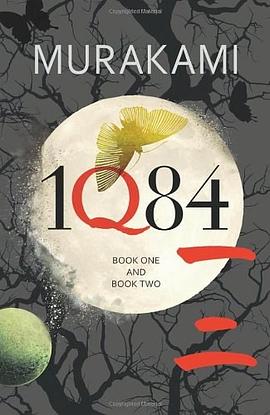
Haruki Murakami is an international phenomenon. When Books One and Two of his latest masterpiece, "1Q84", were published in Japan, a million copies were sold in one month, and the critical acclaim that ensued was reported all over the globe. Readers were transfixed by the mesmerising story of Aomame and Tengo and the strange parallel universe they inhabit. Then, one year later, to the surprise and delight of his readers, Murakami published an unexpected Book Three, bringing the story to a close. In order to reflect the experience of "1Q84's" first readers, Harvill Secker is publishing Books One and Two in one beautifully designed volume and Book Three in a separate edition. A long-awaited treat for his fans, "1Q84" is also a thrilling introduction to the unique world of Murakami's imagination. This hypnotically addictive novel is a work of startling originality and, as the title suggests, a mind-bending ode to George Orwell's "Nineteen Eighty-Four". (The number 9 in Japanese is pronounced like the letter 'Q'). The year is 1984. Aomame sits in a taxi on the expressway in Tokyo. Her work is not the kind which can be discussed in public but she is in a hurry to carry out an assignment and, with the traffic at a stand-still, the driver proposes a solution. She agrees, but as a result of her actions starts to feel increasingly detached from the real world. She has been on a top-secret mission, and her next job will lead her to encounter the apparently superhuman founder of a religious cult. Meanwhile, Tengo is leading a nondescript life but wishes to become a writer. He inadvertently becomes involved in a strange affair surrounding a literary prize to which a mysterious seventeen-year-old girl has submitted her remarkable first novel. It seems to be based on her own experiences and moves readers in unusual ways. Can her story really be true? Both Aomame and Tengo notice that the world has grown strange; both realise that they are indispensable to each other. While their stories influence one another, at times by accident and at times intentionally, the two come closer and closer to intertwining.
作者简介
目录信息
读后感
评分
评分
评分
评分
用户评价
Murakami's "1Q84" is an absolute tour de force, a novel that ensnares you from the very first page and refuses to let go until the final, lingering echo of its narrative. From the outset, the author masterfully establishes a palpable sense of unease, a subtle tremor beneath the surface of ordinary reality that hints at something profoundly different, something perhaps even dangerous, lurking just out of sight. The sheer scope of the imagination at play here is breathtaking; Murakami doesn't just create a world, he meticulously constructs an entirely new paradigm, a parallel universe that feels both utterly alien and disturbingly familiar. It’s the kind of book that makes you question the very fabric of your own existence, the unspoken rules that govern our lives, and the hidden forces that might be subtly manipulating them. The dual narrative structure, following Aomame and Tengo separately, initially feels like disparate threads, but as the story progresses, the intricate ways in which their lives intertwine, often in ways that defy logical explanation, is utterly captivating. The pacing is deliberate, allowing the atmosphere to thicken and the characters to develop their motivations and inner lives with a depth that is rarely achieved in contemporary fiction. It’s a slow burn, yes, but one that rewards patience with a richness and complexity that is truly unforgettable. The way the mundane is infused with the surreal, the everyday suddenly punctuated by the extraordinary, is a hallmark of Murakami's genius, and in "1Q84," he elevates this to an art form.
评分The thematic exploration of duality and the nature of reality is incredibly thought-provoking. The existence of two moons, the parallel worlds, and the concept of "cats having two tails" are not just fantastical elements; they serve as powerful metaphors for the fractured realities and dual perspectives that shape our lives. The novel delves into the ways in which our perceptions are constructed, how we navigate multiple truths, and the inherent ambiguity that often lies at the heart of existence. It’s a work that encourages introspection, prompting readers to question their own assumptions about the world and their place within it. The author masterfully blurs the lines between what is real and what is imagined, forcing the reader to confront the subjective nature of experience. This exploration of duality extends to the characters themselves, who often embody conflicting desires and motivations, adding further complexity to their journeys.
评分Ultimately, "1Q84" is a profoundly immersive and intellectually stimulating novel that stays with you long after you’ve finished reading. It’s a book that challenges, entertains, and ultimately leaves you with a deeper appreciation for the mysteries of life and the power of human connection. The author’s ability to weave together disparate elements – magical realism, philosophical inquiry, intricate plotting, and deep character development – into a cohesive and utterly compelling narrative is nothing short of extraordinary. It’s a novel that invites contemplation, sparking discussions about fate, free will, the nature of reality, and the enduring strength of the human spirit. The lingering questions and the haunting imagery are a testament to the novel’s lasting impact. It’s a reading experience that transcends simple entertainment, offering a journey into the depths of imagination and the complexities of the human condition.
评分The sheer inventiveness of the world-building is a marvel. Murakami doesn't just present a different reality; he imbues it with its own internal logic, its own peculiar customs and societal norms, all while maintaining a disquieting familiarity. The "Little People" are a prime example of this, a concept that is both deeply unsettling and strangely compelling, their presence adding an element of the uncanny that is both fascinating and terrifying. The way these elements are integrated into the narrative, not as gratuitous additions but as integral components of the story, speaks to the author’s meticulous planning and imaginative prowess. It’s a world that feels both dreamt and meticulously constructed, a place where the impossible becomes palpably real. The narrative unfolds with a deliberate pace, allowing the reader to become fully immersed in this altered landscape, to absorb its nuances and its inherent strangeness. The subtle shifts in reality, the moments where the veil between worlds seems to thin, are handled with such artistry that they feel both inevitable and astonishing. It's a masterclass in creating an immersive and utterly unique fictional universe.
评分The evocative and almost dreamlike quality of Murakami's prose is a significant part of what makes this book so captivating. His descriptions are not merely functional; they are imbued with a poetic sensibility, creating vivid and lingering images that stay with the reader long after the page is turned. The atmosphere he conjures is palpable, a blend of the familiar and the uncanny, the mundane and the surreal, that draws you completely into his created world. It's a style that is both accessible and profound, capable of conveying complex emotions and abstract ideas with a remarkable clarity and grace. The rhythm of his sentences, the careful choice of words, all contribute to the hypnotic effect of the narrative, pulling you deeper into its mysteries. It’s the kind of writing that makes you pause, reread a sentence, and simply marvel at the artistry. This is not just storytelling; it’s a meticulously crafted experience that engages all the senses.
评分The sense of mystery and intrigue that Murakami masterfully cultivates is one of the novel's greatest strengths. From the very beginning, there are questions that demand answers, enigmas that beckon the reader deeper into the narrative's labyrinthine depths. The reasons behind Aomame's actions, the true nature of the "Little People," and the ultimate purpose of the parallel world remain tantalizingly elusive for much of the book. This deliberate withholding of information, coupled with the gradual revelation of crucial details, creates a compelling sense of anticipation and suspense. It's a narrative that rewards careful observation and encourages speculation, drawing the reader into an active process of interpretation. The interconnectedness of seemingly disparate events and characters, the subtle hints and foreshadowing that pepper the narrative, all contribute to this overarching sense of mystery. It's a testament to the author's skill that he can maintain such a high level of suspense without resorting to cheap thrills or plot contrivances.
评分The exploration of the power of narrative and storytelling is a central theme that resonates throughout the novel. The act of writing, of shaping words and ideas, is presented as a potent force, capable of not only reflecting reality but also of altering it. Tengo's role as a writer, his involvement in shaping "Air Chrysalis," is a pivotal aspect of this exploration. The idea that stories can create new worlds, that they can influence perception and even manifest tangible consequences, is a fascinating concept that Murakami handles with immense skill. It raises profound questions about the relationship between author and reader, between fiction and fact, and the inherent power that lies within the act of creation itself. The novel invites us to consider how our own perceptions are shaped by the stories we consume, and how we, in turn, contribute to the ongoing narrative of our own lives. It's a deeply meta-fictional element that adds another layer of intellectual engagement to an already rich and complex work.
评分What truly sets this novel apart is its ability to evoke such a visceral emotional response. It’s not just a story to be read; it’s an experience to be felt, to be absorbed into the very core of your being. The quiet desperation that often underlies the characters’ actions, their yearning for connection and understanding in a world that often feels indifferent or even hostile, is profoundly moving. Aomame’s internal monologues, her reflections on the nature of her existence and the moral implications of her actions, are particularly poignant. Similarly, Tengo’s struggle with his identity, his search for meaning and purpose, resonates deeply. The author has a remarkable talent for capturing the quiet moments of human vulnerability, the fleeting instances of hope that flicker in the darkness, and the enduring power of love and connection, even in the face of overwhelming odds. The atmosphere of the novel is so potent, so richly drawn, that it becomes a character in itself, influencing the mood and actions of those within it. It’s a book that lingers long after you’ve turned the final page, its characters and their journeys continuing to occupy your thoughts, prompting introspection and a deeper appreciation for the complexities of the human heart.
评分The sheer density of symbolism and thematic exploration within this novel is staggering. It’s the kind of book that begs to be revisited, to be dissected, to uncover the layers of meaning that lie beneath the surface of its seemingly straightforward plot. The concept of "two moons" isn't merely a fantastical element; it acts as a powerful metaphor for the fractured realities, the dual perspectives, and the inherent duality that permeates the lives of the characters and the world they inhabit. The exploration of faith, belief, and the nature of truth is handled with a nuanced hand, never resorting to easy answers or simplistic pronouncements. Instead, Murakami invites the reader to grapple with these profound questions alongside his characters, to ponder the unseen forces that shape our destinies and the choices we make when confronted with the inexplicable. The palpable sense of destiny, the feeling that certain individuals are meant to cross paths, to influence one another in profound ways, is a recurring motif that adds a layer of almost mythic resonance to the narrative. It’s a testament to the author’s skill that he can weave together elements of magical realism, philosophical inquiry, and compelling character development into a tapestry that feels both epic and deeply personal. The sense of wonder, coupled with an undercurrent of existential dread, creates a unique and potent reading experience.
评分The characters in this novel are not simply archetypes; they are complex, flawed, and deeply human individuals who grapple with universal desires and anxieties. Aomame, with her assassin's precision and her hidden vulnerability, is a compelling protagonist whose inner world is as meticulously detailed as the external one she navigates. Tengo, the quiet and introspective writer, embodies a different kind of strength, one rooted in observation and creative expression. Their individual journeys, though initially disparate, are so intricately woven together that their eventual convergence feels both inevitable and profoundly earned. The supporting characters, too, are richly drawn, each contributing to the intricate tapestry of the narrative with their own motivations and secrets. It’s this depth of characterization, this ability to capture the nuances of human experience, that makes the novel so compelling and emotionally resonant. You find yourself deeply invested in their fates, rooting for their survival and their eventual understanding.
评分练听力,听懂十分之一,加油
评分练听力,听懂十分之一,加油
评分练听力,听懂十分之一,加油
评分练听力,听懂十分之一,加油
评分练听力,听懂十分之一,加油
相关图书









本站所有内容均为互联网搜索引擎提供的公开搜索信息,本站不存储任何数据与内容,任何内容与数据均与本站无关,如有需要请联系相关搜索引擎包括但不限于百度,google,bing,sogou 等
© 2026 book.quotespace.org All Rights Reserved. 小美书屋 版权所有