

具体描述
Because of its thorough examination of all aspects of the Hereford Map, this book is a tribute to the richest, most complicated surviving example of medieval cartography, as well as an essential tool about medieval culture.
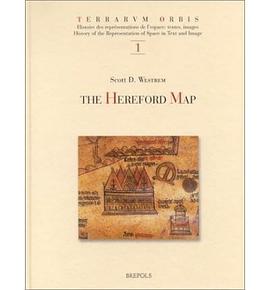
The Hereford Map, a depiction of the inhabited world drawn around 1300, is among the largest surviving examples of medieval mappamundi. It measures 1.59 meters by ca. 1.30 meters (52 1/2 inches by c. 52 inches). On it appear some 1,091 inscriptions, or legends; most of these are placed adjacent to a painted figure of what they identify. They range from simple place-names to long descriptions containing historical, ethnographical, theological and zoological information. The book's introduction offers essential background on the Map's history, sources, and scholarship. Particularly important is an explanation of its close relationship to a text recently discovered - Expositio mappe mundi - a work most composed a century before the Map was made. Right-facing pages contain, for each legend: (1) an exact line-for-line transcription, (2) an edited version of this transcription, and (3) an English translation. Left-facing pages offer commentary on each legend, giving information about its literary and cartographical source, the item it identifies, and textual problems. Included in the book is a color illustration of the entire Map (approximately 40% of its actual size), as well as detail photographs, taken in January 2001 under special conditions, enabling readers to see each legend precisely, as well as to locate all transcribed and translated text. Because of its thorough examination of all aspects of the Map, this book is a tribute to the richest, most complicated surviving example of medieval cartography, as well as an essential tool about medieval culture. giving information about its literary and cartographical source, the item it identifies, and textual problems. Included in the book is a color illustration of the entire Map (approximately 40% of its actual size), as well as detail photographs, taken in January 2001 under special conditions, enabling readers to see each legend precisely, as well as to locate all transcribed and translated text. Because of its thorough examination of all aspects of the Map, this book is a tribute to the richest, most complicated surviving example of medieval cartography, as well as an essential tool about medieval culture. giving information about its literary and cartographical source, the item it identifies, and textual problems. Included in the book is a color illustration of the entire Map (approximately 40% of its actual size), as well as detail photographs, taken in January 2001 under special conditions, enabling readers to see each legend precisely, as well as to locate all transcribed and translated text. Because of its thorough examination of all aspects of the Map, this book is a tribute to the richest, most complicated surviving example of medieval cartography, as well as an essential tool about medieval culture. taken in January 2001 under special conditions, enabling readers to see each legend precisely, as well as to locate all transcribed and translated text. Because of its thorough examination of all aspects of the Map, this book is a tribute to the richest, most complicated surviving example of medieval cartography, as well as an essential tool about medieval culture. taken in January 2001 under special conditions, enabling readers to see each legend precisely, as well as to locate all transcribed and translated text. Because of its thorough examination of all aspects of the Map, this book is a tribute to the richest, most complicated surviving example of medieval cartography, as well as an essential tool about medieval culture.
The Hereford map, drawn around 1300, is one of the largest preserved specimens of the genus of mappae mundi. It measures 1.59 x 1.30 m and contains more than a thousand legends and a large number of painted images. These legends range from simple toponyms to long descriptions containing information of all kinds. The introduction to the book provides essential elements relating to the history of the map, its sources and the studies devoted to it. Attention is drawn in particular to the close relations it maintains with a recently discovered text (Expositio mappe mundi), composed a century before the map was drawn up. The right pages give, for each legend, a diplomatic transcription, an edition and a translation in English. The left pages offer a detailed commentary giving information on the sources, the object identified, any textual problems. The book also contains an abundant illustration: a color reproduction (about 40% of its size), and photographs of details taken in January 2001 in privileged conditions, allowing the reader to locate and read all the transcribed and translated texts. . Thanks to an in-depth examination of all aspects of the map, this book is a tribute to the richest specimen of medieval cartography, as well as an essential working tool on the culture of the Middle Ages as a whole. a color reproduction (approximately 40% of its size), and photographs of details taken in January 2001 under privileged conditions, allowing the reader to locate and read all the transcribed and translated texts. Thanks to an in-depth examination of all aspects of the map, this book is a tribute to the richest specimen of medieval cartography, as well as an essential working tool on the culture of the Middle Ages as a whole. a color reproduction (approximately 40% of its size), and photographs of details taken in January 2001 under privileged conditions, allowing the reader to locate and read all the transcribed and translated texts. Thanks to an in-depth examination of all aspects of the map, this book is a tribute to the richest specimen of medieval cartography, as well as an essential working tool on the culture of the Middle Ages as a whole.
作者简介
目录信息
读后感
评分
评分
评分
评分
用户评价
从我目前翻阅到的章节来看,作者对于背景世界的构建,展现出了近乎偏执的细致。他似乎不仅仅是在讲述一个故事,更像是在绘制一张详尽的地理文化草图。无论是对某一地区气候的描写,还是对某个特定时代服饰纹样的描述,都透露出经过大量考据的痕迹。比如,他对某类传统节日中祭品的详细列举,那种详尽到近乎食谱的程度,让我不禁感叹,这背后必然是作者付出了数年心血进行田野调查的成果。这种“百科全书式”的写作倾向,虽然偶尔会打断叙事的流畅性,但却极大地增强了故事的真实可信度。它不是凭空捏造的奇幻,而是建立在一个逻辑严密、细节丰富的虚拟“现实”之上的。我期待着作者如何将这些细枝末节编织进宏大的主线叙事中去。
评分这本书的语言风格,乍看之下颇有些晦涩,但细细品味后,却发现其中蕴含着一种古老的韵律感。作者似乎非常钟爱使用那些已经被现代口语淘汰的词汇和句式,这使得阅读过程更像是在解码一段被尘封的史诗。每一个长句的结构都极其复杂,层层递进,仿佛一条蜿蜒曲折的小溪,必须耐下性子才能跟上它的流向。有那么几次,我不得不停下来,默默地在脑海中重新组织句子的主干,以确保没有遗漏任何微妙的语气转折。这种阅读体验,非常考验读者的专注力,但回报也是丰厚的——它强迫你慢下来,真正地去“听”作者的声音,而不是像浏览快餐信息那样肤浅地滑过。我个人认为,这种对文字本身的敬重,使得整部作品散发出一种沉静而有力的知识气息,远非那种追求即时快感的作品可比。
评分这本书带给我的情绪波动是极其微妙且深远的,它不像那些直白的惊悚小说能带来瞬间的刺激,而是像冬日里缓慢升温的炉火,逐渐渗透进你的骨子里。我发现在阅读的间隙,我常常会陷入一种若有所思的状态,脑海中不断地回放着某些场景或某句富有哲理的对话。它很少直接给出答案,而是设置了一个又一个的悖论或道德困境,让你自己去挣扎和权衡。这种“留白”的艺术处理,非常高明。它避免了将复杂的议题简单化,使得每一个角色和事件都有了多重解读的可能性。可以说,这本书更像是一面镜子,映照出的是读者自身对世界运行规则的理解和局限。我必须承认,读完一章后,我需要更长的时间来“消化”它所带来的思想冲击。
评分这本书的封面设计简直是一场视觉的盛宴,那种厚重的羊皮纸质感,配上古朴的字体,瞬间就将我拉入了一个充满神秘色彩的旧日世界。我拿到手的时候,甚至有些爱不释手,那种触摸带来的历史的厚重感,是现在许多轻薄书籍无法比拟的。光是翻开扉页,那精美的插图和手绘的边饰,就足以让人驻足良久,仔细揣摩每一个细节。虽然我还没有完全沉浸在故事的主线中,但仅凭这装帧和排版,我就能感受到出版方在制作上投入的巨大心力,这不仅仅是一本书,更像是一件可以收藏的艺术品。书页边缘微微泛黄的处理,恰到好处地营造出一种“出土文物”的氛围,让我对即将展开的阅读旅程充满了敬畏和期待。我甚至开始想象,那些描绘的场景,如果能做成立体的展示,该是何等的壮观。
评分这部作品的结构布局,乍看起来是线性展开的,但其中穿插了大量回溯和前瞻性的叙事片段,这种时空交错的处理,让整个故事的张力保持在了一个非常高的水准。作者对于时间概念的把控堪称大师级,他能在不让读者感到迷失的前提下,灵活地在过去与现在之间跳跃,每一个时间点的切换都服务于揭示更深层次的因果关系。我特别欣赏他如何利用这种非线性叙事来悬置关键信息,使得每一个转折点都显得是那么的自然而然,却又出乎意料。我有一种预感,等到全书读完,那些看似零散的片段一定会汇聚成一幅无比清晰、令人震撼的全景图。这种对叙事骨架的精妙雕琢,显示出作者高超的文学功底和对故事节奏的精准拿捏。
评分 评分 评分 评分 评分相关图书









本站所有内容均为互联网搜索引擎提供的公开搜索信息,本站不存储任何数据与内容,任何内容与数据均与本站无关,如有需要请联系相关搜索引擎包括但不限于百度,google,bing,sogou 等
© 2026 book.quotespace.org All Rights Reserved. 小美书屋 版权所有