
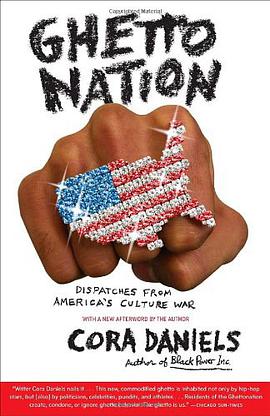

具体描述
From the Introduction:
ghet-to n. (Merriam-Webster dictionary) Italian, from Venetian dialect ghèto island where Jews were forced to live; literally, foundry (located on the island), from ghetàr , to cast; from Latin jactare to throw
1: a quarter of a city in which Jews were formerly required to live
2: a quarter of a city in which members of a minority group live, especially because of social, legal, or economic pressure
3a: an isolated group <a geriatric ghetto > b: a situation that resembles a ghetto especially in conferring inferior status or limiting opportunity <stuck in daytime TV’s ghetto >
ghet-to adj. (twenty-first-century everyday parlance)
1a: behavior that makes you want to say “Huh?” b: actions that seem to go against basic home training and common sense
2: used to describe something with inferior status or limited opportunity. Usually used with “so.” <That’s so ghetto > ; <He’s so ghetto >
3: a quarter of a city in which members of a minority group live, especially because of social, legal, or economic pressure.
4: common misusage: authentic, Black, keepin’ it real
As current and all-consuming as “ghetto” is in these days of gold teeth, weaves (blond and red), Pepsi-filled baby bottles, and babymamas, ghetto has a long history. The original ghetto was in the Jewish quarter of Venice, a Catholic city. Before it became the Jewish quarter, this area contained an iron foundry or ghèto , hence the name. These days, ghetto no longer refers to where you live, but to how you live. It is a mindset, and not limited to a class or a race. Some things are worth repeating: ghetto is not limited to a class or a race. Ghetto is found in the heart of the nation’s inner cities as well as the heart of the nation’s most cherished suburbs; among those too young to understand (we hope) and those old enough to know better; in little white houses, and all the way to the White House; in corporate corridors, Ivy League havens, and, of course, Hollywood. More devastating, ghetto is also packaged in the form of music, TV, books, and movies, and then sold around the world. Bottom line: ghetto is contagious, and no one is immune, no matter how much we like to suck our teeth and shake our heads at what we think is only happening someplace else…
From an award-winning journalist and cultural commentator comes a provocative examination of the impact of “ghetto” mores, attitudes, and lifestyles on urban communities and American culture in general.
Cora Daniels takes on one of the most explosive issues in our country today in this thoughtful critique of America’s embrace of a ghetto persona that demeans women, devalues education, celebrates the worst African American stereotypes, and contributes to the destruction of civil peace. Her investigation exposes the central role of corporate America in exploiting the idea of ghetto-ness as a hip cultural idiom, despite its disturbing ramifications, as a means of making money. She showcases Black rappers raised in privileged families who have taken on the ghetto persona and sold millions of albums, and non-Black celebrities, such as Paris Hilton, who have adopted ghetto attitudes and styles in pursuit of attention and notoriety. She explores, as well, her own relationship to the ghetto and the ways in which she is both part of and outside the Ghettonation.
Infused with humor and entertaining asides—including lists of events and people that the author nominates for the Ghetto Hall of Fame, and a short section written entirely in ghetto slang— Ghettonation is a timely and engrossing report on a controversial social phenomenon. Like Bill Cosby’s infamous, much-discussed comments about the problems within the Black community today, it is sure to trigger widespread interest and heated debate.
作者简介
目录信息
读后感
评分
评分
评分
评分
用户评价
从纯粹的文学技巧角度来看,这部作品的叙事声音是极其独特的。它巧妙地融合了民间故事的口述传统和现代主义的内心独白。你可以在同一页中感受到一种古老的、近乎神话的宿命感,紧接着又被拉入极度个体化的、碎片化的意识流中。这种声音的切换非常自然流畅,毫无违和感,反而增强了故事的张力和层次感。我个人认为,最精彩的部分在于对“沉默”的处理。很多关键的转折和情感的爆发点,都是通过人物的沉默、未说出口的话语来完成的,这种留白艺术使得读者必须主动参与到意义的建构中去。它拒绝被轻易定义,也拒绝被快速消化。它更像是一块需要时间去风化、去侵蚀的石头,你每一次重读,都会发现新的纹理和新的解读空间。这是一部需要用心去“听”而不是“看”的小说,非常推荐给那些厌倦了平面化叙事的读者。
评分这部作品简直是一场视觉与心灵的洗礼。作者以一种近乎于诗意的笔触,描绘了一个我们既熟悉又陌生的城市角落。那些在霓虹灯下闪烁的、被遗忘的角落,被赋予了鲜活的生命力。叙事节奏的把握极佳,时而如急促的鼓点,将人拉入纷繁复杂的现实泥沼;时而又像一曲悠扬的慢板,让人得以喘息,细细品味那些潜藏在表象之下的细腻情感。我特别欣赏作者对于人物刻画的深度,每个人物都不是单一的符号,而是复杂、矛盾的集合体,他们的挣扎、他们的希望,都如同在我眼前真实上演。读到某些情节时,我甚至能清晰地感受到那种空气中弥漫的湿热与尘土的气息,仿佛置身其中,与他们一同呼吸。这种沉浸式的体验是很多小说难以企及的,它不仅仅是文字的堆砌,更像是一扇通往另一个世界的门,一旦推开,便难以自拔。整本书读下来,感觉像经历了一次漫长而深刻的自我对话,很多平日里被忽略的议题,在文字的敲击下,变得异常清晰和迫切。
评分这本书的结构设计简直是神来之笔。它不是一条直线叙事,更像是一个由无数碎片拼凑而成的马赛克。每一个章节,就像是独立的一幅画,乍一看似乎松散,但当你读到最后,会猛然发现所有的线条都汇聚到了一个共同的中心点上。这种非线性叙事反而更贴合现实生活的混沌感,我们的人生不也是由无数个不期而遇和无意间的交叉点构成的吗?阅读的过程就像是在解谜,需要不断地在不同的时间线和人物视角之间跳跃,这种智力上的参与感是令人兴奋的。而且,作者对环境的描写功力深厚,那些具体的场景元素——墙上的涂鸦、生锈的铁门、夜晚空旷的街道——都被赋予了强烈的象征意义。它们不再是背景,而是参与到故事进程中的隐形角色。它考验着读者的耐心,但回报是丰厚的,它让你在合上书本后,仍然能清晰地“看见”那个世界在脑海中缓缓转动。
评分我很少读到如此具有“重量感”的作品。它不是那种读完就束之高阁的书,更像是被深深地烙印在了记忆深处。这本书探讨的议题,关乎身份认同的迷失与重建,那种在高速发展的社会机器中被抛弃或难以融入的疏离感,被刻画得入木三分。作者的文笔简洁有力,很多时候,最深刻的表达 justru 来自于最朴素的词汇,没有华丽辞藻的堆砌,却有着直抵人心的穿透力。特别是关于家庭关系的几段描写,细腻得让人心惊,那种欲言又止的爱与隔阂,比任何激烈的冲突都更令人动容。它没有提供廉价的救赎,而是展示了人在绝境中仍能迸发出的那种微弱而坚韧的光芒。读完后,我花了很长时间才从那种情绪中抽离出来,因为它迫使你审视自己与周遭环境的关系,让你开始重新定义“归属感”这个词的真正含义。
评分说实话,刚翻开这本书的时候,我还有些犹豫,因为这类题材往往容易落入刻板印象的窠臼。然而,作者成功地避开了所有我预期的俗套。它没有用廉价的煽情去博取同情,也没有用过于激烈的冲突来堆砌戏剧性。它的力量,恰恰在于那种不动声色的真实。那些生活在边缘的人们,他们的日常被细致入微地记录下来,没有美化,却也充满了不屈服的尊严。我尤其被其中关于“选择”与“命运”的探讨所吸引。每一次角色的抉择,都像是一块投入平静湖面的石子,激起的涟漪层层叠叠,影响深远。语言风格上,它时而冷峻得如同纪录片镜头,直击问题的核心;时而又充满了哲思的思辨,引人深思。这本书的价值,不在于提供一个简单的答案,而在于提出更深刻的问题,并用一种近乎残酷的诚实将这些问题呈现在我们面前,迫使我们正视我们自己构建的藩篱与界限。
评分 评分 评分 评分 评分相关图书














本站所有内容均为互联网搜索引擎提供的公开搜索信息,本站不存储任何数据与内容,任何内容与数据均与本站无关,如有需要请联系相关搜索引擎包括但不限于百度,google,bing,sogou 等
© 2026 book.quotespace.org All Rights Reserved. 小美书屋 版权所有