

具体描述
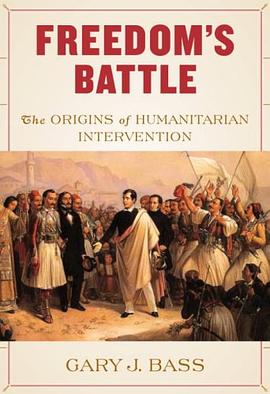
Why do we sometimes let evil happen to others and sometimes rally to stop it? Whose lives matter to us? These are the key questions posed in this important and perceptive study of the largely forgotten nineteenth-century “atrocitarians”—some of the world’s first human rights activists. Wildly romantic, eccentrically educated, and full of bizarre enthusiasms, they were also morally serious people on the vanguard of a new political consciousness. And their legacy has much to teach us about the human rights crises of today.
Gary Bass shatters the myth that the history of humanitarian intervention began with Bill Clinton, or even Woodrow Wilson, and shows, instead, that there is a tangled international tradition, reaching back more than two hundred years, of confronting the suffering of innocent foreigners. Bass describes the political and cultural landscapes out of which these activists arose, as an emergent free press exposed Europeans and Americans to atrocities taking place beyond their shores and galvanized them to act. He brings alive a century of passionate advocacy in Britain, France, Russia, and the United States: the fight the British waged against the oppression of the Greeks in the 1820s, the huge uproar against a notorious massacre in Bulgaria in the 1870s, and the American campaign to stop the Armenian genocide in 1915. He tells the gripping stories of the activists themselves: Byron, Bentham, Madison, Gladstone, Dostoevsky, and Theodore Roosevelt among them.
Military missions in the name of human rights have always been dangerous undertakings. There has invariably been the risk of radical destabilization and the threatening blurring of imperial and humanitarian intentions. Yet Bass demonstrates that even in the imperialistic heyday of the nineteenth century, humanitarian ideals could play a significant role in shaping world politics. He argues that the failure of today’s leading democracies to shoulder such responsibilities has led to catastrophes such as those in Rwanda and Darfur—catastrophes that he maintains are neither inevitable nor traditional.
Timely and illuminating, Freedom’s Battle challenges our assumptions about the history of morally motivated foreign policy and sets out a path for reclaiming that inheritance with greater modesty and wisdom.
作者简介
Gary J. Bass is a professor of politics and international affairs at Princeton University. He is the author of Stay the Hand of Vengeance: The Politics of War Crimes Tribunals. A former reporter for The Economist, he has written often for the New York Times, and has also written for The New Yorker, The Washington Post, the Los Angeles Times, The New Republic, and Foreign Affairs.
目录信息
读后感
评分
评分
评分
评分
用户评价
如果你期待的是那种热血沸腾、非黑即白的英雄史诗,那你可能要失望了。这本书的基调是阴郁且充满哲思的,它更像是一面冰冷的镜子,直白地映照出现实中权力的运作方式和个体在结构性暴力面前的脆弱。我尤其欣赏作者对“沉默的代价”的探讨。书中很多重要的转折点,都不是因为激烈的冲突爆发,而是因为某一个关键人物选择了保持缄默。这种“不作为”的力量,在作者的笔下,比任何激进的行动都更具破坏性。文字的密度非常高,需要反复阅读才能领会其中深藏的讽刺和反讽。我花了好几天时间才读完第一部分,不是因为内容太难,而是因为每读完一章,我都需要时间来消化那种渗透在字里行间的虚无感和清醒的悲凉。它没有提供廉价的希望,而是迫使你去直面那些你或许更愿意视而不见的真相。对于那些喜欢深度思考、对社会议题敏感的读者来说,这无疑是一次精神上的洗礼,虽然过程可能略显疼痛。
评分这本书,说实话,刚翻开的时候我还有点忐忑,毕竟“自由之战”听起来就挺宏大,怕是那种晦涩难懂的政治理论堆砌,或者干巴巴的历史叙事。但出乎意料的是,作者的笔触极其细腻,他没有直接跳入宏大的冲突,而是选择了一个非常接地气的切入点——聚焦于一个小镇居民在时代洪流中的挣扎与选择。我特别喜欢他对人物内心世界的刻画,那种面对不公义却又不得不低头的懦弱,与偶尔迸发出的、为了一丝尊严而挺身而出的勇气,被描绘得淋漓尽致。那些日常的琐碎,邻里间的猜忌与扶持,在背景的巨大压力下,显得格外真实而沉重。我仿佛能闻到那个时代空气中弥漫着的尘土和恐惧。书中对社会结构的分析,也是通过生活化的场景展现出来的,比如镇上的面包师如何因为立场问题而生意冷清,或者老教师如何在不合时宜的“真理”面前保持沉默。这种将哲学思辨融入柴米油盐的叙事手法,让原本沉重的议题变得可感可知,让读者可以非常自然地把自己代入进去,思考:如果是我,我会怎么做?这绝不是一本能让你轻松读完的书,但它读完后留下的回响,却久久不散,像一首低沉的大提琴曲,一直在心底回荡。
评分我必须承认,这本书的结构布局简直是鬼斧神工,它采用了多重视角的叙事策略,让读者在不同时间线和人物命运之间穿梭,体会到一种宿命般的无力感。作者似乎对人性中的灰色地带有着近乎偏执的迷恋,书中没有绝对的好人或坏人,只有在极端环境下做出不同妥协的个体。比如那位看似铁石心肠的执法者,他身上的某些细节描绘,又让人忍不住去探究他行为背后的逻辑链条,那种“为了更小的恶而选择的恶”的挣扎,简直是心理学的教科书。最让我震撼的是书中对于“记忆的篡改”这一主题的处理。叙事者本身就带有强烈的个人偏见,读者需要像侦探一样,不断地去质疑和交叉比证文本中的信息,去拼凑出接近真实的图景。这种高度的互动性,使得阅读过程变成了一场智力上的冒险。语言风格上,它时而如同散文般华美,时而又像电报般简洁有力,节奏感极强,仿佛作者在掌控着读者的呼吸频率。读到一些关键转折点时,我甚至会情不自禁地停下来,揉揉眼睛,怀疑自己刚才是不是看错了,这种阅读体验,绝对是顶级的。
评分老实说,这本书的阅读体验是极度私密且内省的。它很少直接说教,但处处都在拷问读者的良知和认知边界。作者擅长运用那种极其冷静、近乎疏离的语调来讲述最残酷的事情,这种反差制造了一种强大的张力。我发现,这本书成功地避开了所有关于“如何战斗”的口号式陈词滥调,而是专注于描绘“为什么会忘记战斗”以及“忘记后会变成什么样”。书中对集体无意识的描绘尤其深刻,人们如何被日常生活的惯性裹挟,慢慢接受了那些原本无法接受的事情,这种“温水煮青蛙”式的演变,比突如其来的灾难更让人不寒而栗。这本书更像是一份沉甸甸的道德备忘录,它不提供解决方案,而是提供了一个让你清醒地审视自己所在处境的工具。每一次重读,我都能发现之前被我忽略掉的微妙的暗示和预兆,它的深度需要时间来沉淀,绝对不是那种可以一目十行快速翻阅的快餐读物。
评分这本书的文体实验性非常强,完全跳脱了我之前阅读过的所有同类作品的范式。它不是线性的,更像是一个由碎片、日记、官方文件甚至是一首诗歌组成的拼贴画。作者对于象征符号的运用达到了炉火纯青的地步,比如反复出现的“那扇永远关着的门”或者“被截断的河流”,每一个意象都承载了多重含义,为文本增添了无尽的解读空间。我记得有那么一个场景,涉及到一场公开审判,作者仅仅用了几段极其冷静客观的文字来描述,但那种压抑的气氛却通过细节的堆砌,比任何情绪化的渲染都更令人窒息。我感觉自己不是在读一个故事,而是在参与一个复杂的历史重建项目。它挑战了读者对“故事性”的传统定义,要求你主动去填补那些空白,去构建逻辑。对于那些追求文学高度和创新性的读者来说,这简直是挖到宝了。它让我重新审视了叙事本身的力量,以及如何用最少的笔墨去描绘最广阔的精神疆域。
评分 评分 评分 评分 评分相关图书







本站所有内容均为互联网搜索引擎提供的公开搜索信息,本站不存储任何数据与内容,任何内容与数据均与本站无关,如有需要请联系相关搜索引擎包括但不限于百度,google,bing,sogou 等
© 2026 book.quotespace.org All Rights Reserved. 小美书屋 版权所有