

具体描述
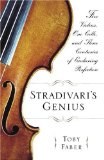
One of modern technology's greatest embarrassments is its inability to produce violins with the awesome musical qualities of those made almost 400 years ago by Stradivarius. This engaging appreciation celebrates the maestro's legacy by following the adventures of six of his instruments. Faber, the former managing director of British publishing house Faber and Faber, begins with a short account of Stradivari's life (1644–1737) and methods in the Italian city of Cremona, where violin-making techniques achieved their zenith. As the Cremonese violins passed through the hands of musicians, the instruments' rich tone and penetrating sonic power stimulated a new style of virtuoso violin-playing that held Europe's concert halls enthralled. And as time passed and the violins' value soared, they spawned whole new industries in collecting, appraising, curating and faking them. Faber's stylish account savors Stradivari's marvelous acoustics and the individual personalities of his instruments while exploring the science behind them (X-rays, chemical tests and tree-ring analysis have all been deployed to unlock their secrets) and regaling readers with colorful tales of the musicians who built their careers around them. The result is an illuminating look at an enduring cultural monument. Photos.
Copyright © Reed Business Information, a division of Reed Elsevier Inc. All rights reserved.
作者简介
Antonio Stradivari (1644-1737) may be forever, but the same cannot be said of his violins, especially the ones that have sustained several concert careers. "Even Strads wear out," says Toby Faber in Stradivari's Genius: Five Violins, One Cello, and Three Centuries of Enduring Perfection (Random House, $23.95). In all, the great instrument-maker produced about 1,000 Stradivariuses, of which about 600 have survived. Faber calls the master "perhaps the most celebrated craftsman in history," a verdict endorsed by the musicians who covet, collect and play his artifacts.
One of these -- and an owner of one of the five violins in Faber's subtitle -- was Nicolo Paganini, whom the composer Robert Schumann called "the turning point in the history of virtuosity." After a torrid career of music-making, wenching and carousing, Paganini contracted illnesses both common (consumption, syphilis) and extraordinary (chronic cystitis and orchitis, which caused one of his testicles to swell to the size of a "little pumpkin"). He could no longer play Strads, so he collected them instead; he died, in 1840, owning at least 11.
Analysts have suggested various "secrets" to the remarkable acoustics of a Stradivarius, including the volcanic earth he may have worked into the varnish and his preference for soaking the wood he used in salt. Faber suggests that hunting for a magic key to Stradivarian excellence may be a fool's errand. "Ultimately," he argues, "attempts to copy Stradivari seem doomed to failure. There are too many variables. . . . All we can copy is Stradivari's approach: single-minded devotion to the aim of producing instruments better than any predecessor's."
目录信息
读后感
评分
评分
评分
评分
用户评价
相关图书













本站所有内容均为互联网搜索引擎提供的公开搜索信息,本站不存储任何数据与内容,任何内容与数据均与本站无关,如有需要请联系相关搜索引擎包括但不限于百度,google,bing,sogou 等
© 2026 book.quotespace.org All Rights Reserved. 小美书屋 版权所有