
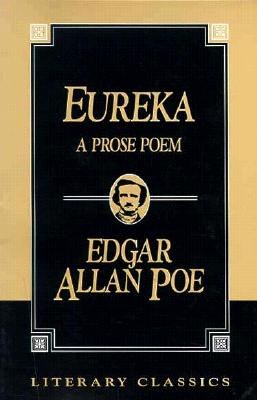

具体描述
In this remarkable work, master story-teller Edgar Allan Poe (1809-1849) builds on known scientific truths to propound a universe governed by the immutable laws of attraction and repulsion, i.e., expansion and a return to unity. The irascible, vindictive God of the Old Testament and the Deists' Master Clockmaker are routed by Poe's pantheistic World Spirit who, through the force of expansion, is diffused throughout his creation. Moreover, we humans are all part of this universal spirit and each of us is his own god. Published after his death, as Poe desired, "Eureka" remains a startlingly different work from the author's more popular offerings.
作者简介
EDGAR ALLAN POE was born in Boston on January 19, 1809. Following the deaths of his actor-parents soon after his birth, Poe was informally adopted by a wealthy tobacco merchant, John Allan of Richmond, Virginia. Poe thus grew up in a prosperous household, with opportunities for travel abroad and education, but his relationship with his adoptive family was unstable. After being expelled from the University of Virginia and, later, from West Point, Poe was disowned by Allan in 1831.
Poe moved to Baltimore in the early 1830s to live with his paternal aunt, Mrs. Maria Clemm; there he began his career as an editor and critic for various literary journals. These jobs were usually short lived, either because Poe soon quit or was fired for erratic behavior, possibly as the result of alcohol. He began to acquire a literary reputation, however, for his essays, tales, and poems, which appeared in various magazines. Poe's story "MS Found in a Bottle," which he had entered in a contest sponsored by the Saturday Visitor, won a prize of fifty dollars.
In 1836, Poe married his thirteen-year-old cousin, Virginia Clemm, whose fragile beauty and early death in 1847 inspired the pale, moribund heroines of his fiction. It was during his marriage that Poe wrote his most famous stories and poems, including "The Fall of the House of Usher," "The Gold Bug," and "The Raven." Poe's own premature end at the age of forty, on October 7, 1849, is traditionally ascribed to his dissolute ways, including heavy drinking and drug taking. However, a recent medical study of the events surrounding Poe's final days at Washington College Hospital in Baltimore attributes his death not to alcohol (to which Poe was extremely sensitive), but to encephalitic rabies. It is suggested, then, that the cause of Poe's death was either misunderstood or else deliberately falsified to make Poe an object lesson for the temperance movement of his day.
Though he was often maligned by his countrymen in his lifetime, after his death Poe's literary works, brilliantly imaginative, innovative, and often macabre, began to attract a wide readership abroad: He was enthusiastically taken up in France by Baudelaire and, later, the "decadent" and "symbolist" poets. And in England, Poe's ratiocinative character, Detective Auguste Dupin (of "The Purloined Letter" and "The Murders in the Rue Morgue"), inspired Arthur Conan Doyle's Sherlock Holmes. Today Poe stands as the creator of detective fiction and the American Gothic tale. Despite lingering criticism, he is recognized as one of the greatest American writers of the nineteenth century.
目录信息
读后感
扶额,这真是篇死线作业了。不得不承认,在阅读本书之前,我实在小觑了爱伦·坡这个名字。之前爱伦·坡这个名字对我来说是推理小说鼻祖,是《惊悚乐园》中三天两觉改写的厄舍府,是不详的黑猫,是挚爱的莫蕾拉,是冷峻睿智的杜宾,是怪诞恐怖的代表。而如今我在读的则应说是一...
评分“你全部的随从,飞过有月光的天空—— 散开——像萤火虫在西西里的夜晚, 然后飞向另一些世界在另一个白天!” 爱伦·坡在《阿尔阿拉夫》的这段诗行下有一段注释,指出引起他注意的、萤火虫聚集成一团后又从中心向四面八方飞散出去的行为,这点点萤火飞舞旋转的玄妙情景竟使我...
评分“你全部的随从,飞过有月光的天空—— 散开——像萤火虫在西西里的夜晚, 然后飞向另一些世界在另一个白天!” 爱伦·坡在《阿尔阿拉夫》的这段诗行下有一段注释,指出引起他注意的、萤火虫聚集成一团后又从中心向四面八方飞散出去的行为,这点点萤火飞舞旋转的玄妙情景竟使我...
评分爱伦·坡忽而将这本书称作“散文诗”,忽而又称作“随笔”,但论述的又是科学、神学、人生等问题。马凌先生在书末的导读非常清晰有效地解释了这本书在爱伦·坡自己的创作和其它领域里的位置、意义,很受用,就不多讨论这个“意义”上的问题了,我觉得最好玩的还是,文体问题。 ...
评分这本书很是让我心动,在想读时我写下这样一句话“ 人这一生无非两个使命,一个是探索宇宙未知,一个是认识真正的自己,大多数人终其一生也无法完成其一。” 这本书确实没有让我失望,艰涩得不一般,几乎很多语句要多读两遍才能理解,还是喜欢得不行,找到当年看考研政治的感觉...
用户评价
我最喜欢这本书的一个地方,是它处理“失败”和“误解”的态度。它没有将历史上的伟大人物简单地神化,反而花了大量篇幅去描绘那些接近成功却最终功亏一篑的尝试,以及那些因为时代局限性而被历史埋没的天才。作者的笔触非常富有同情心,他似乎在告诉我们,真正的“突破”往往是建立在无数次默默无闻的错误之上的。这种对“过程”的尊重,而非仅仅聚焦于“结果”的写作角度,让我感到非常新鲜。特别是书中关于某个文艺复兴时期发明家的传记部分,作者引用了大量从未公开过的私人信件,展现了一个天才在面对现实困境时的挣扎与脆弱。这使得书中的人物形象立体而饱满,不再是教科书上扁平化的符号。读完之后,我感觉自己对“成功学”那一套进行了彻底的反思,明白了创新之路的曲折与不易。
评分这本书的装帧和排版确实很考究,纸张的质感非常好,拿在手里分量十足。但内容上,我必须承认,它对我来说有些晦涩难懂。我尝试了从头到尾按顺序阅读,但很快就迷失在了大量的术语和晦涩的典故之中。这本书似乎默认读者已经拥有了非常扎实的古典哲学和早期科学史背景知识,很多关键概念没有做过多的解释,直接抛了出来。我不得不频繁地停下来查阅资料,这极大地打断了阅读的流畅性。这使得阅读过程变成了一种持续的“查漏补缺”的过程,而非享受故事或论证本身。对于那些希望获得清晰、线性叙事体验的读者来说,这本书可能会是一个挑战。它的句子结构复杂,充满了嵌套从句,仿佛作者在试图用语言本身来模拟他所描述的复杂系统——这种尝试虽然有创意,但对于理解来说,无疑增加了不少难度。它更适合作为一部参考工具书,而不是一部可以轻松沉浸其中的小说。
评分老实说,我拿到这本书的时候,是被它封面上那张古老星图的插画吸引的。翻开后才发现,这完全不是我预期的那种基于科学发现的传记文学。它更像是一部哲学散文集,夹杂着大量的历史考据和一些近乎诗意的冥想。我发现作者似乎痴迷于追溯那些“伟大思想”的起源地和传播路径,但他的路径选择非常个人化,充满了跳跃性。比如,他可能上一章还在细致分析某个中世纪炼金术士的笔记,下一章就立刻转向了二十世纪初的量子力学辩论。这种看似不连贯的跳跃,反而形成了一种奇特的张力。阅读体验是碎片化的,需要读者自己去构建逻辑的桥梁。我个人认为,这本书的价值不在于提供明确的答案,而在于它成功地激发出了一系列新的、更复杂的问题。很多段落我读了好几遍,试图捕捉作者隐藏在文字背后的那层更深层的寓意,那种感觉很奇妙,像是在破解一个精心设计的谜题。
评分这本厚厚的精装书摆在我的书架上,散发着一种沉甸甸的历史感。我花了整整一个周末才读完,期间不得不停下来好几次,不是因为情节拖沓,而是因为书中探讨的思想实在太过深邃,需要时间去消化。作者的叙事手法非常独特,他似乎不太在意传统的小说结构,而是将时间线打散,让不同的历史片段像碎片一样拼凑出一个宏大的图景。我尤其欣赏他对细节的捕捉,那些关于十八世纪末欧洲知识分子沙龙的描写,活灵活现,仿佛我能闻到空气中混合着的烟草味和陈年红酒的味道。书中对于“灵感爆发”那一瞬间的心理描绘,简直是教科书级别的,那种从混沌到豁然开朗的过渡,写得如此细腻真实,让人不禁回想起自己过去某个顿悟的瞬间。整本书读下来,感觉就像是进行了一场漫长而艰苦的智力攀登,虽然过程有些吃力,但到达顶峰时所见的风景,绝对值得这一切付出。它不是那种能让你轻松度过午后时光的读物,更像是一次严肃的智识探险,要求读者全身心地投入。
评分这本书的阅读门槛相当高,但如果你能坚持下去,它提供的回报是惊人的。我发现它真正巧妙的地方在于,它并不试图讲述一个单一的、连贯的故事,而是通过并置看似无关的领域(比如音乐理论、建筑结构和早期天文观测),来揭示潜藏在人类所有创造活动背后的共同的、深层的结构性思维模式。这种跨学科的整合能力令人叹服。作者的论证逻辑严密得像一台机器,但文字的表达却又充满了文学性的感染力。我尤其欣赏作者在总结部分所展现出的那种宏大的历史视野,他将我们带出了眼前的琐碎,去审视人类文明在时间长河中的一次次“跃迁”。这本书更像是一面棱镜,折射出知识本身是如何被建构、被误读,又如何最终得以巩固的。它迫使你重新审视你所接受的“常识”的基础。
评分 评分 评分 评分 评分相关图书












本站所有内容均为互联网搜索引擎提供的公开搜索信息,本站不存储任何数据与内容,任何内容与数据均与本站无关,如有需要请联系相关搜索引擎包括但不限于百度,google,bing,sogou 等
© 2026 book.quotespace.org All Rights Reserved. 小美书屋 版权所有