具体描述
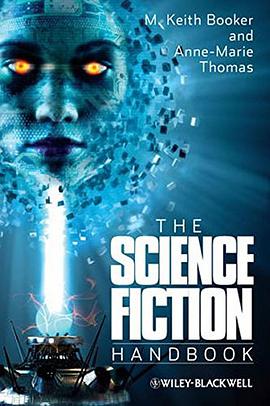
The Science Fiction Handbook offers a comprehensive and accessible survey of one of the literary world's most fascinating genres. Includes separate historical surveys of key subgenres including time-travel narratives, post-apocalyptic and post-disaster narratives and works of utopian and dystopian science fiction Each subgenre survey includes an extensive list of relevant critical readings, recommended novels in the subgenre, and recommended films relevant to the subgenre Features entries on a number of key science fiction authors and extensive discussion of major science fiction novels or sequences Writers and works include Isaac Asimov; Margaret Atwood; George Orwell; Ursula K. Le Guin; The War of the Worlds (1898); Starship Troopers (1959); Mars Trilogy (1993-6); and many more A 'Science Fiction Glossary' completes this indispensable Handbook
The Art of the Speculative: A Deep Dive into Imaginative Worldbuilding Unlocking the Potential of the Unseen and the Untold This comprehensive volume serves as an essential companion for aspiring and seasoned writers venturing into the boundless territories of speculative fiction. Far removed from the mechanics of crafting genre narratives, this book focuses intently on the architecture of imagination—the foundational principles required to construct worlds, societies, and technologies that feel both utterly alien and strikingly plausible. It is an exploration into the deep structure of "what if," moving beyond mere plot mechanics to examine the very philosophical underpinnings that give speculative fiction its lasting resonance. Part I: Deconstructing the Impossible – The Grammar of Speculation The initial sections dismantle the common misconception that speculative fiction is solely about gadgetry or fantastical races. Instead, we treat speculation as a rigorous intellectual exercise. We begin by examining Conceptual Anchoring: the process of identifying a single, world-altering variable—be it a change in physical law, a radical social shift, or a singular technological breakthrough—and tracing its inexorable, cascading consequences across all facets of human experience. We dedicate significant space to Internal Consistency and the Suspension of Disbelief. This is not simply about ensuring your magic system has rules, but about understanding why those rules must feel inevitable to the inhabitants of your created reality. We analyze historical examples of societal collapse and rapid advancement to establish a realistic framework for projecting future or alternative states. Topics include: The Economics of the Unforeseen: How does the introduction of zero-point energy or instantaneous transportation reshape global finance, labor structures, and resource distribution? We explore macroeconomic modeling applied to fictional scenarios. Linguistics of the Other: Moving beyond simple glossary creation, this chapter delves into how a species’ unique sensory apparatus or environment dictates the very structure of its communication, and how translation—or the failure thereof—drives conflict and understanding. Environmental Determinism: Analyzing the profound impact of altered atmospheric compositions, stellar distances, or planetary gravity on biological evolution, architecture, and cultural ritual. We map out techniques for synthesizing believable flora and fauna that organically fit the established milieu. Part II: The Human Equation in Extreme Environments Speculative fiction’s greatest strength lies not in its fantastical elements, but in its unflinching examination of human nature under pressure. This section pivots from world construction to character interrogation within those constructed realities. The Ethics of Transcendence: We explore narrative frameworks for handling moral dilemmas that arise when conventional boundaries—mortality, identity, privacy—are erased or redefined. Case studies involve narratives dealing with digital consciousness upload, radical biological augmentation, and post-scarcity societal structures. How do core human drives (love, fear, ambition) mutate when the stakes are cosmic or eternal? Narrative Structure in Non-Linear Realities: Many complex speculative concepts resist traditional Aristotelian structures. This chapter provides tools for structuring narratives that span millennia, involve nested realities, or rely heavily on unreliable, temporally-displaced narrators. We dissect techniques for managing massive casts of characters across generations while maintaining emotional continuity for the reader. Emphasis is placed on Thematic Resonance over Plot Exhaustion, ensuring the grand scale serves the intimate human story, rather than overwhelming it. Designing Credible Conflict: Conflict in speculative settings must rise logically from the established rules. We categorize conflict not just as Person vs. Person, but as Person vs. Systemic Inertia, Person vs. Metaphysical Law, and Person vs. Evolving Self. Detailed analysis is provided on crafting antagonists whose motivations are wholly rational within their worldview, making them formidable not through malice, but through sheer, divergent logic. Part III: The Writer as Futurist and Anthropologist The final section addresses the professional and philosophical responsibilities of the speculative writer. It treats the act of writing speculative fiction as a form of rigorous, imaginative anthropology applied to the future or the impossible. The Vocabulary of Immersion: Developing a precise, evocative lexicon that grounds the fantastic in sensory detail. This is less about inventing new words and more about choosing existing words with surgical precision to evoke unfamiliar sensations—the scent of ozone in an airless city, the texture of synthetic bone, the soundscape of a silicon ecosystem. Forecasting Cultural Drift: A deep dive into projecting how contemporary trends—political polarization, data saturation, climate anxiety—might mature or collapse over long timescales. We utilize models of cultural diffusion and technological adoption curves to lend weight to projections of societal evolution. This requires disciplined extrapolation, avoiding facile utopian or dystopian conclusions in favor of nuanced, messy middle-grounds where progress and regression coexist. The Craft of the Reveal: Mastering the pacing of information release. In worlds dense with novelty, the temptation is to infodump. This section outlines techniques for gradual, organic world-disclosure, ensuring that every piece of exposition solves one mystery while simultaneously introducing a more profound one, drawing the reader deeper into the established reality without ever feeling lectured. This includes strategies for integrating complex technical data seamlessly into dialogue and action. Conclusion: The Responsibility of Vision This handbook ultimately argues that the most powerful speculative fiction does not predict the future, but clarifies the present by shifting perspective. By mastering the construction of rigorous alternative realities, the writer gains unparalleled power to interrogate the assumptions governing our own time. The focus remains steadfastly on the craft: detailed methodologies for building, populating, and challenging imaginary worlds with uncompromising intellectual honesty and narrative mastery. It is a blueprint for constructing realities that resonate long after the final page is turned.