
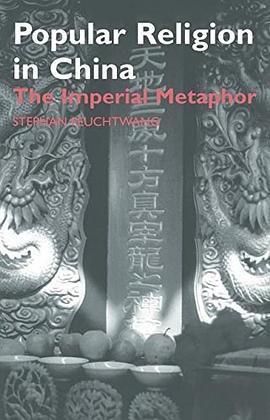
Popular Religion in China pdf epub mobi txt 电子书 下载 2026
- 宗教
- 海外中国研究
- 民间信仰
- 人类学
- 英文原版
- 社会学/人类学
- 历史
- 民间宗教
- 中国宗教
- 民间信仰
- 宗教社会学
- 文化人类学
- 宗教研究
- 中国文化
- 信仰
- 宗教实践
- 流行宗教
- 社会宗教

具体描述
The institution of local festivals and temples is not as well known as that of ancestor worship, but it is just as much a universal fact of Chinese life. Its content is an imperial metaphor, which stands in relation to the rest of its participants' lives as the poetry of collective vision, theatrically performed, built and painted in temples, carved and clothed in statues. Stephan Feuchtwang has brought together unpublished as well as published results of his own and other anthropologists' fieldwork in the People's Republic of China and Taiwan and put them into an historical, political and theoretical context.
Students of anthropology will be intrigued. This is not a religion of a Book. Nor is it one of the named religions of China. Popular religion includes some elements of both Buddhism and the former imperial cults, more of Daoism, but it is identifiable with none of them. It is popular in the sense of being local and true of the China of the Han, or Chinese-speaking people, where every place had or has its local cults and the festivals peculiar to them. Its rites, in particular offerings of incense and fire, suggest a concept of religion. It is quite different from theories of religion based on doctrine and belief.
Students of politics will also find here vital and new perspectives. Politics is never far from religion, least of all in the People's Republic of China or colonial and post-colonial Taiwan.
作者简介
Professor Stephan Feuchtwang is an emeritus professor of the Department of Anthropology, the London School of Economics and Political Science (LSE). He has been engaged in research on popular religion and politics in mainland China and Taiwan since 1966, resulting in a number of publications on charisma, place, temples and festivals, and civil society. He has recently been engaged in a comparative project exploring the theme of the recognition of catastrophic loss, including the loss of archive and recall, which in Chinese cosmology and possibly elsewhere is pre-figured in the category of ghosts. Most recently he has been pursuing a project on the comparison of civilisations and empires.
目录信息
Acknowledgements x
1 History, identification and belief 1
2 The annual apocalypse 27
3 Official and local cults 63
4 Local festivals and their cults 95
5 The incense-burner: communication and deference 133
6 Daoism and its clients 159
7 Ang Gong, or the truth of puppets 191
8 The politics of religion and political ritual 211
Notes 247
References 255
Glossary 265
Index 275
· · · · · · (收起)
读后感
如题,作为一个历史系学生,断断续续翻了1周,一开始我就读不懂序言,跳到第一章开始读,还是读不懂。估计是因为翻译太烂以及本人完全不懂人类学术语,总之,大家选择看之前需谨慎。 以上! ...................................................................................
评分虽然这不是一个新问题了,但是经常在读不懂原文和更读不懂翻译之间挣扎。 最近连续读了几个原文+译文,发现其实很多译者在术语上都已经尽力了。反而是一些英文的习惯说法或者语序颠倒的问题上翻译错误造成了整个一段甚至一章都令人困惑。 举个例子,原文第九页说到but far from...
评分整本书至少有三分之一的篇幅被用于向美国读者介绍关于中国民间宗教的一般性知识,不过穿插其间的大量台湾田野记录则十分引人入胜,典型的人类学著作,而在新增的第八章中试图对民间仪式与政治间的映射关系作出更为整体性的解释,并且这种解释将应用于理解1949年之后的大...
评分在中国历史的宏大叙事话语中,民间社会被湮没在大一统的政治幻象里,仿佛在推行中央集权的古典专制时代,它完全被自上而下的建构,不存在任何自发形成的可能性。这种对于历史的误读来自历史书写自身的局限。清末,梁启超就提出二十四史本质上是帝王的家谱写作,认为历史视角永...
评分在中国历史的宏大叙事话语中,民间社会被湮没在大一统的政治幻象里,仿佛在推行中央集权的古典专制时代,它完全被自上而下的建构,不存在任何自发形成的可能性。这种对于历史的误读来自历史书写自身的局限。清末,梁启超就提出二十四史本质上是帝王的家谱写作,认为历史视角永...
用户评价
我发现这本书在方法论上的创新性非常值得称道。它似乎拒绝了将“宗教”与“世俗”进行二元对立的传统研究框架。作者毫不避讳地探讨了金钱、政治影响力以及地方精英如何巧妙地将宗教活动“嵌入”到现代化的进程中,例如利用宗教庆典来吸引游客、促进地方经济发展,或者作为申请政府拨款的理由。这种对宗教“工具性”的坦诚分析,既不带有道德批判,也不流于空泛的赞美,而是提供了一种更贴近现实的、务实的理解路径。书中关于寺庙资金运作的章节尤其精彩,它清晰地展示了这些信仰场所如何在市场经济大潮下,通过“公司化”管理、投资不动产等方式,维持其香火和影响力。这彻底打破了我以往认为宗教场所是超然于经济之外的清净之地的想象。这种对宗教场域内部复杂经济逻辑的揭示,让整本书的分析维度提升了一个层次。
评分这本书最让我感到震撼的是其对“地方性”与“全球性”张力的探讨。作者通过关注一些看似非常偏远、封闭的信仰群体,反过来映照出中国社会在面对全球化浪潮时的复杂反应。在那些偏远的山村或城中村里,古老的信仰仪式如何吸收、改写外来的文化符号,比如某些流行歌曲的旋律被用来演唱神歌,或者现代媒体技术被用来直播驱邪仪式。这种“在地化”的创造力令人惊叹。它告诉我们,文化接触点从来都不是单向的文化倾销,而是一个充满抵抗、融合与重塑的动态过程。通过对比不同地区对同一神祇的不同阐释,我们可以清晰地看到,在国家宏大叙事之下,微观层面的信仰实践是如何顽强地保留了自己的主体性和地方口音。这本书无疑是理解当代中国社会文化韧性的重要文本,它提供了一个向下扎根的视角,让我们看到了宏大叙事之外那些鲜活的生命力。
评分这本书的视角实在是太独特了,完全颠覆了我对中国宗教现象的一些刻板印象。我一直以为“民间信仰”这个词涵盖了所有那些在大城市里不太主流的活动,但作者通过扎实的田野调查,深入剖析了那些在特定社群内部运作的、充满活力和地方色彩的宗教实践。比如,书中对某一特定地域中如何通过神祇的“巡游”来构建社区认同和解决地方纠纷的描述,细致入微,让我仿佛亲眼见证了一场盛大的仪式。它不仅仅是记录了仪式本身,更重要的是挖掘了仪式背后复杂的社会结构和权力运作。作者没有用高高在上的学术腔调去评判这些实践的“真伪”或“先进与落后”,而是以一种近乎人类学家的谦逊态度,去理解信仰是如何在日常生活的柴米油盐中扎根、生长、并提供意义的。特别是关于那些流动人口和边缘群体如何利用宗教网络来获取社会支持的部分,简直是洞察人心的神来之笔。它提醒我们,宗教从来都不是孤立的教条体系,而是活生生的社会粘合剂。
评分我对这本书的阅读体验可以用“烧脑”来形容,但绝不是枯燥的那种。作者在处理历史脉络和当代现实的交织时,展现出了惊人的驾驭能力。他不是简单地罗列历史事件,而是巧妙地设置了一个个“关键节点”,展示了特定历史变迁(比如清末的社会动荡或者近代的城市化进程)是如何重塑了地方信仰的实践方式和神祇谱系的。这种动态的、演化的视角,极大地丰富了我对“传统”这个概念的理解——它不是一成不变的石头,而是流动的、不断被重新协商的叙事。书中对不同宗族、不同行会之间在争夺宗教资源(比如庙宇的管辖权或祭祀的优先权)时的微妙博弈,描述得就像一部小型的政治斗争史。读完之后,我开始重新审视那些我过去视为“迷信”的行为,意识到它们其实是社群在特定历史压力下,为维持其存在感和秩序而发展出的复杂策略。这种深厚的历史学功底,让这本书的论述有了坚实的骨架。
评分这本书的语言风格非常具有感染力,一点也不像那种堆砌术语的学院派著作。作者似乎非常擅长讲故事,他笔下的人物,无论是威严的道士,还是热情的社区组织者,都栩栩如生。我尤其喜欢他描述那些小型、非正式的祭祀场合时的笔触,充满了画面感和人情味。比如,他描述一位老太太为了供奉某个小神而精心准备祭品的过程,那种虔诚和投入,让人即使不信教,也能感受到其中蕴含的巨大情感力量。这种“沉浸式”的写作手法,极大地降低了理解门槛,让一个对外行来说略显晦涩的领域变得平易近人。它不像教科书那样告诉你“应该”怎么看,而是邀请你一起走入那个世界,亲身去感受那种氛围。读到后面,我几乎忘记了自己是在读一本学术研究,更像是在阅读一部部关于普通人精神生活的微型传记。这种叙事上的成功,无疑是这本书能够广泛传播的关键。
评分英语太地道了,每看一分钟就要走五分钟的神……所以我不敢说我看明白了。
评分第三章是核心
评分英语太地道了,每看一分钟就要走五分钟的神……所以我不敢说我看明白了。
评分such an intricate piece of work.some point itself seems to be metaphoric.my point is whether the whole framework is a bit over-political.
评分第三章是核心
相关图书






本站所有内容均为互联网搜索引擎提供的公开搜索信息,本站不存储任何数据与内容,任何内容与数据均与本站无关,如有需要请联系相关搜索引擎包括但不限于百度,google,bing,sogou 等
© 2026 book.quotespace.org All Rights Reserved. 小美书屋 版权所有