

具体描述
The Undiscovered Consumer . . .and the Mistake of Universal Excellence
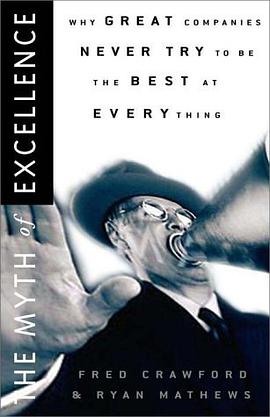
What do customers really want? And how can companies best serve them? Fred Crawford and Ryan Mathews set off on what they describe as an "expedition into the commercial wilderness" to find the answers. What they discovered was a new consumer -- one whom very few companies understand, much less manufacture products for or sell products or services to. These consumers are desperately searching for values, a scarce resource in our rapidly changing and challenging world. And increasingly they are turning to business to reaffirm these values. As one consumer put it: "I can find value everywhere but can't find values anywhere."
Crawford and Mathews's initial inquiries eventually grew into a major research study involving more than 10,000 consumers, interviews with executives from scores of leading companies around the world, and dozens of international client engagements. Their conclusion: Most companies priding themselves on how well they "know" their customers aren't really listening to them at all. Consumers are fed up with all the fuss about "world-class performance" and "excellence." What they are aggressively demanding is recognition, respect, trust, fairness, and honesty.
Believing that they are still in a position to dictate the terms of commercial engagement, businesses have bought into the myth of excellence -- the clearly false and destructive theory that a company ought to be great at everything it does, that is, all the components of every commercial transaction: price, product, access, experience, and service. This is always a mistake because "the predictable outcome [is] that the company ends up world-class at nothing; not well-differentiated and therefore not thought of by consumers at the moment of need."
Instead, Crawford and Mathews suggest that companies engage in Consumer Relevancy, a strategy of dominating in one element of a transaction, differentiating on a second, and being at industry par (i.e., average) on the remaining three. It's not necessary for businesses to equally invest time and money on all five attributes, and their customers don't want them to. Imagine the confusion if Tiffany & Co. started offering deep discounts on diamonds and McDonald's began selling free-range chicken and tofu.
The Myth of Excellence provides a blueprint for companies seeking to offer values-based products and services and shows how to realize the commercial opportunities that exist just beyond their current grasp -- opportunities to reduce operating costs, boost bottom-line profitability, and, most important, begin to engage in a meaningful dialogue with customers.
The Undiscovered Consumer . . .and the Mistake of Universal Excellence
What do customers really want? And how can companies best serve them? Fred Crawford and Ryan Mathews set off on what they describe as an "expedition into the commercial wilderness" to find the answers. What they discovered was a new consumer -- one whom very few companies understand, much less manufacture products for or sell products or services to. These consumers are desperately searching for values, a scarce resource in our rapidly changing and challenging world. And increasingly they are turning to business to reaffirm these values. As one consumer put it: "I can find value everywhere but can't find values anywhere."
Crawford and Mathews's initial inquiries eventually grew into a major research study involving more than 10,000 consumers, interviews with executives from scores of leading companies around the world, and dozens of international client engagements. Their conclusion: Most companies priding themselves on how well they "know" their customers aren't really listening to them at all. Consumers are fed up with all the fuss about "world-class performance" and "excellence." What they are aggressively demanding is recognition, respect, trust, fairness, and honesty.
Believing that they are still in a position to dictate the terms of commercial engagement, businesses have bought into the myth of excellence -- the clearly false and destructive theory that a company ought to be great at everything it does, that is, all the components of every commercial transaction: price, product, access, experience, and service. This is always a mistake because "the predictable outcome [is] that the company ends up world-class at nothing; not well-differentiated and therefore not thought of by consumers at the moment of need."
Instead, Crawford and Mathews suggest that companies engage in Consumer Relevancy, a strategy of dominating in one element of a transaction, differentiating on a second, and being at industry par (i.e., average) on the remaining three. It's not necessary for businesses to equally invest time and money on all five attributes, and their customers don't want them to. Imagine the confusion if Tiffany & Co. started offering deep discounts on diamonds and McDonald's began selling free-range chicken and tofu.
The Myth of Excellence provides a blueprint for companies seeking to offer values-based products and services and shows how to realize the commercial opportunities that exist just beyond their current grasp -- opportunities to reduce operating costs, boost bottom-line profitability, and, most important, begin to engage in a meaningful dialogue with customers.
作者简介
目录信息
读后感
评分
评分
评分
评分
用户评价
这本书的结构安排极其巧妙,像是一部多声部交响乐,不同的主题和论点相互穿插、回响,最终汇集成一个宏大的主题。我印象最深的是关于“历史修正主义”在定义“卓越”中的作用那一章,作者通过对比不同时代对同一成就的评价标准,揭示了“伟大”的定义是多么具有流动性和权力色彩。这种跨学科的引用,从社会学到心理学,再到艺术史,显示了作者深厚的学识功底,但同时也要求读者具备一定的知识背景,否则可能会在某些深奥的引用处感到吃力。我感觉,这本书更像是一场智力上的探戈,需要读者跟上作者的步伐,在不同的论述层面上翩跹起舞。它挑战的不仅仅是个人的野心,更是整个社会文化结构对成功的集体定义,读完后,你很难再用以前那种简单粗暴的二元对立来看待任何成就和失败了,取而代之的是一种更加复杂、充满灰色地带的认知框架。
评分这本书,说实话,刚翻开的时候我还有点期待能有什么惊世骇俗的见解,毕竟书名听起来就很有冲击力,带着一种挑战既有观念的意味。然而,读完之后,我的感觉更像是在迷宫里绕了一大圈,最终发现出口竟然就在原地,只不过视角被巧妙地引导了。作者的笔触细腻得有些过分,尤其是在描述那些看似光鲜亮丽的“成功人士”的内心挣扎时,那种对人性的剖析,简直让人不寒而栗。我尤其欣赏其中关于“完美主义陷阱”的论述,它没有直接给出解决方案,反而像一把手术刀,精准地切开了我们对“卓越”那种病态的执着背后的脆弱。书中引用的那些历史典故和哲学思辨,初看之下略显晦涩,需要反复咀嚼,但一旦悟出其中三味,那种豁然开朗的感觉是任何直白的“成功学”鸡汤都无法比拟的。它更像是一面镜子,映照出我们自身在追求目标过程中的种种虚妄和自我欺骗,读完后,我反而放下了不少焦虑,开始重新审视自己对“好”的定义,这或许是这本书最深层的价值所在,它提供的不是到达彼岸的地图,而是质疑航行的必要性本身。
评分说实话,这本书的语言风格非常具有辨识度,充满了那种古典的、带着讽刺意味的幽默感。它不是那种轻飘飘的励志读物,而是带着一股知识分子的锐气和疏离感,仿佛作者站在一个高高的瞭望塔上,冷眼旁观着山脚下芸芸众生为“卓越”而奔走呼号的景象。我特别喜欢作者在处理具体人物案例时的那种克制与精准,他从不轻易下道德判断,而是将人物置于特定的社会和心理背景中进行剖析,让读者自己去体会其中的讽刺和悲剧性。这种处理方式,使得书中的观点具有极强的穿透力,它不直接告诉你哪个是错的,而是让你自己去发现,你所膜拜的“高峰”可能建立在多么不牢固的沙丘之上。如果你期待的是一本能立刻让你信心倍增、充满力量感的书,那这本书可能会让你失望,因为它更像是一剂清醒剂,让你在热血沸腾之前,先冷静下来,用后脑勺思考一下自己到底在追逐什么。
评分我拿到这本书时,对“神话”这个词的理解还停留在古代传说层面,但阅读完后,我才真正理解了它在当代社会语境下的含义。作者对于“制造期望”这一过程的拆解,细致入微到令人发指,他展示了如何通过精妙的叙事和选择性的记忆,将一系列偶然的成功塑造成一种必然的、可复制的“卓越模式”。这本书最大的力量在于其解构能力,它不是在提供新的信仰,而是在瓦解旧的偶像。阅读体验是渐进式的:起初是好奇,中间是困惑,最后是深刻的共鸣——那种“原来大家都一样在演戏”的释然感。这本书的篇幅不算短,但几乎没有废话,每一个段落似乎都服务于最终的那个宏大命题。它让人明白,真正的自由,或许不是去成为那个“卓越”的人,而是拥有不被“卓越”定义自己的权利,这是一种更为微妙和高级的解放。
评分我必须承认,这本书的叙事节奏掌握得非常老道,简直就像一部精心编排的悬疑剧。开头部分,那种层层剥开的叙事结构,成功地勾起了我的好奇心,让你忍不住想知道,到底是什么“神话”在操控着我们对顶尖成就的盲目崇拜。作者似乎深谙大众心理的弱点,总是在你快要被那些宏大的论调说服时,突然插入一个看似微不足道却极具颠覆性的案例,让你不得不停下来思考:“等等,这和我理解的不太一样。”书中有大量关于文化符号和大众传媒如何构建“卓越”这一概念的分析,这部分内容尤其精彩,它揭示了我们所敬仰的那些“典范”往往是如何被社会机器精心打造和维护的。阅读过程中,我的思绪像坐过山车一样跌宕起伏,时而感到被狠狠地敲打,时而又被其深刻的洞察力所折服。不过,不得不说,对于那些习惯了直接结论和操作指南的读者来说,这本书可能会显得有些绕圈子,它更注重的是“为什么会这样”的追问,而非“该怎么做”的指导,这种哲学层面的探讨,需要读者投入相当的耐心和思考深度。
评分 评分 评分 评分 评分相关图书






本站所有内容均为互联网搜索引擎提供的公开搜索信息,本站不存储任何数据与内容,任何内容与数据均与本站无关,如有需要请联系相关搜索引擎包括但不限于百度,google,bing,sogou 等
© 2026 book.quotespace.org All Rights Reserved. 小美书屋 版权所有