
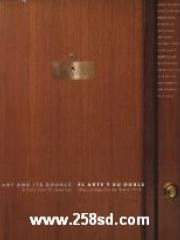

具体描述
Within a cultural framework as well-defined and<br >closely-knit as the New York art world, periods of tran<br >sition are known to occur with a remarkable lack of grace.<br >This doesn t mean that the indicators of change are<br >themselves difficult to perceive, nor that the changes<br >are so sweeping as to destroy all semblance of a me-<br >diating order. What tends to happen is that the watch<br >dogs of the outgoing style become complacent before<br >the shift, and vindictive afterwards. Those who usher in<br >the new modes wax with piety at first, then quickly be<br >come tyrannical. This phase is then proceeded by a long<br >er chapter involving the consolidation of business in-<br >terests, and the identification of shared aesthetic terrain<br >between the two former adversaries. Once the strug<br >gle has subsided, the intervening years before the next<br >transition are enlivened by the shared memories of a<br >well executed revolution.<br >As of this writing, the cluster of styles known variously<br >as neo-conceptualism, post modernism, neo-geo, com-<br >modity sculpture, the new abstraction, simulation, and<br >"It , has taken more or less furl control of the New York<br >art media, its collective imagination, and its market-<br >place.tl) It is useless to resist it, and yet it is probably hope-<br >less to compete within it, since the originators of this<br >style have long since been identified, and the sole re-<br >maining formality is to decide which of the younger gen<br >eration will attain to a more or less grudging perma<br >nence. Virtually all necessary lines of support have been<br >drawn between the history of modern art on one side,<br >and the European avant-garde on the other.~2) The gal-<br >leries are already being swept by countless second-wave<br >post-moderns, and this trend is expected to intensify<br >during the 1986-87 season. The two questions to be<br >answered, then, are, What does all of this mean? and<br > How did it happen so fast? <br > While the image of overnight transition may corre-<br >spond neatly to popular myths regarding the fickleness<br >of the American avant garde, the roots of the post-<br >modern aesthetic have actually been in evidence for<br >nearly a decade; even the identification of this range<br >of work as a movement is merely the official acknow/<br > edgement o f a change that has been predicted for past<br > few years. Certainly the recent growth of public inter-<br > est in an art engaged by popular culture occurs as an<br > explicit response to a number of factors that have be-<br > come increasingly visible from within and outside of the<br > art world.. The first, most apparent and yet/east signifi<br > cant of these factors was an unspoken agreement that<br > the neo-expressionist era was suffocating the possibil<br > ity of meaning in art, and, relatedly, that some of the<br > painters of that movement had begun to appear some-<br > what compromised by their relationship to the interna-<br > tional art market, ta) The second factor has been a sharp<br > escalation of that market, particularly as this relates to<br > financial speculation in young artists careers, t4) A third,<br > and perhaps the most pervasive factor in this transition<br > has been a marked shift in the way artists perceive them-<br > selves in relation to the social, political and economic<br > superstructure of American society - print and elec-<br >tronic media, so called "consumer" culture, and multi<br >national corporate capitalism.<br >Before attempting to explore any of these factors, the<br >most pressing point to be made about post modernism<br >is that it is, in Hal Foster s words, "not monolithic" -<br >there are some closely related historical premises repre-<br >sented by highly divergent media, and virtually no<br >consensus among the artists as to overriding formal<br >or thematic concerns. The artists involved practice<br >photography, abstract painting, constructed sculp-<br >ture, installations and public art, graphic design, collage,<br >drawing, and more or less traditional methods of oblect<br >making. Some are quite politically engaged, others<br >deeply involved with current philosophy, and stiff<br >others ground their work in predominantly intuitive pro-<br >cesses. Lastly, each artist is keenly aware o f their sour-<br >ces in prior forms of art, and of the role they are<br >attempting to create for themselves in the development<br >of art in the late 20th century.<br >A final point bears mentioning relative to the theme<br >of this exhibition and the post-modern movement as a<br >whole. In deciding upon the artists and works to include<br >in Art and its Double, there has been no curatorial<br >attempt to present an authoritative summary of post-<br >modernist activity in New York, nor of the entire range<br >of ideas it suggests. On the contrary, this exhibition rep-<br >resents a highly personalized selection of work made<br >since 1980, which happens to embrace several of post<br >modernism s themes. There are important styles and<br >artists in New York quite unrelated to this movement<br > - a truth borne out by the peripheral status of most<br > conceptually-based art during the firsi half of the 80 s.<br > In addition, there are a number of vital artists working<br > within this parameter whose work, for reasons of physi<br > cal /imitations in space, could not be included. The over<br > all goal in bringing this art together has been to explore<br > how some of t/~ese variant ideas have entered the<br > artistic mainstream, and to suggest how they may con-<br > tinue to shape its future. Hopefully, this exhibition will<br > succeed in suspending the entire issue of art move<br > ments for a moment, and bring attention instead to fif-<br > teen of the most compelling artists working in New York<br >today.<br >In 1914, Marcel Duchamp exhibited his first complete<br > ready-made - a standard metal bottle-rack, mass<br >produced and unadorned.ts) With this single gesture<br >he brought into locus one of the most profound and<br >lasting issues of 20th century aesthetics: the problem<br >of the uniqueness of the work of art. Twenty-two years<br >later, the philosopher Walter Benlamin would take up<br >this same problem in regard to the "aura of originality"<br >that surrounded the art obect in the era prior to that of<br >the popularization of methods of mechanized reproduc-<br >tion. ~8) Both Duchamp and Benjamin arrived at similar<br >conclusions through widely divergent approaches - thG<br >modern artist could not afford to ignore the implications<br >of technological advances which were being intro-<br >duced at a startling rate: photography, electricity, radio,<br >film, the automobile, aviation and telephones were gra-<br >
作者简介
目录信息
读后感
评分
评分
评分
评分
用户评价
这本书的叙事节奏非常跳跃,仿佛是夏日午后,意识流穿梭于不同街区的场景之间,让人在不经意间就完成了对某个主题的深入探索。我发现作者特别擅长使用强烈的感官细节来锚定情感。比如,他描写一家老式熟食店(deli)里,蒜味、烟熏肉味和廉价清洁剂混合在一起的味道,那种强烈的气味冲击,瞬间就将我拉回到了我记忆中那些凌晨三点的街角。这种对“嗅觉记忆”的运用,远比单纯的视觉描述更具穿透力。在讨论艺术机构的商业化时,作者没有采取那种高高在上的批评姿态,而是用一种近乎自嘲的幽默感,描绘了艺术家如何在市场洪流中努力保持“本真”的挣扎。这种接地气的处理方式,让原本可能晦涩的理论变得生动可感。我特别喜欢他对“噪音”和“沉默”之间界限的探讨。在纽约这样一个永远喧嚣的城市里,真正的沉默似乎成了一种稀有且昂贵的艺术品。作者巧妙地将这种城市噪音视为一种持续的“背景音乐”,而真正的艺术创作,往往发生在那些稍纵即逝的“静默间隙”之中。整本书读下来,感觉像是经历了一场精心编排的“声音景观漫步”,既令人疲惫,又充满了启迪。
评分这本书的视角非常独特,它避开了传统上对“波西米亚精神”的浪漫化叙事,转而聚焦于那些在城市边缘挣扎的、不被主流媒体关注的实践者。作者对“地下文化”的挖掘,不是为了猎奇,而是为了寻找那些在主流系统之外运作的、更具韧性的创造力。我印象最深的是他花了大量篇幅描述布鲁克林威廉斯堡一家已经倒闭的独立录音棚,那里汇聚的音乐人,他们创作的音乐如何在不被电台播放的情况下,通过小范围的磁带交换和口碑传播而拥有持久的影响力。这是一种关于“价值”的逆向工程。作者在暗示:真正的“艺术价值”可能恰恰存在于那些计算器无法触及的领域。他的行文充满了对效率和速度的反思,尤其是在当前社交媒体快速迭代的背景下,他笔下的那些慢工出细活的艺术形式,显得格外珍贵和具有抵抗性。阅读这本书的过程,就像是进行了一次对信息过载的排毒疗程,它迫使你放慢速度,去关注那些需要时间才能沉淀下来的东西——比如材料的质感、光线的衰变,以及人与人之间那种需要耐心的交流。
评分这本书的标题确实引人入胜,让人立刻联想到艺术作品与其映照、模仿或对立的复杂关系。我读完后,感觉它像是一次深入曼哈atten 街头巷尾的漫步,但焦点并非那些光鲜亮丽的画廊,而是那些在不经意间捕捉到城市脉搏的瞬间。作者对“双重性”的探讨,与其说是哲学思辨,不如说是一种对城市景观进行细致入微的“解码”。例如,他对布鲁克林大桥下那些被遗忘的工业遗迹的描绘,充满了诗意和批判。他似乎在问:当一个建筑不再服务于其实用功能时,它是否就成为了某种纪念碑式的“双重”存在?这种观察角度,使得即便是最日常的场景,比如地铁车厢内乘客的侧影,都被赋予了一种超验的意义。我尤其欣赏作者在描述中那种不加修饰的真实感,那种混合着咖啡的苦涩和清晨阳光的刺眼,非常到位地捕捉了纽约那种永不停歇、自我矛盾的生命力。这不是一本关于艺术史的教科书,而更像是一本献给城市观察家的私密日记,充满了对“在场”与“缺席”之间张力的深刻体悟。阅读过程中,我常常需要停下来,回味那些关于光线如何切割空间,以及声音如何定义边缘的段落,它们构建了一种独特的、既疏离又亲密的阅读体验。
评分这位作者的写作技巧达到了一个令人赞叹的平衡点:他既能进行高度理论化的分析,又能在瞬间跳跃到极其个人化的叙事中,而两者之间没有丝毫的生硬过渡。在探讨艺术与政治边界的章节里,他引用了几段非常简短的访谈录音的文字转录,这些转录语焉不详,充满了口头语和未完成的句子,但正是这些“残缺”,揭示了权力结构下个体表达的局限性与力量。他成功地将“双重性”的概念从艺术范畴扩展到了社会和个人身份层面:我们如何在公共身份和内在自我之间进行持续的、无意识的表演?这本书的结构组织非常巧妙,像是一部复杂的交响乐,不同的主题(空间、时间、商品化、身份)在不同的乐章中交织出现,最后汇集成一个统一而震撼的印象。我不会说这是一本“轻松”的书,它要求读者投入极大的注意力和同理心,但其回报是巨大的。它提供了一种新的滤镜,让读者能够以一种既批判又充满敬畏的眼光,重新审视自己生活着的这座庞大而迷人的都市景观。
评分从文学手法上来看,这本书更像是一系列结构精巧的短篇散文集合,而不是一部连贯的论著。每个章节都像是独立的作品,但又隐隐地环绕着一个核心的焦虑:在这个高度图像化和符号化的时代,如何重新定义“观看”的行为本身?作者对“复制品”的痴迷非常突出。他不是简单地讨论安迪·沃霍尔,而是深入到第五大道上那些奢侈品店的橱窗陈列,分析它们是如何通过精确的重复和微小的差异来制造欲望的。他将这些商业展示空间视为一种“伪艺术品工厂”,在这里,真实性被彻底货币化了。这种观察视角,让我重新审视了我每天通勤路上那些看似平庸的景象——它们难道不也是精心设计的“双重”陷阱吗?作者的语言风格带有明显的知识分子式的精确性,但又被一种近乎街头诗人的直觉所平衡。他不会过度解释自己的意图,而是将证据——那些照片般的描述、那些看似随意的对话片段——直接抛给你,让你自己去构建意义。这种留白的处理,使得阅读过程充满了主动性和探索欲,仿佛你手里拿着一份古老的地图,正在努力辨认那些已经被时间模糊的标记。
评分 评分 评分 评分 评分相关图书










本站所有内容均为互联网搜索引擎提供的公开搜索信息,本站不存储任何数据与内容,任何内容与数据均与本站无关,如有需要请联系相关搜索引擎包括但不限于百度,google,bing,sogou 等
© 2026 book.quotespace.org All Rights Reserved. 小美书屋 版权所有