
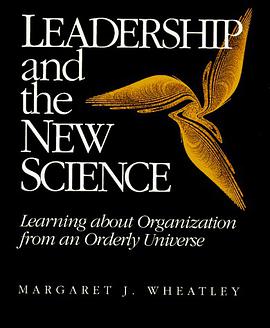

具体描述
From Library Journal How do you hold 100 tons of water in the air with no visible means of support? Wheatley answers this question (you build a cloud, of course) and many others, ranging from cutting-edge science to the new paradigm of 21st-century organizations, that are just as enigmatic. Using exciting breakthroughs in biology, chemistry, and especially quantum physics, Wheatley paints a brand-new picture of business management. Paradoxes abound in this far-reaching work that may confound many pragmatists. This new relationship between business and science is nothing less than an entirely new set of lenses through which to view our organizations, offering not a Newtonian but a quantum perspective. Hold onto the top of your head when you read this book. For larger public and academic libraries.- Dale Farris, Groves, Tex.Copyright 1992 Reed Business Information, Inc. --This text refers to an out of print or unavailable edition of this title. Industry Week magazine survey by Tom Brown "The Best Management Book of the Year" --This text refers to an out of print or unavailable edition of this title. See all Editorial Reviews
作者简介
Margaret Wheatley writes, teaches and speaks about how we can organize and accomplish work in chaotic times, sustain our relationships, and willingly step forward to serve. Since 1973, Meg has worked with an unusually broad variety of organizations: Her clients and audiences range from the head of the U.S. Army to twelve-year-old Girl Scouts, from CEOs and government ministers to small town ministers, from large universities to rural aboriginal villages. All of these organizations and people wrestle with a common dilemma—how to maintain their integrity, focus and effectiveness as they cope with the relentless upheavals and rapid shifts of this troubling time. But there is another similarity: a common human desire to find ways to live together more harmoniously, more humanely, so that more people may benefit.
She has written several best-selling books. Her new book, published October 2012 is
So Far From Home: Lost and Found in Our Brave New World.
Her other books are:
• Walk Out Walk On: A Learning Journey Into Communities Daring to Live the Future Now, co-authored with Deborah Frieze.
• Perseverance
• Leadership and the New Science (18 languages and third edition)
• Turning to One Another: Simple Conversations to Restore Hope to the Future (seven languages and second edition)
• Finding Our Way: Leadership for an Uncertain Time.
• A Simpler Way (co-author Myron Kellner-Rogers)
Meg earned her doctorate in Organizational Behavior from Harvard University, and a masters in Media Ecology from New York University. She also studied at University College London, U.K. She has been a global citizen since her youth, serving in the Peace Corps in Korea in the 1960s, and has taught, consulted or served in an advisory capacity on all continents (except Antarctica). She began her career as a public school teacher, and also has been a professor in two graduate management programs (Brigham Young University and Cambridge College Massachusetts).
She is co-founder and President emerita of The Berkana Institute, founded in 1991. Berkana has been a leader in experimenting with new organizational forms based on a coherent theory of living systems. We have worked in partnership with a rich diversity of people around the world who strengthen their communities by working with the wisdom and wealth already present in their people, traditions and environment
Meg has received several awards and honorary doctorates. In 2003, The American Society for Training and Development (ASTD) honored her for her contribution “to workplace learning and development” and dubbed her “a living legend.” In April 2005, she was elected to the Leonardo Da Vinci Society for the Study of Thinking for her contribution to the development of the field of systems thinking. In 2010, she was appointed by the White House and the Secretary of the Interior to serve on the National Advisory Board of the National Parks System; her primary responsibility is to support the growth of a 21st century culture of adaptation and innovation throughout the system.
She returns from her frequent global travels to her home in the mountains of Utah and the true peace of wilderness. She has raised a large family now dispersed throughout the U.S. and is a very happy mother and grandmother.
目录信息
1. Discovering an Orderly World
2. Newtonian Organizations in a Quantum Age
3. Space Is Not Empty: Invisible Fields that Shape Behavior
4. The Participative Nature of the Universe
5. Change, Stability, and Renewal: The Paradoxes of Self-Organizing Systems
6. The Creative Energy of the Universe - Information
7. Chaos and the Strange Attractor of Meaning
8. The New Scientific Management
Epilogue: Being Comfortable with Uncertainty.
· · · · · · (收起)
读后感
最近几年,企业家和高管喜欢用自然科学的理论来解释何为“管理”,比如熵增,本来是物理化学学科的专有词,被人们用来表达企业壮大后,组织秩序呈现出一种日渐无需的状态。 在《领导力与新科学》一书中,作者阐述了三个理论,混沌理论、量子理论和自组织理论。听起来前两个都...
评分最近几年,企业家和高管喜欢用自然科学的理论来解释何为“管理”,比如熵增,本来是物理化学学科的专有词,被人们用来表达企业壮大后,组织秩序呈现出一种日渐无需的状态。 在《领导力与新科学》一书中,作者阐述了三个理论,混沌理论、量子理论和自组织理论。听起来前两个都...
评分黄卫伟 在管理哲学中不断涌现出诸如“混沌”“耗散结构”“场”“热力学第二定律”“熵”等大量的新科学术语。 这一现象的产生至少反映了一个困境,即现行的组织和管理理论难以解释和解决企业管理面临的新问题、新挑战。然而,这些新科学术语在为我们的组织和管理提供理论解释...
评分黄卫伟 在管理哲学中不断涌现出诸如“混沌”“耗散结构”“场”“热力学第二定律”“熵”等大量的新科学术语。 这一现象的产生至少反映了一个困境,即现行的组织和管理理论难以解释和解决企业管理面临的新问题、新挑战。然而,这些新科学术语在为我们的组织和管理提供理论解释...
评分感觉就是强调认知关系,环境,权力扁平化等等观点,可能92年确实挺新,但是17年现在这些已经接近常识了,所以,以我目前的积累,个人觉得3星。 虽然很好的入门蜻蜓点水介绍了各个新学科的知识。但是,管理应用的可操作性不强,比如说到政府对救灾不利,个人组织很有效,但是08...
用户评价
说实话,我原本对这类宣称要“革命性”管理思想的书籍持保留态度,总觉得很多都是换汤不换药的陈词滥调。然而,这本书成功地避开了那些空洞的口号,转而深入挖掘了“关系”和“连接”的本质力量。它探讨了信息在网络中的流动速度、结构拓扑如何决定组织的学习能力。书中有一章专门分析了“弱连接”的价值,这让我大开眼界。在传统的组织结构中,我们倾向于加强“强连接”——那些日常紧密合作的部门或团队,认为这样效率最高。但这本书清晰地指出,正是那些稀疏的、跨界的“弱连接”,才构成了组织获取外部新信息和创新思想的桥梁。作者通过数据分析展示了,那些连接度适中、拓扑结构更接近“小世界”网络的组织,其创新产出率远高于那些高度集中或完全分散的系统。这种对结构美学的追求,让我对“组织架构设计”这件事产生了全新的敬畏感。它不再是画图表的工作,而是在精心编排一场复杂的互动舞蹈。我开始把工作中的冲突和低效,看作是网络结构不佳的表现,而不是员工能力不足的结果,这种归因上的转变,极大地缓解了团队内部的紧张气氛。
评分这本书的叙事方式非常引人入胜,它巧妙地穿梭于前沿物理学、生物学和管理学的边界,仿佛在绘制一幅宏大的跨学科地图。我尤其欣赏作者在论证过程中所展现出的那种严谨而又充满诗意的平衡感。它不是那种枯燥的学术专著,而是充满了对生命系统运作机制的深刻洞察。举例来说,书中关于“自组织”的章节,不仅仅是理论堆砌,而是通过一系列生动的比喻——比如蚁群觅食、鸟群迁徙——来阐释企业内部如何实现高效协作而无需明确的“总指挥”。让我印象特别深刻的是,作者反复强调“冗余”在复杂系统中的重要性,这与我们追求极致效率、消除一切“浪费”的企业文化形成了尖锐的对比。书中的观点是,看似多余的连接、未被完全利用的资源,恰恰是系统面对突发冲击时保持弹性和快速适应的关键。这迫使我反思,我们那些看似精简到极致的流程,是不是反而把组织推向了脆弱的边缘?这本书的语言风格就像是一位经验丰富的老教授,他既能用最清晰的逻辑为你剖析复杂的原理,又能用最接地气的语言将这些高深的理论植入你的日常管理实践之中。读完后,我甚至开始在思考,我们的人力资源配置是不是也应该引入更多的“生态多样性”。
评分这本书的独特之处在于,它没有止步于描述“是什么”,而是深入探讨了领导者在“变化中”应该扮演的角色。作者将领导者描绘成一个“调谐器”(Tuner),而不是一个“控制杆”(Controller)。这个比喻非常精妙。一个调谐器不会强行改变系统的方向,而是微调环境参数——比如规则的清晰度、激励机制的敏感度——以引导系统自然地向更优化的状态演化。这需要极高的克制力,承认我们对复杂系统的预测能力是有限的。我过去常常陷入“微观管理”的泥潭,试图控制每一个环节的产出,而这本书让我意识到,过度的干预只会扼杀系统的内在活力和自愈能力。书中提供的实践框架,比如如何设置“边界条件”而非“行动方案”,如何利用“最小干预最小化”的原则进行变革,都非常实用。我特别喜欢作者对“学习速度”的强调,认为在一个快速变化的环境中,组织谁的学习速度快,谁就能生存下来。这本书就像一剂清醒剂,让我从对“完美的计划”的执念中解脱出来,转而专注于构建一个能够持续适应和自我优化的有机体。
评分天哪,我最近读完了一本让我对组织结构和未来工作方式产生了彻底颠覆性认识的书,书名我得好好回忆一下……啊,对了,好像是关于领导力与某种新兴科学的结合。这本书最让我震撼的是它对“复杂适应系统”(CAS)理论在管理学中的应用。作者并没有停留在传统的金字塔模型上,而是将组织比作一个充满活力的生态系统,强调自下而上的涌现性(emergence)和去中心化的力量。我记得书中有一个案例,讲述了一个高度分散化的项目团队,如何通过简单的互动规则,自发地找到了比中央集权规划更优越的解决方案。这完全颠覆了我过去二十年里所信奉的“控制论”管理哲学。它不再谈论“如何更好地指挥”,而是着眼于“如何设计环境,让正确的行为自然发生”。书中对于“反馈回路”的精妙分析,让我开始重新审视我们日常会议中的每一个决策点。它提醒我们,一个微小的干扰信号,在复杂的网络中可能会被放大成重大的结构性变化,而我们往往只关注了线性的、可预测的结果。这种从静态结构到动态过程的视角转换,简直是为身处VUCA时代的管理者开了一扇天窗。读完之后,我感觉自己不再是一个试图“修复”机器的人,而是一个“培育”花园的园丁,那种心态上的转变是无价的。
评分我必须要提一下这本书的哲学深度,它超越了商业管理学的范畴,直抵人类认知和组织存在的基础。作者在结尾部分探讨了“心智模型”与组织结构之间的相互塑造关系。他认为,我们之所以难以摆脱僵化的层级结构,根本原因在于我们看待世界的基本心智模型仍然是线性的、机械论的。这本书通过引入系统思维,实际上是在邀请读者进行一次深层次的“认知升级”。它鼓励我们去拥抱不确定性,将“失败”重新定义为系统学习过程中不可或缺的“数据点”,而非需要惩罚的错误。这种从根本上重塑底层思维的工作,是这本书最具长远价值的地方。它不是教你一套新的工具箱,而是帮你改造了大脑中用于设计工具的蓝图。读完之后,我感觉自己对权力的运作、信息的价值以及人与人之间复杂依赖性的理解,都达到了一个新的维度。这本书的价值不在于它能立即解决你手头的季度目标,而在于它能保证你在未来十年内,都能以一种更具远见和韧性的方式来面对任何未知的挑战。它确实配得上“开创性”的评价,因为它改变了你看待一切组织现象的“镜头”。
评分 评分 评分 评分 评分相关图书


















本站所有内容均为互联网搜索引擎提供的公开搜索信息,本站不存储任何数据与内容,任何内容与数据均与本站无关,如有需要请联系相关搜索引擎包括但不限于百度,google,bing,sogou 等
© 2026 book.quotespace.org All Rights Reserved. 小美书屋 版权所有