
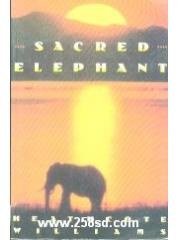

具体描述
On October 28, 1922, Howard Carter summoned his reis, the foreman of his<br >excavating crew, to his house just outside the Valley of the Kings and told him<br >that he wanted to resume work without delay.<br > Arehaeologizts worked only a short season in the Valley in those days.<br >By April the pitiless s~, beating on its sheer rock walls, turned it into a furnace<br >until late October, and the kha~in, the searing wind from the south, swirled its<br >~ndy floor into choking stoma.<br > Carter had even Iem time than that. The tourists would begin arriving by<br >mid-December to visit the burial ground of the pharaohs. Since his dig would block<br >the entr~ce to the tomb of Rameses VI, one of the Vafley s most popular<br >attractions, he knew he would have to be finished by then.<br > And this short ~ason might well be Carter s last in the Valley. He had just<br >returned from a meeting in England with the Earl of Camarvon, who had been<br >bearing the cost of his excavations for the past fifteen years and sharing in the<br >infrequent glory of their finds. Camarvon, disappointed by yea~ of failure, told Carter<br >that he had decided not to apply for the renewal of his government concession to<br >ex~vate in the Vnlley. Only Carter s pleading, and his offer to pay the cost him~lf if<br >nothing were found, had induced Camarvon to agree to one final ~ason.<br > So Carter knew that he had less than two months to complete, in sueee~<br >or failme, the ~rch that had obse~ed him for ten years. The prize he sought was<br >the tomb of Tutankhamun, who had reigned more than 3,200 years before.<br > The Valley of the Kings, the royal necropolis, had been part of ancient Thebes,<br >the capital from which the Egyptian empire was ruled at the zenith of its power.<br >The Valley lay just a few miles away from the west bank of the Nile, whose unfailing<br >waters nurtured Egyptian civilization, opposite Karnak and Luxor and more than<br >fo~ hundred miles south of preaent-day Cairo.<br > With the end of the seemingly perpetual power of the pbaraohs, Thebes<br >had b~n po~e~d by the Persians, by the Gr~ks of Alexander the Great, by the<br >Romans, by tile Arabs, by the Ottoman Empire. Egypt had been invaded by file<br >French of Napoleon, who brought with him a group of ~holars: later Egypt became a<br >protectorate of Great Britain, although with its own ruling house.<br > For centuries the Valley and its surrounding desert, wild and inacce~ible,<br >had been the haunt of bandits. Only in the nineteenth century, as a measure of order<br >was imposed, did archaeologists dare to begin excavating there.<br > In all, about thizty-three royal tombs had been found in the bedrock of the<br >Valley or delved into its furrowed rock walls, but every one had been pillaged<br >long before by profe~innal thieves, some of whom struck witlfin a few years of the<br >royal b~ials. What bad been fo~d by Einopeans, wbih it included many beautiful<br >objects, was scarcely more th~ their I~vings. At that, few important discoveri~<br >had been made in the Valley since the start oi tile twentieth cent~y, and most experts<br >believed that the b~ial gro~d had yielded all its secrets.<br > Carter, who had spent more than thirty years in Egypt, di~greed. Three<br >
作者简介
目录信息
读后感
评分
评分
评分
评分
用户评价
这本书的语言风格给我留下了极其深刻的印象,它有一种古典的韵味,但同时又充满了现代的锐利。有些句子读起来,简直像是在品尝一杯陈年的威士忌,醇厚而复杂,回味悠长。作者显然对文字有着极高的掌控力,他能用最简洁的词汇,勾勒出最宏大的场景,也能用最繁复的修饰,精准地捕捉到人物内心转瞬即逝的情绪波动。我尤其喜欢作者在描写人与人之间复杂关系时的那种疏离感和疏离感中的连接感。那种“你懂我,但我们永远无法完全坦诚”的张力,被他拿捏得恰到好处。而且,这本书的翻译功力也值得称赞,它没有让原作的精髓流失,反而增添了一种独特的异域美感。我尝试去模仿书中的某些句子结构,结果发现,那是一种需要长期沉浸才能掌握的语感。这不是一本可以快速翻阅的书,它要求你放慢速度,去品味每一个词语被放置的位置,去聆听文字之间产生的共振。每次合上书页,总感觉自己的词汇量和对世界观察的角度,都被微妙地拓宽了一点点。
评分我对这本书中对次要角色的塑造感到由衷的赞叹。很多小说里,配角往往只是情节的工具人,但在这里,即便是只出现寥寥数页的人物,也拥有着令人难忘的生命力。他们的动机、他们的世界观,都被勾勒得清晰而立体,仿佛他们也有着属于自己的、未在书中展开的完整故事线。这使得整个世界的构建显得异常丰满和真实,你有一种强烈的错觉,认为书中描绘的不仅仅是一个虚构的故事,而是真实世界的一个侧面切片。例如,那个总是在角落里沉默的老人,他一个眼神、一个细微的动作,所蕴含的信息量,甚至超过了某些主要角色的长篇独白。这种对“群像”的精细打磨,极大地提升了阅读的沉浸感和真实感。它证明了作者对“全景式”叙事的驾驭能力,即便是最不起眼的角落,也充满了作者投注的精力和用心。这让我对作者的观察力深感敬佩,他似乎能洞察到任何个体在巨大社会背景下的独特存在意义。
评分这本书的叙事节奏简直让人欲罢不能,仿佛作者在用一种近乎催眠的笔调,将你一步步拖入一个全然不同的世界。我记得最清楚的是开篇,那种对环境细节的刻画,简直达到了偏执的程度。每一个气味、每一束光线的角度,都被描绘得淋漓尽致,让人感觉自己就站在那个燥热的、尘土飞扬的广场中央。情节的推进并非一蹴而就,而是像潮水一样,缓慢而坚定地渗透进来,让你在不知不觉中,就已经完全沉浸其中,无法自拔。我特别欣赏作者对于人物内心冲突的处理,那些细微的犹豫、突然爆发的情绪,都处理得极其自然,没有丝毫矫揉造作之感。有时候,我会停下来,反复阅读某一段对话,仅仅是为了体会那种潜台词的丰富性。这本书的魅力就在于此,它不急于给你答案,而是将你置于一个充满张力的情境中,让你自己去感受、去推测。读到一半时,我甚至开始怀疑自己对某些角色的基本判断,这种智力上的挑战,对于一个资深读者来说,是极其难得的享受。这种层层剥开的阅读体验,比直接灌输给你的故事要深刻得多。
评分从结构设计的角度来看,这本书简直是一件精密的机械艺术品。故事线索看似交织复杂,但当你真正理解了作者的布局后,会发现每一个看似偶然的事件,都早已被埋下了伏笔。这种伏笔的铺设,高明之处在于,它不会让人感到刻意,而是在“啊哈!”的瞬间,让你恍然大悟,并立刻想倒回去重读前面的章节,去寻找那些被自己错过的蛛丝马迹。我特别佩服作者对时间轴的处理。他可以在宏大的历史背景下叙事,但核心的情感冲突却始终聚焦于个体最私密的一刻。这种时空尺度的自由切换,展现了作者深厚的功力。而且,书中引入的那些非线性叙事片段,非但没有打乱阅读的流畅性,反而像是一种节奏的转换,让读者的大脑得以喘息,并在新的视角下重新审视已经发生的一切。读完最后一页,我花了好久才从那种被精心编织的结构中抽离出来,感觉自己刚刚完成了一次高强度的智力攀登,收获的不仅仅是故事本身,更是对叙事艺术的全新理解。
评分这本书的意境,很大程度上是建立在一种挥之不去的“失落感”之上的。它讲述的也许是一个关于寻找的故事,但字里行间透露出的,却是关于“失去”的深刻洞察。它没有采用那种直白的情感宣泄,而是通过环境的衰败、人物的疏离、以及那些未完成的承诺,来构建一种弥漫性的忧郁氛围。这种氛围感是如此强大,以至于它超越了具体的情节,成为了一种与读者情感相连的媒介。我发现自己在阅读过程中,不自觉地开始对照现实生活中的某些遗憾,书中的角色所经历的挣扎,似乎也折射出了我们自身在面对选择时的无力和挣扎。它探讨的主题是宏大的——比如记忆的不可靠性、身份的流动性——但处理方式却极其细腻和个人化。作者成功地将哲学思辨融入日常生活的琐碎之中,使得那些深刻的思考,变得触手可及,而不是高高在上。读完之后,内心久久不能平静,那是一种被温柔地提醒了人生的本质缺憾后的宁静。
评分 评分 评分 评分 评分相关图书













本站所有内容均为互联网搜索引擎提供的公开搜索信息,本站不存储任何数据与内容,任何内容与数据均与本站无关,如有需要请联系相关搜索引擎包括但不限于百度,google,bing,sogou 等
© 2026 book.quotespace.org All Rights Reserved. 小美书屋 版权所有