

具体描述
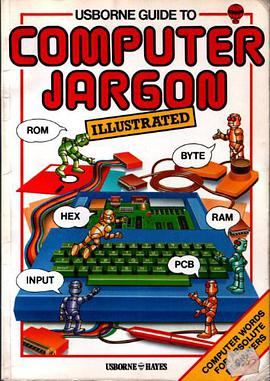
For most people the words used to describe<br >computers are a whole new language. You<br >need a dictionary to read a computer<br >magazine or book, or even an<br >advertisement for a new computer. This<br >book is a guide to the words a beginner<br >needs to know in order to read or talk about<br >computers. For each word there is a written<br >definition and many of the words are<br >illustrated as well. The words have been<br >specially chosen for people using a home<br >computer, or microcomputer, and there are<br >also a few more advanced words to start<br >you off on more specialized reading.<br >All specialized subjects have their own<br >jargon so that experts can talk and write<br >about them. For instance, mathematicians<br >have maths words, musicians need musical<br >terms and engineers have their own<br >technical terms. Computers are such a new<br >technological development that lots of new<br >words have had to be invented to describe<br >things which never existed before. The<br >words have come from lots of different<br >sources. There are words from our normal<br >language which have been given new twists<br >of meaning, technical terms, manufacturer s<br >trade names, abbreviations made into<br >words and slang words. There s even a<br >jargon word for all these words-<br >buzzwords!<br > New words are being invented all the<br >time, so no book of computer jargon can be<br >entirely up to date. This book, though, gives<br >you all the words you need to gain a basic<br >understanding of computers and you will<br >soon find that learning about them is not as<br >difficult as the jargon makes it seem.<br >Howto use this book<br >The words in this book are arranged thematically, that is, by subject. For example, all<br >the words to do with programs are listed together, and so are the graphics words,<br >memory words and words to describe the parts inside a computer. The main subjects<br >are given in the contents list on the opposite page.<br > To find the explanation for a word you do not understand, look it up inthe<br >Wordfinder at the back of the book. The main explanation of the word is given on the<br >page number printed in bold type, like this. Other page numbers are places where<br >you can find out more about the word. In the text, words which you may not<br >understand are printed in bold type to show that they are explained in the book and<br >you can look them up in the Wordfinder.<br >
作者简介
目录信息
读后感
评分
评分
评分
评分
用户评价
坦白说,我最欣赏的是这本书所蕴含的开放和包容的精神。在信息爆炸的今天,技术术语的更新速度快得惊人,新的框架、新的缩写层出不穷。这本书并没有试图去囊括所有转瞬即逝的热词,而是专注于那些构成计算机和电子学领域基石的核心概念。它教给你的是“理解术语的底层逻辑和思维方式”,而不是简单地记忆一堆标签。当你掌握了这种逻辑,面对那些全新的、书里没有出现过的术语时,你也能凭借着扎实的基础,迅速地通过上下文和逻辑推导出它的含义。这是一种授人以渔的教育方式。这本书仿佛在告诉我:技术世界的大门已经为你打开,你需要的工具我已经交给你了,剩下的探索就看你自己了。这种鼓励读者独立思考和持续学习的态度,比任何快速记忆技巧都来得更有价值。
评分这本书简直是为我这种对电子产品一窍不通但又想跟上时代的人量身定做的!我一直觉得那些技术人员聊天的内容就像是外星语,什么“API”、“云计算”、“物联网”的,听得我一头雾水。拿到这本《Usborne Guide to Computer Jargon》,我简直是如获至宝。首先,它的排版和插图就非常友好,不像那些厚重的教科书,看着就让人望而却步。它把那些拗口的术语都拆解开来,用非常生活化的例子来解释,比如解释“防火墙”的时候,它会类比成小区保安,这下我瞬间就明白了,原来技术名词没有我想象中那么高深莫测。我特别喜欢它那种循序渐进的讲解方式,不会一下子把所有概念一股脑地砸给你,而是让你在轻松愉快的阅读中,慢慢构建起自己的技术词汇库。现在我跟同事讨论工作的时候,偶尔也能插上几句“行话”,虽然深度还不够,但至少不会冷场了,感觉自己的“科技感”瞬间提升了一个档次。这本书的价值在于,它真正做到了“去神秘化”,让技术不再是少数人的专属语言。
评分对于一个常年混迹于设计圈子,但对后端技术只停留在表面了解的从业者来说,这本书无异于一座知识的金矿。我过去在和程序员沟通项目需求时,经常因为无法准确理解他们提到的“延迟”、“带宽”或“异步处理”的真正含义,导致需求理解出现偏差,返工是家常便饭。这本书的贡献在于,它不仅定义了这些术语,更重要的是,它阐述了这些技术概念在实际工作流程中是如何相互作用、如何影响最终产品的。例如,在讲解“用户体验”相关的术语时,它会反向引用那些基础的网络术语,让我明白一个微小的网络延迟是如何在用户界面上被感知为“卡顿”的。这种跨领域的知识融会贯通,极大地提升了我的跨部门沟通效率。我不再是简单地转达需求,而是真正能站在对方的技术角度去思考解决方案的可行性,这对于我的职业发展来说,是无价的助力。
评分这本书的编辑团队绝对是下了一番大功夫的,他们在处理那些容易混淆的概念时展现出了令人惊叹的细致入微。比如“云存储”和“本地存储”,很多人会把两者混为一谈,但这本书用一个巧妙的图表对比了它们的优缺点、安全性和访问速度,清晰地指出了它们适用的场景。我过去经常因为这些技术细节上的模糊而感到困扰,觉得自己好像永远也无法真正掌握这些知识。但这本书的讲解方法,不是简单地给出A=B的等式,而是用清晰的对比、反向的论证,甚至加入一些常见误区来强化正确的理解。读起来完全没有那种被动接受知识的枯燥感,反而像是在和一个经验极其丰富的朋友聊天,他总能预判到你可能会在哪里卡住,并提前准备好最完美的“拐杖”。这种以读者为中心的编写思路,是很多技术书籍所缺乏的,它体现了一种真正的“服务意识”。
评分我必须说,这本书的叙事逻辑简直是教科书级别的流畅与巧妙。它不像一本单纯的术语词典,更像是一场精心编排的导览之旅,带着你从计算机最基础的“比特”和“字节”开始,逐步深入到复杂的网络架构和新兴的软件开发概念。最让我印象深刻的是它对历史背景的穿插介绍。比如在解释“编译器”这个概念时,作者没有直接给出定义,而是先提到了早期程序员需要手动进行大量的汇编工作,那种辛酸和不便,一下子就凸显了编译器诞生的重要性。这种讲故事的方式,让冰冷的术语突然有了温度和人情味,我记住了那些定义,也理解了它们诞生的“为什么”。而且,这本书的覆盖面极其广,从早期的操作系统到现代的敏捷开发,从硬件的底层逻辑到用户体验设计的哲学,几乎都有所涉猎。它真的做到了“博而不杂”,所有的内容都紧密围绕着“解释术语”这一核心目标,不跑偏,不灌水,读完后有一种知识体系被重新梳理和强化的感觉,非常踏实。
评分 评分 评分 评分 评分相关图书










本站所有内容均为互联网搜索引擎提供的公开搜索信息,本站不存储任何数据与内容,任何内容与数据均与本站无关,如有需要请联系相关搜索引擎包括但不限于百度,google,bing,sogou 等
© 2026 book.quotespace.org All Rights Reserved. 小美书屋 版权所有