

具体描述
Product Description
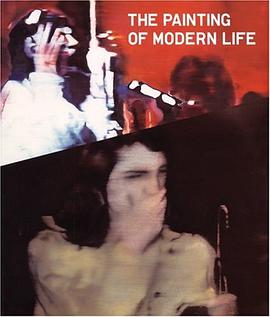
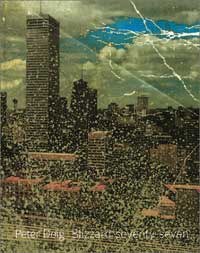
Andy Warhol's silkscreens, Gerhard Richter's blurred images, Vija Celmins' hyperrealism: some of the most influential developments in the history of contemporary art hinge on the use of photographs as source material. Beginning in the early 60s, with seminal works by the aforementioned artists, The Painting of Modern Life charts the 45-year evolution of the translation of photographic images to paint--revealing an extraordinary breadth of stylistic and thematic diversity. This volume features 22 painters whose sources range from snapshots to commercial media, among them Richard Artschwager, Robert Bechtle, Celmins, Peter Doig, Marlene Dumas, Thomas Eggerer, Judith Eisler, Franz Gertsch, Richard Hamilton, Eberhard Havekost, David Hockney, Johannes Kahrs, Johanna Kandl, Martin Kippenberger, Liu Xiaodong, Malcolm Morley, Elizabeth Peyton, Michelangelo Pistoletto, Richter, Wilhelm Sasnal, Luc Tuymans and Warhol. Essays by curator Carolyn Christov-Bakargiev, writer and critic Martin Herbert, Hayward Director Ralph Rugoff and poet and critic, Barry Schwabsky lend insight to issues of translation, context and content.
About the Author
Vija Celmins was born in Riga, Latvia, in 1938, and immigrated to North America with her family when she was 10 years old. Since the 60s she has received international attention for her renditions of natural scenesooften copied from photographs that lack a point of reference, horizon, or discernible depth of field. A master of several mediums, including oil painting, charcoal, and multiple printmaking processes, Celmins matches a tangible sense of space with sensuous detail in each work. She received a John D. and Catherine T. MacArthur Fellowship in 1997, and retrospectives of her work have traveled to the Whitney Museum of American Art, the Walker Art Center, the Museum of Contemporary Art, Los Angeles, and the Institute of Contemporary Art, London. In 2002, a retrospective of her prints was held at The Metropolitan Museum of Art. Celmins currently resides in New York and California.
Richard Artschwager was born in 1924 in Washington, D.C., and grew up in New Mexico. He began his studies at Cornell University in 1941 but was called into service for World War II. In 1950 he moved to New York, where he began to design and build furniture, a commercial venture which held great influence over his early sculpture. Artschwager's work is found in the collections of such institutions as The Museum of Modern Art, New York, The Metropolitan Museum of Art, New York and the Whitney Museum of American Art, New York.
Franz Gertsch was born in Morigen, Switzerland in 1930, and studied in Bern. He made his first large-scale photorealist works in the late 1960s, and showed them to rapt attention in the early 1970s. His large-scale woodcut work, which he began in the 1980s, is unique--he works in formats that push the limits of paper production, and has opened new dimensions for a traditional medium. Gertschis work is represented in museums around the world.
Gerhard Richter was born in 1932 in Dresden, Germany. Since the early 1960s he has emerged as one of the essential painters of the postwar period, pioneering photorealism with paintings made from found photographs (amateur snapshots, advertisements and book and magazine illustrations) and then from his own photographs. His work has also profoundly engaged with and influenced such genres as Pop and abstract art. A retrospective of Richter's work was shown in 2001 at The Museum of Modern Art, New York. The exhibition was one of the largest ever organized there for a living artist, and traveled to The Art Institute of Chicago, the San Francisco Museum of Modern Art and the Hirshhorn Museum in Washington, D.C.
Andy Warhol was born in Pittsburgh, Pennsylvania in 1928. In 1949, after attending the School of Fine Arts at what is now Carnegie Mellon University, he moved to New York City where he embarked on a successful career as a commercial illustrator. It was in the 1960s that he began his iconic Campbell's Soup paintings, and honed his trademark deadpan persona. Throughout the 1960s and 70s, Warhol created silkscreen paintings, sculptures and films, promoted the fledgling rock band, The Velvet Underground, and produced Interview magazine. After surviving a gunshot wound inflicted by the infamous Valerie Solanis in 1968, Warhol died during a routine gallbladder operation in 1987.
Barry Schwabsky is an American art critic and poet living in London. He is the author of The Widening Circle: Consequences of Modernism in Contemporary Art and Opera: Poems 1981-2002, as well as contributions to Vitamin P: New Perspectives in Painting and to monographs and exhibition catalogues on such artists as Alighiero e Boetti, Jessica Stockholder, and Gillian Wearing. Schwabsky also co-edits the international reviews section of Artforum and has taught at New York University, Yale University, and Goldsmiths College.
作者简介
目录信息
读后感
评分
评分
评分
评分
用户评价
这本书的装帧设计本身就透露着一股不寻常的品味,那种略带磨砂质感的封面,配上烫金的字体,拿在手里沉甸甸的,让人立刻联想到那些被时间温柔抚摸过的老物件。我特地找了一个光线柔和的下午,蜷缩在老式的扶手椅里,伴随着窗外偶尔传来的悠扬爵士乐,才敢翻开它。内页的纸张选择也极其考究,散发着淡淡的油墨香,仿佛能穿透纸面,触碰到作者埋藏在字里行间的深沉思绪。我记得我花了整整一个小时,只是在欣赏那些看似随意的排版和字体选择,它们之间的留白处理得恰到好处,既不显得空旷,也不至于拥挤,给予读者极大的视觉呼吸空间。这本实体书的质感,已经超越了一本普通的阅读材料,更像是一件精心打磨的艺术品,收藏的价值远大于阅读本身带来的即时满足感。初次接触,我被这种近乎偏执的细节控所折服,它暗示着内容必然也是经过反复锤炼,绝非轻率之作。那种对“物”的尊重,预示着接下来的阅读体验将是一场对精致与深邃的探索之旅,让人忍不住屏住呼吸,生怕一个不慎就破坏了这精心营造的氛围。
评分这本书的哲学思辨色彩是如此浓厚,以至于我常常需要放下书本,走到窗边,望着远处的车水马龙,试图将书中的概念与现实生活进行对接。作者对“时间”和“记忆”的探讨尤为深刻,他似乎在质疑我们所依赖的线性时间观的可靠性。我尤其欣赏他引入的那些看似与主线无关的碎片化信息——可能是某个历史脚注,或是一段古老的谚语——这些片段在后续的章节中会以一种令人拍案叫绝的方式重新汇集,形成一个巨大的、精密的网状结构。这种写作手法要求读者具备极强的记忆力和联想能力,稍微走神片刻,可能就会错过一个至关重要的逻辑节点。这不像是在阅读一个故事,更像是在参与一场智力上的高强度攀登,每向上一步,看到的风景就越发开阔,但脚下的风险也随之增加。它不是为了取悦读者而存在的,而是为了挑战和提升读者的思维阈值。
评分我对某些文学作品的接受度,往往取决于作者是否能用一种近乎舞蹈般的节奏来驾驭语言,而这本书在这方面展现了惊人的天赋。它的行文并非那种直白的叙事推进,更像是一场精心编排的独白,时而如潺潺溪流般细腻婉转,轻抚过心底最柔软的角落;时而又如同暴风雨来临前夕的寂静,所有笔触都凝聚在爆发的前一刻,空气仿佛凝固。我发现自己常常需要停下来,不是因为不理解,而是因为那些句子结构本身就具有一种音乐性,需要用“听”的方式去品味它们内在的韵律。有几个段落,我甚至忍不住大声朗读了出来,想要感受那些拗口但又极富张力的词汇组合在口腔中碰撞出的火花。这种阅读体验,彻底颠覆了我以往对文字的理解,它不再是信息的载体,而成为了情绪本身。它迫使我的思维以一种非线性的方式去运转,去捕捉那些隐藏在字面意义之下的弦外之音和未说出口的潜台词,过程既是煎熬,也是一种极大的解放。
评分读完第一部分后,我产生了一种强烈的错位感,仿佛自己被瞬间抛入了一个全然陌生的时空坐标系。作者构建的世界观是如此的庞大而又细密,每一个社会阶层的描绘,每一处场景的转换,都带着一种令人不安的真实感和疏离感并存的特质。我特别留意了其中关于“边缘群体”的刻画,那不是居高临下的俯视,而是一种近乎共生的理解。人物的动机复杂得令人发指,他们既有崇高的理想,又充斥着最卑劣的算计,这种人性的双重性被拿到了显微镜下进行剖析,毫不留情。我记得有一幕场景,涉及到一场发生在昏暗巷口的对峙,作者仅仅用了三行简洁的语言来描述环境,但其中包含的光影对比和气味暗示,却比长篇累牍的描写更加令人心悸。它挑战了我对“传统叙事”的耐心,要求读者必须主动参与到意义的建构中去,否则很容易在信息流中迷失方向。
评分关于这本书的“情感重量”,我必须单独提出来说一说。它并非那种煽情到令人落泪的作品,但它带来的情绪冲击是持久而内敛的,像陈年的酒,后劲十足。很多时候,我读到某个角色的选择,会产生一种强烈的“无力感”,那不是因为情节的悲惨,而是因为理解了他们身处的结构性困境,那种明知不可为而为之的宿命感。作者成功地将宏大的社会批判融入到极小的个人悲剧中,使得抽象的理论变得可以触摸、可以共情。读完最后一页时,我没有立刻合上封面,而是让它静静地摊开在桌面上,凝视了很久。那是一种混合了敬畏、疲惫和满足感的复杂情绪,仿佛刚刚结束了一场漫长而艰苦的朝圣之旅。这本书带来的“后遗症”是真实的,它会潜移默化地改变你观察世界的方式,让你对日常生活的表象产生更多的质疑和更深层次的探究欲。
评分 评分 评分 评分 评分相关图书












本站所有内容均为互联网搜索引擎提供的公开搜索信息,本站不存储任何数据与内容,任何内容与数据均与本站无关,如有需要请联系相关搜索引擎包括但不限于百度,google,bing,sogou 等
© 2026 book.quotespace.org All Rights Reserved. 小美书屋 版权所有