

具体描述
H-K歌姬提供:
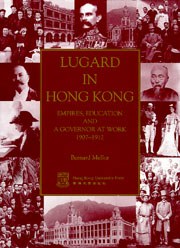
Sir Frederick Lugard ranks as one of Britain most distinguished colonial administrators, although he remains a controversial figure. During his five years as Governor of Hong Kong -- a brief spell in the middle of a long and dramatic career in Africa -- Lugard found in educational reform the scope he needed to make a lasting impression and give play to his imperialist theories and instincts.The University of Hong Kong owes its existence to the initiative and tenacity of Lugard. His purpose in founding the University was to produce a new, highly educated middle class trained in Western technology and the English language: a vanguard of increased British influence in the east. This book paints a very human picture of Lugard as a working governor in the relative stability of Hong Kong against a backdrop of the Chinese empire being torn apart by revolution.
http://www.hkbookcity.com/showbook2.php?serial_no=2095
作者简介
作者即杨宪益与戴乃迭在牛津大学的同学,也可说是二人的“红娘”。
從1946年8月開始,梅樂彬先生已在香港大學服務,初在英文系任講師兼署理教務主任,負責第二次世界大戰後香港大學復課之策劃工作。從1948年2月起梅樂彬先生出任為教務主任,為聯邦各大學現任教務主任中之資歷最深的一位。自從1942年被召加入印度軍隊服務後,梅樂彬先生一直居住在東方。1944年留於中國西部,戰事結束後在香港擔任民事行政職位。在港大期間有兩年曾被調往英國駐美大使館及英國駐加拿大高級專員處擔任高等教育顧問。梅樂彬先生著有不少有關高等教育及英國文學方面之著作。梅樂彬先生於1966年獲女皇頒授OBE銜。
Mr. Chancellor, Blackpool is famous for its illuminations but surely few of its lights can have shone with such lustre as that of Bernard Mellor. His native town, the University of Oxford, wartime India and China have all, in divers ways, been the fortunate recipients of his endeavours. But it is as a man of letters and as the servant of this University that we do him honour here today.
His earliest intent was to be a concert pianist. Though no mean proficient, he was dissuaded from so perilous a course by his father. Instead he elected to read English at Merton College, Oxford. Here in the heady if anxious years from 1936 to 1940 - when Sebastian's teddy bear had been put to flight - Bunny Mellor flung himself into University life. Outside his College, his principal activity was as Editor of the Cherwell, in which he was assisted by contemporaries of note, not least his political columnist, a certain Edward Heath. However, it was within the stout walls of Merton that Mr. Mellor met the two men who were to exercise so profound an influence upon him: the one, the late Edmund Blunden, tutor and exemplar; the other, Yang Hsien-yi, a Chinese undergraduate somewhat at sea in an alien land. Yang was his first contact with China, and a decisive one. In 1940 he joined the Royal Artillery and evincing an interest in the culinary art was sent on an Army cook's course. This was to result in his first official publication, pithily entitled "Ration Cooking for Small Detachments". Both hotter fare and wider responsibilities befell him when he was commissioned in 1942 into the Third Madras Regiment, Indian Army. The sub-continent yet again aroused the creative in Bunny Mellor. Discovering that his regiment had no official uniform, he calmly proceeded to design his own, and resplendent in turban and myriad silver tassels astounded GHQ, Delhi. His work in the Indian Army was concerned with intelligence - the less charitable might suggest that Wireless Interception Training proved an admirable asset for a future Registrar - and armed with this new found expertise he was, in 1944, posted to the China theatre.
China, at last he had reached his goal, had attained his overriding objective since Oxford days. But it was a China long ravaged by war, a land fighting for its survival. As a Unit Commander of the Inter-Services Liaison Department, Mr. Mellor brought to bear those esoteric skills so lately acquired, and furnished with proverbial cloak and dagger did sterling service. He also was to forge many future friendships. Shortly after Liberation, he came to Hong Kong, acting as Assistant Director of Education in the Civil Affairs Administration. In the August of the following year, 1946, he was appointed a Lecturer in English and the Acting Registrar of a University many of whose buildings were open to the skies and whose very existence was open to doubt. Thus began an association which has continued to the present. A short spell at Oxford followed, to be broken when in January 1948 he was invited to return as Registrar. The length of his tenure of that onerous office is unrivalled and he has emerged as the senior amongst serving registrars in the Universities of the Commonwealth. His devotion has been remarkable, his contribution incalculable. Along with a small band of brothers, he nursed a University, sorely bruised and battered, back to health and vigour. Never hide-bound, never faint-hearted, he has encouraged new developments and urged on vital expansion. With dextrous aplomb he has threaded a path through the maze of conflicting interests, sometimes soothing the ruffled, occasionally checking the madcap, always prepared to give liberally from his rich store of experience. The two qualities which mark this Registrar are style and foresight.
We in this University are far from being the sole beneficiaries of Mr, Mellor's energies. The academic community of Hong Kong as a whole is heavy in his debt. Over the years he has served on innumerable committees concerned with education, both secondary and tertiary, and he can fairly claim to be one of the principal architects of our sister University. For these endeavours he was made Officer of the Order of the British Empire in 1966. In the wider world the problems of Universities in Australia, the Philippines, Malaysia, and Singapore, all have commanded his attention. The institutions of learning in North America came under his scrutiny when in 1957 and 1958 he was seconded to Washington and Ottawa as an adviser on matters of higher education. A veritable flood of official reports and major works in the field of comparative higher education then ensued, authoritative, urbane, and invaluable. Yet his pen has been widely employed on, perhaps, more verdant vellum. Here we have the man of affairs wedded to the man of letters. The poems of Sir Francis Hubert he has rescued from a wholly undeserved neglect in an edition at once scholarly and elegant. In close collaboration with Edmund Blunden he has delved deep into English poetry from the seventeenth century to the mid-nineteenth, culling delightful treasure. From his Italian retirement we may confidently expect publications on tobacco, on the English in Italy, and much more beside. Mr. Chancellor, although Bernard Mellor is to leave us next year, we may hope that this University, to which he has vouchsafed such unstinted loyalty, may not be entirely bereft of his counsel. In requesting you to confer upon him the honorary degree of Doctor of Letters we, like Mr. Mellor himself, look as much to the future as to the past.
http://www3.hku.hk/hongrads/index.php/archive/graduate_detail/175
H-K提供
目录信息
读后感
评分
评分
评分
评分
用户评价
这本关于香港历史的著作,读来颇为引人入胜,它巧妙地将宏大的历史叙事与生动的社会切片编织在一起。作者对于殖民地时期社会结构的细致描摹,尤其让人印象深刻。比如,书中对于早期华人精英阶层如何在中英夹缝中寻求身份认同和政治影响力的分析,展现了一种深刻的洞察力。叙事节奏把握得非常好,既有对重大历史事件如太平绅士制度变迁的稳健铺陈,也有对市井生活细节的灵动捕捉,比如早期街市的喧嚣或是电车轨道旁的轶事。文字功底扎实,没有那种刻板的学术腔调,反而充满了一种历史的温度。尤其是对某些关键历史人物的侧写,立体而复杂,让人不禁思考,在历史的洪流中,个体命运是如何被环境塑造,又是如何反过来作用于历史进程的。这本书的价值在于,它不仅仅是简单的时间线梳理,更像是一幅多层次的文化与政治交织的图景,让读者得以穿透历史的迷雾,窥见那个时代独特的精神风貌和内在张力。
评分对于非历史专业的读者而言,这本书的学术性并没有成为阅读的障碍,反而是其魅力所在。作者高超的叙事技巧,将复杂的地缘政治概念,巧妙地融入到一个个鲜活的故事之中。我特别欣赏它处理多元文化冲突的方式——既不偏袒任何一方,也不陷入泥潭式的相对主义,而是以一种近乎冷静的超然视角,去解构不同文化群体在特定历史时期内产生的张力与和解。书中关于文化身份认同的探讨,尤为引人深思。它没有给出简单的答案,而是展示了一个身份不断流动、重塑的过程。这种开放性的讨论,极大地拓展了我的思维边界。读完后,对于理解当代香港社会中一些看似无解的矛盾,都有了全新的、更具纵深感的认识。这本书的笔触是克制的,但其内在蕴含的思想能量却是澎湃的。
评分这本书的阅读体验,就像是走进了一个年代久远的、布置精美的旧式画廊,每一章节都是一幅精心装裱的作品,但主题却前后呼应,共同构成了一部关于“变迁”的宏大交响乐。最让我称道的是其对经济基础与上层建筑之间微妙互动的刻画。它没有把经济发展视为一条单向度、直线性的进步之路,而是揭示了每一次经济腾飞背后,所付出的社会代价和权力转移。例如,对早期贸易体系中“中间人”角色的描述,生动展现了那个时代灵活性与投机性并存的商业哲学。文字风格极其老练,论证严密,但绝不枯燥,时而蹦出一些恰到好处的双关语和历史典故,使得严肃的学术探讨充满了阅读的乐趣。它迫使你重新审视那些习以为常的历史假设,并在字里行间中,感受历史是如何在机遇与偶然中被塑造出来的。
评分我必须说,这本书在对城市空间演变的论述上,达到了一个令人惊叹的高度。它并非简单地罗列建筑风格的更迭,而是深入挖掘了空间形态背后所承载的社会权力关系和心理预期。比如,书中对某些特定区域,如中环的金融区与九龙城寨的并置与分野的探讨,简直是精彩绝伦。作者运用了丰富的视觉材料(虽然在文字中得以重现),来支撑其关于“界限”与“渗透”的理论。这种对地理政治学的细腻把控,使得阅读体验极富层次感。每当读到关于公共空间如何被重新定义、日常生活如何被权力结构渗透的段落时,都会有一种强烈的代入感,仿佛能真切感受到那些街道的呼吸和墙壁的低语。它挑战了许多关于香港发展模式的传统叙事,提供了一种更具批判性和空间意识的解读框架,对于任何对城市研究有兴趣的人来说,都是一份不可多得的珍贵参考。
评分如果说大多数历史著作是平铺直叙的流水账,那么这本书则更像是一部结构精巧的立体电影。它成功地将宏观的政策制定与微观的个体命运编织在一起,使得历史不再是抽象的年代和法令,而是有血有肉、有呼吸的社会现场。我特别喜欢作者对于“边缘人物”的关注。那些在官方记录中常常被忽略的群体——比如早期的劳工阶层、女性社团或是在特定时期移民进来的各个族群——在书中得到了细致而充满同理心的描绘。这种多重视角的切换,极大地丰富了我们对这段历史的理解维度。它提醒我们,历史是由无数个体的选择与挣扎构成的,而非少数精英的独白。整本书的结构布局如同一件复杂的艺术品,层次分明,衔接自然,读完后,留下的不仅仅是知识的积累,更是一种对历史复杂性的深刻敬畏。
评分 评分 评分 评分 评分相关图书














本站所有内容均为互联网搜索引擎提供的公开搜索信息,本站不存储任何数据与内容,任何内容与数据均与本站无关,如有需要请联系相关搜索引擎包括但不限于百度,google,bing,sogou 等
© 2026 book.quotespace.org All Rights Reserved. 小美书屋 版权所有