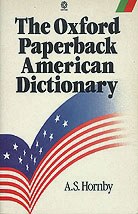
具体描述
A Comprehensive Grammar and Style Companion for Advanced English Learners This volume serves as an indispensable resource for non-native English speakers pursuing advanced proficiency, particularly those engaged in academic study, professional communication, or rigorous literary analysis. It meticulously dissects the architectural components of sophisticated English usage, focusing intently on the nuances that often elude intermediate learners and even some native speakers. Core Focus: Beyond Surface-Level Rules The central aim of this text is not merely to recite grammatical rules but to illuminate the contextual application and rhetorical impact of specific linguistic choices. It moves beyond the basic "subject-verb agreement" and delves into the complex interplay between syntax, semantics, and pragmatic function in real-world discourse. Section I: Mastering Syntactical Complexity This foundational section systematically explores the construction of complex sentences, moving far beyond simple and compound structures. Subordination and Embedding: A deep dive into the effective use of dependent clauses (adverbial, adjectival, and nominal) to achieve precision and logical flow. This includes exhaustive treatment of relative pronouns (who, which, that, whom, whose) and the subtle differentiations in their appropriate deployment, especially concerning restrictive versus non-restrictive clauses, often a significant hurdle for advanced learners. Parallelism and Balance: Analysis of how maintaining structural consistency across coordinate elements (phrases, clauses, lists) enhances readability and persuasive force. Numerous examples demonstrate how violations of parallelism create awkwardness or ambiguity in formal writing. Inversion and Fronting: Examination of marked sentence structures, where elements are placed unconventionally for emphasis or stylistic variation. The text details the precise contexts where inversion (e.g., after negative adverbials like Scarcely had... or Never before had...) is mandatory versus those where it is purely stylistic. Participial and Absolute Phrases: Detailed instruction on harnessing the power of participial phrases (present and past) to condense information efficiently, avoiding dangling modifiers through rigorous attention to the relationship between the modifying phrase and the subject of the main clause. The proper structure and function of absolute constructions are also thoroughly mapped out. Section II: Lexical Precision and Collocational Mastery Language proficiency at an advanced level hinges on selecting the exact right word and employing it within its expected linguistic neighborhood. Collocations and Frameworks: This is a cornerstone of the text. It systematically presents high-frequency, high-utility collocations essential for academic and professional writing (e.g., to render a verdict, to enact legislation, a mitigating factor). It emphasizes that learning vocabulary as isolated units is insufficient; true fluency requires internalizing these multi-word units. Register and Tone: A comprehensive guide to navigating the spectrum of formality. It provides side-by-side comparisons of vocabulary and structures appropriate for a scientific paper versus those suitable for a persuasive editorial or nuanced interpersonal communication. Specific attention is paid to hedging language (e.g., might suggest, it would appear that) crucial for academic caution. Prepositional Idioms and Phrasal Verbs in Context: Moving beyond elementary phrasal verb lists, this section organizes phrasal verbs by semantic field and discusses their fixed usage within more formal syntactic constructions, illustrating how they interact with direct and indirect objects. Word Choice: Connotation vs. Denotation: Detailed exploration of near-synonyms, focusing on the subtle emotional or historical baggage (connotation) each carries, ensuring the writer chooses words that align perfectly with their intended message, avoiding unintended bias or misinterpretation. Section III: Punctuation as Rhetorical Tool Punctuation is treated not as arbitrary typographic decoration but as essential structural signposting that dictates the pacing and meaning of written discourse. The Semicolon and Colon: Detailed delineation of the specific, non-interchangeable roles of the semicolon (linking closely related independent clauses) and the colon (introducing explanations, lists, or formal quotations). Case studies illustrate common errors where a comma splice is mistakenly substituted for a semicolon, or vice versa. Dashes and Parentheses: A careful analysis of the emphatic power of the em dash (used for sharp interruption or amplification) versus the parenthetical nuance of parentheses (used for supplementary, less crucial information). Quotation Marks and Internal Dialogue: Precise guidance on handling direct quotation, especially within complex citation styles, including the correct placement of terminal punctuation relative to the closing quotation mark in American and British conventions. Section IV: Style and Clarity in Advanced Prose This final, highly practical section focuses on refining prose to achieve maximum impact and clarity, addressing the common pitfalls of over-complication. Active vs. Passive Voice Strategically: While acknowledging the necessity of the passive voice in specific scientific or objective reporting contexts, the text strongly advocates for the active voice to maintain vigor and clarity. It provides diagnostic tests for identifying when the passive voice obfuscates agency unnecessarily. Nominalization Avoidance: A critical examination of the tendency to convert verbs and adjectives into abstract nouns (e.g., changing analyze to analysis), which often results in wordy, abstract, and weak prose. Techniques for "de-nominalizing" sentences back into strong verb-based constructions are offered. Pronoun Reference Clarity: Extensive instruction on ensuring every pronoun (it, this, which, they) has an unambiguously clear antecedent, especially in dense paragraphs where ambiguity can easily creep in, leading to reader confusion. Flow and Cohesion: Practical strategies for creating seamless transitions between paragraphs and sections, utilizing advanced cohesive devices (e.g., transitional phrases, anaphoric references, thematic bridging) to guide the reader logically through complex arguments. Intended Audience: Graduate students, researchers, technical writers, editors, and advanced ESL/EFL instructors seeking a rigorous, reference-style manual that prioritizes functional mastery over rote memorization. It serves as a benchmark for achieving native-like sophistication in written English.