
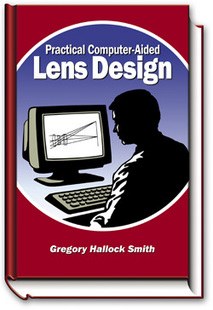
Practical Computer-Aided Lens Design pdf epub mobi txt 电子书 下载 2026
- 光学设计
- practical
- lens
- deign
- computer
- aid
- 光学设计
- 镜头设计
- 计算机辅助设计
- CAD
- 光线追迹
- 光学软件
- 屈光系统
- 光学工程
- 设计软件
- Zemax
- Code V

具体描述
Practical Computer-aided Lens Design
By Gregory Hallock Smith
Published by Willmann-Bell, 1998
ISBN 0943396573, 9780943396576
427 pages
Table of Contents:
Preface
Part A Optical Concepts and Techniques
A.1 Introduction
A.2 A Brief History of Lens Design
A.2.1 Two Approaches to Optical Design
A.2.2 Analytical Design Methods
A.2.3 Numerical Evaluation Methods
A.2.4 Optical Design Using Computer-Aided Numerical Optimization
A.3 Light and Imaging Systems
A.3.1 The Nature of Light
A.3.2 Spectral Regions
A.3.3 Objects, Light Rays, and Wavefronts
A.3.4 Images and Imaging Systems
A.3.5 The Optical Axis
A.3.6 Stops and Pupils
A.3.7 Marginal and Chief Rays
A.3.8 Perfect Imagery
A.3.9 Causes of Image Quality Degradation
A.3.10 The Point Spread Function
A.3.11 Image Motion
A.3.12 Stray Light
A.3.13 Focal and Afocal Systems
A.3.14 Fast and Slow Lenses and Detectors
A.3.15 Coordinate Systems and Sign Conventions
A.3.16 Optical Prescriptions
A.3.17 Aspheric Surfaces
A.3.18 Thin Lenses
A.3.19 The Pinhole Camera Example
A.4 First-Order, Paraxial, and Gaussian Optics
A.4.1 Snell's Law to First Order
A.4.2 Paraxial Optics
A.4.3 Usefulness of Paraxial Optics
A.4.4 Principal Planes and Cardinal Points
A.4.5 Collinear Mapping and Gaussian Optics
A.4.6 Where First-Order Optics Do Not Work
A.4.7 Paraxial Properties of Surfaces
A.5 First-Order Ray Tracing
A.5.1 Recursion Formulas for Surfaces
A.5.2 Transfer Equation
A.5.3 Refraction Equation
A.5.4 Recursion Formulas for Thin Lenses
A.5.5 Reduced Thickness
A.5.6 The Lagrange Invariant
A.5.7 Physical Significance of the Lagrange Invariant
A.5.8 First-Order Ray Trace Used to Design a Projector
A.6 Basic Optical Analysis
A.6.1 Gaussian and True Entrance Pupils
A.6.2 Effective Refracting Surface
A.6.3 Zones
A.6.4 Bending a Lens
A.6.5 Tangential and Sagittal Planes
A.6.6 Back Focal Length and Effective Focal Length
A.6.7 Telephoto and Retrofocus Lenses
A.6.8 BFL, EFL, and Aberrations
A.6.9 Sign Conventions for Aberrations
A.6.10 Three Basic Analytical Tools
A.6.11 Layout
A.6.12 Spot Diagram
A.6.13 Filling the Lens with Rays
A.6.14 Transverse Ray-Intercept Ray Fan Plot
A.6.15 Example of a Ray Fan Plot
A.6.16 Use of Ray Fan Plots
A.7 On-Axis Geometrical Aberrations
A.7.1 Plane Surfaces
A.7.2 Correcting Versus Controlling Aberrations
A.7.3 Undercorrected Spherical Aberration at Paraxial Focus
A.7.4 Undercorrected Spherical Aberration at Best Focus
A.7.5 Overcorrected Spherical Aberration at Paraxial Focus
A.7.6 Third-Order Spherical Aberration Controlled at Paraxial Focus
A.7.7 Third-Order Spherical Aberration Controlled at Best Focus
A.7.8 Third- and Fifth-Order Spherical Aberration Controlled at Paraxial Focus
A.7.9 Third- and Fifth-Order Spherical Aberration Controlled at Best Focus
A.7.10 A Perfect Monochromatic On-Axis Lens
A.7.11 A Defocused Perfect Lens
A.7.12 Balancing Aberrations in Multi-Element Lenses
A.7.13 Longitudinal Chromatic Aberration
A.7.14 Other Chromatic Aberrations
A.7.15 Defocus with an On-Axis Paraboloidal Mirror
A.8 Off-Axis Geometrical Aberrations
A.8.1 Lateral Chromatic Aberration
A.8.2 Field Curvature
A.8.3 Coma
A.8.4 Astigmatism and Field Curvature
A.8.5 Distortion
A.8.6 Higher-Order Off-Axis Aberrations
A.9 Analytical Relationships for Imagery
A.9.1 Petzval Surface and Petzval Sum
A.9.2 Aberration Dependence on Aperture and Field
A.9.3 Use of Symmetry in Controlling Transverse Aberrations
A.9.4 Effect of a Stop Shift
A.9.5 Vignetting and the Cosine-Fourth Law
A.10 Optical Glass
A.10.1 Index of Refraction
A.10.2 Dispersion
A.10.3 Crown and Flint Glasses
A.10.4 Partial Dispersion
A.10.5 Glass Maps
A.10.6 Ultraviolet and Infrared Glasses
A.10.7 Glass Selection
A.10.8 Melt Sheets
A.10.9 Non-Optical Glass Considerations
A.10.10 Glass Manufacturers
A.10.11 Mirror Substrate Materials
A.11 Wavefronts and Diffraction
A.11.1 Diffraction by Aperture Edges
A.11.2 Geometrical Wavefronts
A.11.3 Aberrations Measured by Optical Path Differences
A.11.4 Specifying the Amount of OPD Aberrations
A.11.5 OPD Ray Fan Plots
A.11.6 The Diffraction-Limited PSF
A.11.7 Diffraction Plus Aberrations
A.11.8 OPD Plots for Chromatic Aberrations
A.11.9 Full Width at Half Power
A.11.10 Diffraction-Limited Resolution
A.11.11 Strehl Ratio and the Quarter-Wave Rule
A.11.12 Scaling the Lens
A.11.13 The Lyot Stop
A.11.14 A Lyot Stop Plus a Field Lens
A.12 Modulation Transfer Function
A.12.1 Frequency Response
A.12.2 Fourier Analysis
A.12.3 Measuring MTF
A.12.4 Calculating the Diffraction MTF by Autocorrelation
A.12.5 Calculating the Diffraction MTF by Fourier Transforms
A.12.6 Consequences for Optical Design
A.12.7 MTF in the Presence of Aberrations
A.12.8 Minimum Detectable Modulation and Limiting Resolving Power
A.12.9 Spurious Resolution
A.12.10 Nyquist Frequency
A.13 The Merit Function
A.13.1 The Merit Function as a Measure of Optical Performance
A.13.2 The Constituents of the Merit Function
A.13.3 Optimization Operands and Damped Least-Squares
A.13.4 Weighting Operands and Lagrange Multipliers
A.13.5 Weighting Fields and Wavelengths
A.13.6 Built-in Operands and Default Merit Functions
A.13.7 Optimizing with RMS Spot Size
A.13.8 Optimizing with OPD Errors
A.13.9 Optimizing with Modulation Transfer Function
A.13.10 Optimizing with User-Selected and User-Defined Operands
A.13.11 Examples of User-Selected and User-Defined Optimization Operands
A.13.12 Longitudinal Color
A.13.13 Lateral Color
A.13.14 Spherical Aberration
A.13.15 Tangential Coma
A.13.16 Sagittal Coma
A.13.17 Astigmatism
A.13.18 Field Curvature
A.13.19 Distortion
A.13.20 Using Both Special Aberration Operands and Vignetting Factors
A.13.21 The DMFS Operand
A.13.22 Solves
A.14 Finding a Starting Design
A.14.1 Determining System Requirements
A.14.2 Determining the Number of Effective System Variables
A.14.3 Controlling Optical Properties
A.14.4 Following the Literature
A.14.5 Attending Meetings
A.15 Optimization Techniques
A.15.1 Local Minima and Global Optimization
A.15.2 Entering the Starting Design
A.15.3 How to Derive a Rough Starting Design
A.15.4 Optimizing in Stages
A.15.5 Early Optimizations
A.15.6 Intermediate Optimizations
A.15.7 Locating the Image Surface
A.15.8 Final Optimizations
A.15.9 Potential Problem Areas and Suggestions
A.16 Fabrication Errors and Tolerancing
A.16.1 Types of Fabrication Errors
A.16.2 Compensators
A.16.3 Measures of Performance during Tolerancing
A.16.4 Error Budget
A.16.5 Sensitivity Analysis
A.16.6 Iterating to Find the Final Tolerances
A.16.7 Reoptimization for Known Fabrication Errors
A.16.8 Test Plate Fit
A.16.9 Recent Advances
Part B Design Examples
B.1 Achromatic and Apochromatic Doublets
B.1.1 Achromatization 219
B.1.2 F/5 Achromatic Doublet with BK7 and F2 Glasses
B.1.3 F/15 Achromatic Doublet with BK7 and F2 Glasses
B.1.4 Telescope Exit Pupils
B.1.5 Color Curves for an Achromat
B.1.6 Glass Selection and Color Curves for an Apochromat
B.1.7 F/15 Apochromatic Doublet with SSK3 and KzFSN4 Glasses
B.1.8 F/15 Apochromatic Doublet with Crystal Fluorite and SK11 Glass
B.2 The Wollaston Landscape Lens
B.2.1 The Singlet Lens with the Stop at the Lens
B.2.2 The Landscape Lens Optimized Polychromatically
B.2.3 The Landscape Lens with No Coma and Flat Tangential Field
B.2.4 The Landscape Lens with Mechanical Vignetting
B.3 The Cooke Triplet and Tessar Lenses
B.3.1 Lens Specifications
B.3.2 Degrees of Freedom
B.3.3 Glass Selection
B.3.4 Flattening the Field
B.3.5 Vignetting
B.3.6 Starting Design and Early Optimizations
B.3.7 Intermediate Optimizations
B.3.8 Final Optimizations Using Spot Size
B.3.9 Final Optimizations Using OPD Errors
B.3.10 The Tessar Lens
B.4 The Double-Gauss Lens
B.4.1 Lens Specifications
B.4.2 Multiple Configurations
B.4.3 Vignetting Factors
B.4.4 Gaussian Quadrature
B.4.5 Starting Design and Early Optimizations
B.4.6 Intermediate Optimizations
B.4.7 Final Optimizations
B.4.8 Final Results
B.4.9 Comparison with Star Photos
B.5 Cassegrain Telescopes
B.5.1 The Reflecting Telescope
B.5.2 Types of Cassegrain Telescopes
B.5.3 System Specifications
B.5.4 The Classical Cassegrain
B.5.5 The Ritchey-Chretien
B.5.6 Refractive Field Correctors
B.5.7 The Classical Cassegrain with Field Corrector
B.5.8 The Ritchey-Chretien with Field Corrector
B.6 Schmidt Telescopes
B.6.1 The Schmidt Approach
B.6.2 System Specifications
B.6.3 Optimizing the Classical Schmidt
B.6.4 Evaluating the Classical Schmidt
B.6.5 Ghost Images
B.6.6 The Achromatic Schmidt
B.7 Tolerancing Example
B.7.1 Tolerancing a Tessar
B.7.2 Specifying the Tolerances
B.7.3 Sensitivity Analysis
B.7.4 Overall Performance
B.7.5 Monte Carlo Statistical Analysis
Bibliography
Index
作者简介
目录信息
读后感
评分
评分
评分
评分
用户评价
收到这本书后,我首先翻阅了目录,感觉内容安排得相当充实。我对于书中关于“设计”这个词的理解,更倾向于它指的是一个完整的流程,从需求分析、初步构思,到详细设计、优化迭代,再到最终的公差分析和验证。所以我非常期待书中能够详细阐述这个全过程。我特别想了解,在现代光学设计中,计算机是如何扮演一个“助手”的角色,帮助设计师们提高效率、突破思维局限的。我设想书中可能会包含一些关于如何利用软件进行参数化设计的内容,能够让我更灵活地探索不同的设计方案。同时,我也希望它能提供一些关于如何处理复杂光学系统的思路,比如多层镀膜的设计,或者包含非球面元件的设计。当然,少不了的是对各种评价函数的深入讲解,以及如何根据不同的应用场景选择最合适的评价指标。如果书中能穿插一些实际的设计案例,展示如何将书中的知识应用到具体的工程问题中,那就更好了。
评分这本书,哦,我得承认,我当初是被它名字里的“Practical”给吸引过去的。我一直觉得,理论固然重要,但实际操作,怎么才能把那些枯燥的公式变成看得见摸得着的光学设计,才是真正的挑战。我特别期待能从里面学到一些“硬核”的东西,不只是停留在概念层面。比如,那些软件工具,比如 Zemax、Code V 这些,我知道它们在行业里是标杆,但具体怎么用,从零开始构建一个优化流程,包括如何设置约束条件、选择优化算法,以及如何解读优化结果,这些细节才是关键。我希望能看到书中提供一些清晰的、循序渐进的例子,最好是针对一些常见的成像系统,例如相机镜头、显微镜物镜,甚至是某些特定的照明系统。如果能有一些实际的案例分析,展示设计过程中的一些“坑”,以及如何规避这些风险,那就太完美了。我希望这本书能让我摆脱那种“看懂了但不会做”的困境,真正掌握用计算机辅助进行镜头设计的技能,让我在实际工作中能够得心应手。
评分我一直对光学设计这个领域充满了好奇,尤其是计算机在其中的作用。市面上关于光学设计的书籍不少,但很多都侧重于基础理论,让我觉得有些晦涩难懂。我更希望找到一本能够真正拉近我与实际应用距离的书。我听说这本书在业界评价不错,于是就抱着试试看的心态入手了。我尤其关注它在“计算机辅助”这个方向上的着墨。我猜想,这本书可能会深入讲解一些主流的光学设计软件的强大功能,而不仅仅是介绍它们的存在。比如,如何利用软件进行蒙特卡洛模拟来评估公差?如何通过像差分析来诊断系统性能瓶颈?更重要的是,书中会不会提供一些关于如何构建高效的优化策略的指导?因为我知道,优化是光学设计中最耗时也最考验功力的一环。我希望能从中了解到一些“秘诀”,比如如何有效地设置边界条件,如何选择合适的评价函数,以及在遇到收敛困难时如何进行调整。如果书中能有一些关于如何将理论知识与软件操作相结合的案例,那将是我最期待的部分。
评分我一直对光学成像的原理很感兴趣,但真正接触到实际的光学设计时,才发现其中的复杂性远超我的想象。这本书的名字听起来就很有实践性,所以我非常希望它能够帮助我理解如何在实际的光学设计过程中,利用计算机工具来解决问题。我特别想知道,书中会不会详细介绍一些常用的光学设计软件,比如如何利用它们来构建三维模型,如何进行光线追迹和像差分析,以及如何通过优化算法来改进设计。我更希望的是,它能够提供一些实用的技巧和经验,比如如何根据系统的要求选择合适的镜片类型和材料,如何评估不同设计方案的优劣,以及如何进行公差分析以确保设计的鲁棒性。如果书中能有一些关于如何处理特殊光学元件(例如衍射元件、自由曲面镜片)的设计方法,那就更好了。我期待这本书能成为我光学设计道路上的一个得力助手,帮助我更自信、更高效地解决实际问题。
评分拿到这本书,我第一反应就是它应该会非常实用。我一直觉得,光学设计不仅仅是理论公式的堆砌,更是一种艺术和工程的结合。所以,我非常期待它能带来一些“干货”,而不是泛泛而谈的概念。我希望书中能深入讲解一些实际的光学设计流程,比如从零开始设计一个镜头,或者优化一个现有设计。我特别想了解,在现代设计中,计算机是如何扮演“赋能者”的角色,帮助设计师们突破以往的局限。例如,它可能会详细介绍如何使用主流的光学设计软件,如何进行参数设置、模型构建、光线追迹,以及如何利用软件内置的优化工具来改进设计。我更希望看到书中能提供一些关于如何解读和理解软件输出结果的指导,比如如何分析像差图、MTF曲线,以及如何根据这些结果进行迭代优化。如果书中能分享一些行业内的设计经验和实用技巧,那绝对会是锦上添花。
评分 评分 评分 评分 评分相关图书












本站所有内容均为互联网搜索引擎提供的公开搜索信息,本站不存储任何数据与内容,任何内容与数据均与本站无关,如有需要请联系相关搜索引擎包括但不限于百度,google,bing,sogou 等
© 2026 book.quotespace.org All Rights Reserved. 小美书屋 版权所有