
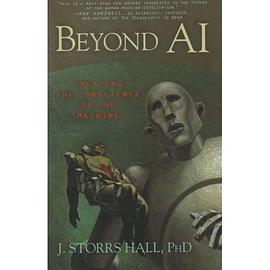

具体描述
Artificial intelligence (AI) is now advancing at such a rapid clip that it has the potential to transform our world in ways both exciting and disturbing. Computers have already been designed that are capable of driving cars, playing soccer, and finding and organizing information on the Web in ways that no human could. With each new gain in processing power, will scientists soon be able to create supercomputers that can read a newspaper with understanding, or write a news story, or create novels, or even formulate laws? And if machine intelligence advances beyond human intelligence, will we need to start talking about a computer's intentions?
These are some of the questions discussed by computer scientist J. Storrs Hall in this fascinating layperson's guide to the latest developments in artificial intelligence. Drawing on a thirty-year career in artificial intelligence and computer science, Hall reviews the history of AI, discussing some of the major roadblocks that the field has recently overcome, and predicting the probable achievements in the near future. There is new excitement in the field over the amazing capabilities of the latest robots and renewed optimism that achieving human-level intelligence is a reachable goal.
But what will this mean for society and the relations between technology and human beings? Soon ethical concerns will arise and programmers will need to begin thinking about the computer counterparts of moral codes and how ethical interactions between humans and their machines will eventually affect society as a whole. Weaving disparate threads together in an enlightening manner from cybernetics, computer science, psychology, philosophy of mind, neurophysiology, game theory, and economics, Hall provides an intriguing glimpse into the astonishing possibilities and dilemmas on the horizon.
About the Author
J. Storrs Hall. Ph.D. (Laporte, PA), the founding chief scientist of Nanorex, Inc., is a research fellow for the Institute for Molecular Manufacturing and the author of Nanofuture, the "Nanotechnologies" section for The Macmillan Encyclopedia of Energy, and numerous scientific articles. He has designed technology for NASA and was a computer systems architect at the Laboratory for Computer Science Research at Rutgers University from 1985 to 1997.
作者简介
目录信息
读后感
评分
评分
评分
评分
用户评价
这本书的文风有一种独特的疏离感和冷静的美感,仿佛透过一层薄薄的玻璃纸观察着人类的命运。它没有过度煽情,而是用一种近乎纪录片式的客观视角,记录着时代的洪流和个体的挣扎。我特别喜欢作者在对话中展现出的那种克制而精准的表达力,很多重要的信息是通过人物之间看似日常却暗流涌动的对话传递出来的,需要读者仔细咂摸。这是一部需要细细品味的佳作,它不满足于讲述一个引人入胜的故事,它更像是在向我们提问:在这个快速演变的世界里,我们究竟还剩下多少“人”的特质?
评分这本《未知的彼岸》简直是近年来科幻小说中的一股清流。作者对未来世界图景的描绘,那种细腻入微的观察和大胆的想象力,让人拍案叫绝。故事的节奏把握得恰到好处,开篇的悬念层层递进,引人入胜,我几乎是屏住呼吸读完了前三分之一。书中的人物塑造极其成功,主角的内心挣扎、面对道德困境时的抉择,都写得真实可信,让人感同身受。特别是那个关于“记忆移植”的情节,引发了我对自我认知和存在本质的深度思考。它不仅仅是一个关于技术的故事,更是一部探讨人性边界的哲学思辨录。
评分我通常对长篇小说不太有耐心,但《未知的彼岸》让我破例了。这本书的魅力在于它的“厚度”。它不是那种一目了然的爽文,而是需要读者投入思考的文本。里面涉及的社会学、伦理学乃至语言学的探讨,都做得相当到位,显示出作者在这些领域做了大量的功课。阅读过程中,我频繁地停下来查阅一些背景资料,这种主动探索的过程,反而增加了阅读的乐趣。书中的世界观构建得宏大而自洽,没有明显的逻辑漏洞,构建了一个令人信服的平行现实。
评分坦白说,这本书的阅读体验是极其酣畅淋漓的。它就像一场精心编排的太空歌剧,充满了视觉冲击力。我能清晰地“看”到那些悬浮的城市、光怪陆离的外星文明,以及不同势力之间错综复杂的权力斗争。情节的转折出人意料,每一次我以为自己猜到了结局,作者总能抛出一个更具爆炸性的信息。这本书的优点在于,它成功地将硬科幻的严谨性与软科幻的人文关怀完美融合,既有硬核的理论支撑,又不乏对个体命运的深切关注。读罢,心中久久不能平静,迫不及待地想和朋友们讨论其中的细节。
评分读完这部作品,我有一种被彻底颠覆了固有认知的震撼感。它探讨的议题非常前沿和深刻,不是那种空泛的未来畅想,而是紧密结合了当下科技发展的逻辑推演。作者的文字功底极为扎实,遣词造句之间透露出深厚的文学素养,很多段落的描述充满诗意,即便是在描写冰冷的机械和数据流时,也能找到独特的美感。我尤其欣赏作者处理多线叙事的高超技巧,几条看似不相干的线索,到最后如水银泻地般汇聚,那种结构上的精妙设计,体现了作者非凡的布局能力。
评分 评分 评分 评分 评分相关图书













本站所有内容均为互联网搜索引擎提供的公开搜索信息,本站不存储任何数据与内容,任何内容与数据均与本站无关,如有需要请联系相关搜索引擎包括但不限于百度,google,bing,sogou 等
© 2026 book.quotespace.org All Rights Reserved. 小美书屋 版权所有