
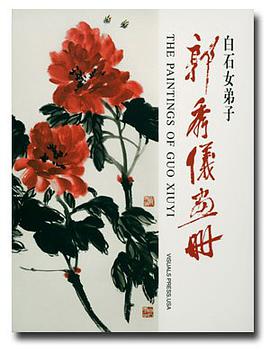

具体描述
Master Qi Baishi's disciple Guo Xiuyi was born in Shanghai into a family originally from Zhongshan, Guangdong province of China.
In 1934 Guo married Huang Qixiang (Huang Chi-hsiang), a hero of the Chinese Northern Expedition and renowned patriotic general against the Japanese invasion. General Huang Qixiang fought with the American alliance in the war and Guo Xiuyi was with her husband at the front of the battle. Guo was a member of the Standing Committee of the China War Time Children Care Association, which rescued, cared and educated for more than 30,000 orphans of the War.
With a Chinese victory after eight years of hard war, Guo Xiuyi, together with her husband, were recognized for their dedication and outstanding contributions. Each of them were awarded Medals of Victory. Husband Huang Qixiang was awarded the Medal of Freedom by the American President Harry Truman.
After the establishment of the People's Republic of China, Guo Xiuyi subsequently served as a Member of the Standing Committee of the National Chinese People's Political Consultative Conference and as Honorary Deputy Chairwoman of the Central Consultative and Control Committee of Chinese Peasants and Workers Democratic Party. Guo Xiuyi also served as the Vice President of The Beijing Research Society of Qi Baishi's Artistic Works.
Guo Xiuyi was apprenticed to Master Qi Baishi in 1951 and studied with the Master for six years. Guo bore the master's teachings in mind, devoting all of her energy to diligent study. As a result, she made marvelous progress and gradually brought into full play all of her talent in the art of painting. Master Qi Baishi was overjoyed to see his disciple's success.
Besides concentrating her effort on grasping the quintessence of the Qi School, Guo also learned and integrated the merits of other schools of painting: learning the style of Master Pu Xuezhai for rocks, orchids and bamboo; how to paint flowers and plants from Master Wang Xuetao. Studying and contrasting the styles and methods of the various schools of painting, Guo was able to bring them together in a comprehensive manner for her own use, thus forming her unique style. Everything painted by Guo seems alive on paper: human figures, landscapes, birds, and other animals, fish and shrimp, plants and flowers. All her paintings are true to life, full of vitality, showing inspiration and creativity.
There are 120 paintings in the album, including 66 paintings with inscriptions by Qi Baishi, five paintings with inscriptions by Huang Miaozi, and paintings with inscriptions from Chen Lifu and Zhang Ding. There is one painting co-painted by Guo Xiuyi, He Xiangning, Hu Jieqing, Tong Ruolan, and Guo Feng Hui. There are five paintings of Guo with Pu Xuezhai and six paintings of Guo with Lou Shibai. The painting album collects several precious history photos, including Guo with Qi Baishi, Song Meiling (Soong May-ling), Deng Yingchao, and Hu Jieqing. The album also exhibits Qi Baishi's, Lou Shibai's, and Guo Xiuyi's engraved seals.
While enjoying the paintings in the album, readers may study Master Qi's inscriptions and appreciate the witty humor of the master. In the album readers may also see Master Qi's praise of his students and understand his teaching style.
作者简介
齐白石大师的女弟子郭秀仪 (1911-2006) 广东中山人,抗战期间曾任中国战时儿童保育会常务理事,解放后历任全国政协常委、中国农工民主党中央名誉副主席、 北京齐白石研究会副会长等职。是爱国名将原中国农工民主党副主席兼秘书长黄琪翔的夫人。
1951年郭秀仪执弟子礼拜于白石老人门下, 追随齐师杖履 , 侍奉笔砚达六年之久。 除专注领悟齐派精髓,苦练大师技法外,还善于博采名家之长,向溥雪斋学兰石, 从王雪涛习花卉, 并常与胡洁青,娄师白切磋研讨画技,多有合绘之作。郭秀仪天资聪慧,加之后天勤奋, 故进益颇快。 她笔下的人物 、 山水、 禽鸟、走兽、鱼虾、花卉能得齐翁之奥妙, 深得恩师之喜爱赞赏。
画册由郭秀仪之子黄向明书前言, 娄师白先生作 序,并收有郭秀仪与齐白石、徐悲鸿、 宋美龄、 邓颖超、 胡洁青等人合影的珍贵历史照片 , 齐白石、陈立夫、张仃、宗德路等人的题字,齐白石、娄师白、郭秀仪篆刻的印章。
画册共有画作120余幅 , 白石老人题字66幅,与何香凝、胡洁青、佟若兰、郭凤惠合作的一幅 , 与溥雪斋合作的五幅 , 与娄师白合作的六幅,黄苗子题字的五幅,还有一幅白石老人代笔的梨花。
读者可在欣赏画作的同时研读白石老人的题跋,感受老人的风趣幽默及对弟子的赞誉喜爱,并领会白石老人的治学育人之道。
作为一位爱国民主人士,一位女画家, 一位社会活动家,郭秀仪其人其画,皆可留名青史, 无论“画以人传”亦或“人以画传” , 郭秀仪皆称当之无愧
目录信息
读后感
评分
评分
评分
评分
用户评价
画册中对人物的刻画,简直是神来之笔,每一幅作品都仿佛拥有独立的生命力,让人在凝视之时,思绪也随之翩跹。那些线条的运用,刚柔并济,时而如行云流水般流畅自如,时而又带着一种雕塑般的力度感,精准地捕捉了人物瞬间的神态与内在的情感波动。尤其是一些侧写镜头,寥寥数笔,便勾勒出了人物坚毅或柔和的内心世界,那种眼神的穿透力,即便只是墨色与纸张的结合,也足以让人心头一颤。可以感受到画家在创作过程中投入了极大的心力去观察和体会生活中的点滴,将那些转瞬即逝的情绪凝固在了画面之中,留给观者无尽的想象空间。这不仅仅是技法的展示,更是一种心灵的对话。
评分这本画册的装帧设计简直是匠心独运,初见时便被其典雅的气质所吸引。封面选用的纸张质地细腻,触感温润,仿佛能感受到创作者对艺术的敬畏之心。装帧的色彩搭配上,也流露着一种沉静而富有力量的美学,让人忍不住想要立刻翻开,一探究竟。每一页的排版都经过了精心的考量,留白恰到好处,既突出了主体画作的魅力,又营造出一种疏朗、呼吸顺畅的视觉体验。装订工艺看得出非常扎实,即便是经常翻阅,也不会担心书页松动。这种对细节的极致追求,从侧面反映出整个团队对这部作品的重视程度,也极大地提升了阅读的愉悦感。抱着它,仿佛就拥有了一件可以长久珍藏的艺术品。
评分坦白说,拿到这本画册之前,我对这位艺术家的了解并不深入,但经过这次细致的品读,我彻底被其艺术魅力所折服。画册的编排逻辑清晰,引导性很强,即便是对艺术鉴赏不太专业的读者,也能被其强大的感染力所吸引,并愿意去探究其背后的深层含义。它成功地搭建起了一座桥梁,让高深的艺术创作变得可亲近、可感受。它不只是一个简单的作品集,更像是一部凝结了艺术家全部心血的视觉日记,记录了她对美、对生活、对艺术永不餍足的追寻。合上书页时,心中充满的不是知识的满足,而是一种被美好事物浸润后的宁静与感动,确实是一次难得的审美享受。
评分从艺术史的角度来看,这本画册提供了一个非常独特的观察视角,它似乎在用一种全新的语言,重新解读了传统人物画的某些核心命题。画风的演变轨迹清晰可见,从早期的青涩尝试,到中期的风格成熟,再到晚期那种返璞归真的境界,每一步都充满了探索的勇气和对自我风格的坚持。欣赏这些作品时,我能强烈地感受到一种脉络的传承与革新并存的张力。它没有完全拘泥于某一种既定的流派,而是在吸收和消化后,形成了独树一帜的面貌,这对于我们理解当代中国画的多元化发展趋势,无疑是一份宝贵的参考资料。这让每一次翻阅都像是在进行一场跨越时空的学术交流。
评分这本书的色彩运用简直是教科书级别的示范,即便不是严格意义上的彩色画册,但黑白灰之间的微妙变化,所产生的视觉冲击力和层次感,已经超越了许多使用大肆渲染的画作。画家对于墨色的掌控达到了出神入化的地步,浓淡干湿,一笔之内,千变万化。浓墨处,如铁铸般沉稳厚重,仿佛能压出实体的重量感;淡墨处,则轻盈飘逸,水汽氤氲,营造出空灵的意境。特别是那些在细节处理上,对边缘过渡的处理,细致入微,让人惊叹于其耐心与精准度。这种对“色”的理解,已经超越了单纯的色彩堆砌,上升到了对光影和氛围的构建,使得画面不仅仅是二维的平面,而是充满了呼吸的立体空间感。
评分 评分 评分 评分 评分相关图书








本站所有内容均为互联网搜索引擎提供的公开搜索信息,本站不存储任何数据与内容,任何内容与数据均与本站无关,如有需要请联系相关搜索引擎包括但不限于百度,google,bing,sogou 等
© 2026 book.quotespace.org All Rights Reserved. 小美书屋 版权所有