
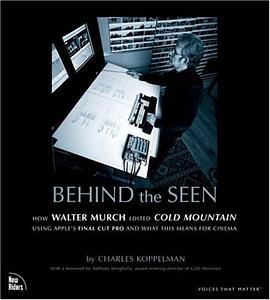

具体描述
The first volume to reveal the post-production process of a major motion picture (Cold Mountain) edited entirely in Final Cut Pro! * Offers a rare inside glimpse at the creative process of one of cinema's giants: threetime Academy Award-winning editor Walter Murch. * Includes anecdotes from the director, edit staff, and producers; photos, emails, and journal entries from Murch; and behind-the-scenes insights. * Accounts from Apple's Final Cut Pro team about what they think about the future of it in feature films. As the first software-only desktop nonlinear editing system, Final Cut Pro sat the film industry on its ear when it debuted back in 1999. Now it's shaking things up again as editor Walter Murch, director Anthony Minghella, and a long list of Hollywood heavy-hitters are proving that this under-$1,000 software can (and should) be used to edit a multi-million dollar motion picture! This book tells the story of that endeavor: the decision to use Final Cut Pro, the relationship between the technology and art (and craft) of movie-making, how Final Cut Pro was set up and configured for Cold Mountain, how the software's use affected the work flow, and its implications for the future of filmmaking. More than anything, however, this is Murch's own story of what seemed to many a crazy endeavor-- told through photos, journal entries, email musings, and anecdotes that give readers an inside view of what the film editor does and how this particular film progressed through post-production. The book includes, in his own words, Murch's vision, approach, and thoughts on storytelling as he shapes Cold Mountain under the intense pressures of completing a major studio film. With Academy Awards for his work on Apocalypse Now and The English Patient, sound and film editor Walter Murch is one of the few universally acknowledged editing masters in cinema. Along with George Lucas and Francis Ford Coppola, he is one of the founding members of the Northern California cinema community. Author Charles Koppelman has been writing screenplays and directing video and film since the early 1980s, including the independent feature film, Dumbarton Bridge, award-winning documentaries, and commercials. "An exploration inside the editorial engine-room of a major feature film - the first book of its kind ever and sure to remain the best. Charles Koppelman chronicles Walter Murch's astonishing high-wire trapeze act as he works his way through the first large-scale implementation of Apple's Final Cut Pro editing software. Must be read by anyone interested in film, computers, or how the creative process unfolds." -- Francis Ford Coppola, director of The Conversation, The Godfather, Apocalypse Now "This is probably the subtlest and most tender account of what a craftsman brings to a motion picture ever written. It is fascinating in its detail and awesome in its gradual uncovering of the ear, the eye and the soul of Walter Murch. The book may seem technical, or 'professional,' but any reader will be thrilled by the description of a struggle and the necessary commitment to it. To be read by anyone who has ever thought it might be fun to make a movie." -- David Thomson, film critic and author of The Biographical Dictionary "BEHIND THE SEEN is not only revelatory in terms of technical innovation, but it reads like a thrilling suspense novel. Superbly written and paced, the book captures the brilliant and daring film/sound editor-scientist Walter Murch in all his passionate and creative glory. Charles Koppelman has crafted a truly unique addition to the canon of film history, delivering a must-read for anyone interested in how movies are made." --Barry Gifford, author of Wild at Heart, Lost Highway and City of Ghosts "...excellent, original and tremendously informative book...Koppelman's account reads like a thriller...Behind the Seen achieves something remarkable: a chronicle about technology and data, machines and methodologies which also manages to record a story of friendships and dreams-not least the dreams I have been lucky enough to share with my friend and editor over three films and for almost a decade." --from the book's foreword by Anthony Minghella, writer and director of Cold Mountain, The English Patient, and The Talented Mr. Ripley
作者简介
目录信息
读后感
评分
评分
评分
评分
用户评价
这本书的文字如同清晨的第一缕阳光,悄无声息地洒满了我的心房,那种感觉是如此的细腻与温柔,让人忍不住想一直沉浸其中,不愿醒来。作者的笔触仿佛拥有魔力,每一个词语的排列组合都像是精心编织的音符,奏出了一曲关于生活本质的深沉乐章。我尤其欣赏作者对于日常琐事的捕捉能力,那些在别人眼中转瞬即逝的瞬间,在作者的笔下却被赋予了永恒的重量与光泽。读完全书,我仿佛完成了一次漫长的内心修行,那些曾经困扰我的迷雾,那些难以言说的情绪,都在文字的引导下找到了出口,变得清晰而澄明。它不是那种情节跌宕起伏的小说,而更像是一面光滑的镜子,映照出我们内心深处最真实、最容易被忽略的部分。那种体验,是需要静下心来,用整个灵魂去感受的。
评分读罢此书,我有一种强烈的冲动,想要拿起笔,模仿作者的句式,去描摹我记忆中那些模糊的场景。这本书的叙事结构非常独特,它似乎故意避开了传统的线性叙事,转而采用了一种碎片化、交错重叠的方式,像是在脑海中快速闪过的记忆片段,时而清晰,时而朦胧。这种阅读体验本身就是一种挑战,要求读者必须全神贯注,主动去填补那些看似留白的区域。有些段落的密度大到令人窒息,需要反复咀嚼才能理解其中蕴含的哲思;而另一些地方则轻盈得如同羽毛,飘忽不定,却又在不经意间击中要害。整体来看,它像是一部后现代主义的散文诗集,充满了对时间和存在的深刻叩问,让人在合上书本后,依然久久不能平息内心的波澜。
评分这是一本需要你“参与”才能读完的书,而不是被动接受的读物。作者在开篇就设定了一个极其疏离的叙事视角,仿佛在用冰冷的科学仪器观察着人类的情感活动。全书的情绪是极其内敛的,甚至可以说有些“冷静得可怕”,所有的激烈情感都被包裹在厚厚的逻辑外壳之下。它像是一部关于“存在主义焦虑”的教科书,但又完全没有教科书的枯燥。它探讨了身份的流动性、记忆的不可靠性,以及时间在我们生命中留下的那些不可磨灭的“印痕”。读到最后,我有一种强烈的感觉,这本书并不是在讲述一个故事,而是在呈现一种理解世界的方式,一种需要不断自我反思和批判的思维模式。它成功地颠覆了我以往对叙事文学的期待,提供了一种既疏远又极度亲密的阅读感受。
评分坦率地说,这本书的阅读门槛不算低,初读时可能会感到有些晦涩难懂,仿佛置身于一片浓密的迷雾之中,找不到方向。它不迎合大众口味,拒绝一切肤浅的解读和快速消费。然而,正是这种“不友好”,才成就了它内在的坚韧和深刻。我花了很长时间才适应作者那种近乎于意识流的表达方式,那些句子往往冗长而复杂,充满了各种从句和内嵌的思绪,但一旦你抓住那条主线,你会发现所有的繁复都是为了构建一个无比精密的思想迷宫。这本书成功地将哲学思辨与个人体验熔为一炉,展现出一种近乎残酷的诚实,迫使读者直面人性的幽暗角落。如果你期待的是轻松愉快的阅读体验,那这本书可能并不适合你,但如果你渴望的是一次思想上的“高强度训练”,那么它绝对是不可多得的珍品。
评分这本书的语言风格简直是一场盛宴,充满了古典韵味却又时不时地跳出充满现代感的讥讽。我几乎可以想象作者是如何在一个深夜,伴着一杯浓咖啡,斟酌着每一个动词和形容词的。它没有宏大的主题,聚焦于极其微观的生命细节,比如窗台上灰尘的堆积,一盏老式台灯投下的光斑,甚至是某次沉默对话中眼神的微妙变化。这些看似不经意的描写,被作者赋予了极高的文学价值。最让我印象深刻的是它对“距离感”的处理,书中人物之间的关系总是保持着一种微妙的、若即若离的状态,读者永远无法完全探知他们的内心深处,只能通过那些被精心挑选出来的外在行为去揣测、去构建。这种克制的表达,反而产生了巨大的张力,让人欲罢不能。
评分 评分 评分 评分 评分相关图书









本站所有内容均为互联网搜索引擎提供的公开搜索信息,本站不存储任何数据与内容,任何内容与数据均与本站无关,如有需要请联系相关搜索引擎包括但不限于百度,google,bing,sogou 等
© 2026 book.quotespace.org All Rights Reserved. 小美书屋 版权所有