具体描述
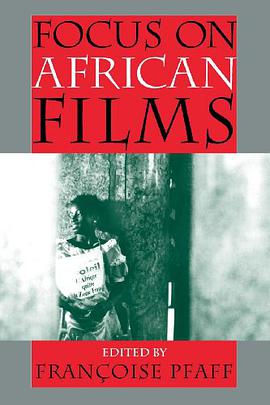
Emphasizing post-independent films released since the 1950s and the burgeoning commercial film production of the last decade, Focus on African Films provides unique and pluralistic perspectives on filmmaking throughout Africa. As a whole, the collection highlights the distinct thematic, stylistic, and socioeconomic circumstances of African filmmaking. Individual essays show how conditions in Africa have generated a broad range of views and techniques, from the stylistically innovative documentaries of Jean-Marie Teno and Abderrahmane Sissako and the "documentary fiction" of Mahamat-Saleh Haroun to the vibrant art films of Jean-Pierre Bekolo and the new films from South Africa. Contributors also outline the direction of increasingly popular, less didactic sub-Sarahan filmmaking in films such as Daniel Kamwa's Pousse-Pousse, Ngangura Mweze's La vie est belle, and Imungu Ivanga's Dole. Up-to-date and richly informative, Focus on African Films will be essential reading for students and scholars of African film.
Focus on African Films: A Deep Dive into Global Cinema's Untapped Riches A Comprehensive Exploration of African Cinematic Landscapes, Artistic Innovations, and Socio-Political Resonance This volume offers an expansive, meticulously researched journey through the diverse and vibrant world of African cinema, moving beyond simplistic categorization to explore the continent's profound contributions to global filmmaking. Far from being a monolithic entity, African cinema represents a complex tapestry woven from colonial histories, post-independence aspirations, indigenous storytelling traditions, and cutting-edge contemporary aesthetics. This book serves as an essential guide and critical companion for scholars, students, cinephiles, and industry professionals seeking a nuanced understanding of filmmaking practices across the vast geographic and cultural expanse of Africa. Part I: Historical Trajectories and Foundational Voices The opening section anchors the discussion in the crucial historical context that shaped African filmmaking. We begin with an examination of early cinematic encounters, tracing the impact of colonial documentary practices and newsreels—films often produced about Africa rather than by Africans—and the subsequent struggle to reclaim the narrative lens. This historical analysis paves the way for a focused study of the pioneers. We dedicate significant attention to the foundational figures whose work marked the true emergence of an autonomous African voice. This includes in-depth case studies on the seminal contributions of filmmakers from Senegal, such as Ousmane Sembène, often hailed as the "father of African cinema." His transition from novelist to director, and the intentional use of local languages and didactic purpose in films like La Noire de... (Black Girl), are dissected to reveal the political imperative embedded within early artistic endeavors. Similarly, the essential works of Djibril Diop Mambéty—whose surrealist, poetic interpretations of modernization in Touki Bouki defied established cinematic norms—are analyzed for their profound aesthetic challenge to both Western expectations and purely political cinema. Furthermore, this section explores the vital, yet often overlooked, cinematic traditions emerging from North Africa, particularly Egypt’s long-standing industry, its influential auteurs, and its complex relationship with pan-Arab cinematic movements. The interplay between nationalist sentiment, burgeoning industrial infrastructure, and artistic expression in countries like Egypt, Morocco, and Algeria forms a crucial counterpoint to the Francophone West African narratives that frequently dominate international discourse. Part II: Aesthetics, Genre, and the Language of Resistance Moving beyond biography and history, the middle section delves into the formal innovations that characterize African filmmaking. This is not merely about recognizing themes, but about analyzing how the stories are told. We investigate the development of distinct aesthetic strategies employed by African directors to negotiate limited resources, censorship, and the legacy of colonial film form. A key focus here is the concept of "Mélange"—the mixing of genres, languages (including Wolof, Bambara, Arabic, French, and English), and narrative structures. We examine how filmmakers deliberately juxtapose high cinematic technique with local oral traditions, resulting in narrative textures unavailable in Eurocentric cinema. Specific attention is paid to the adaptation of mythology, folklore, and proverbs into cinematic language, exploring how these elements serve not just as decoration, but as structural devices that critique modernity or offer alternative epistemologies. Genre studies are given particular depth. While social realism remains a dominant mode, this analysis also explores the emergence and evolution of African science fiction (Afrofuturism), horror, and sophisticated melodramas that tackle contemporary issues like urbanization, migration, and the AIDS crisis. By treating these genres with the same critical rigor applied to global counterparts, we uncover the unique cultural syntax informing these cinematic choices. Part III: Nollywood and the Dynamics of Popular Cinema A substantial portion of this volume is dedicated to Nollywood, the colossal Nigerian film industry. Recognizing Nollywood as perhaps the most prolific film production system globally, we undertake a critical analysis that moves beyond sensationalist headlines concerning production speed and low budgets. The analysis centers on Nollywood’s unique distribution model, its relationship with video culture, and its unprecedented capacity to reach massive, localized audiences across the continent and the diaspora. We explore Nollywood's thematic preoccupations—spirituality, familial conflict, the pursuit of wealth, and localized moral justice—and how these narratives resonate deeply with viewer expectations built over decades. Furthermore, the book examines the dynamic tension between Nollywood’s commercial imperatives and the artistic aspirations of Nigerian auteurs seeking international recognition, detailing the strategies employed to elevate production values while retaining narrative immediacy. This section also contrasts Nollywood’s grassroots model with the state-supported or elite-driven cinemas of other regions, illuminating the diverse pathways through which African stories reach the screen. Part IV: Contemporary Landscapes, Global Flows, and Future Directions The concluding section addresses the current state of African cinema in the 21st century, characterized by increasing digital saturation, the rise of new production hubs (such as South Africa, Ghana, and Kenya), and the shifting landscape of international funding and distribution. We analyze the impact of streaming platforms and global co-production models on African storytelling, exploring whether these new avenues offer genuine creative liberation or merely introduce new forms of external editorial pressure. This section critically engages with the representation of African cinema in international film festivals, interrogating the phenomenon of the "festival film" and its relationship to domestic audiences. Finally, the volume culminates in an exploration of emerging directorial voices—the generation working entirely within the digital age—whose work often reflects a transnational identity, grappling with issues of global connectivity, environmental degradation, and complex gender politics. This forward-looking analysis seeks to chart the potential trajectories of African cinema as it continues its vital, necessary conversation with the rest of the world. This book, through its rigorous historical charting, aesthetic dissection, and cultural contextualization, aims to solidify African cinema's place not as a peripheral category, but as a central and dynamic force shaping the future of world cinema.