

具体描述
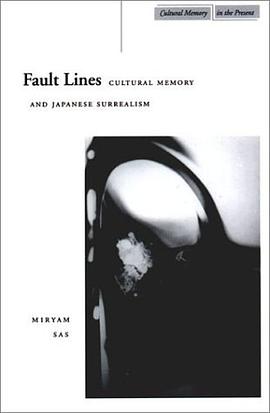
How can a movement like Surrealism be transferred, transplanted, or transported from one culture to another, one language to another? This book traces the creative dialogue between France and Japan in the early twentieth century, focusing on Surrealist and avant-garde writings. It opens a theoretical treatment of cultural memory, influence, visuality, writing, nostalgia, and nation to suggest a new perspective for the reading of modern Japanese culture and cross-cultural interactions. The author argues that the problem of literary influences should be recast as a problem of cultural memory, where analysis of causes and effects gives way to a deeper analysis of displacements and aftershocks, which she calls cultural "fault lines." The book analyzes the writings of Takiguchi Shuzo, Nishiwaki Junzaburo, Kitasono Katsue, and others whose work was associated explicitly with the Surrealist movement in Japan. It also incorporates readings of other experimental works and postwar performances that reflect the wider impact of these avant-garde ideas. The author argues that a vision of alterity, a foreign space located somewhere beyond, plays a crucial role in formulations of avant-garde praxis in both the Japanese and French contexts. Here exploration of Japanese notions of the Surreal, calling for a rereading of received notions about French avant-gardes, leads to a reconfiguration of this period, written less as a narrative history of literature than as the nonlinear route of a multivalent dialogue. Japanese Surrealism is important both for the specific questions it raises and for its exemplary place as an encounter between cultures, literary movements, and languages. As a movement that challenges and breaks apart clear and bounded conceptions of language, poetry, and the transmissibility of meaning, Japanese Surrealism reframes the relation between content and consciousness and is thus a particularly strong and revealing case of cultural interaction. What this avant-garde encounter makes apparent is that inherent discontinuities and fragmentations within individual cultures can also become crucial opportunities for productive intersections between distant realities and distant cultures.
作者简介
目录信息
读后感
评分
评分
评分
评分
用户评价
说实话,一开始我有点担心这本书会过于晦涩难懂,毕竟名声在外,总觉得门槛很高。然而,一旦真正沉浸进去,那种顾虑便烟消云散了。作者的文笔是那种带着历史厚重感,但又极其流畅的类型,仿佛一位技艺高超的匠人,用最坚实的材料打磨出了最精致的器物。书中对于几处关键转折点的处理,堪称教科书级别。它们不是突兀的“神反转”,而是建立在前面所有细微铺垫之上的必然爆发,每一次揭示都像是拼图完成后的豁然开朗。我特别喜欢作者对“失落”这一主题的探讨,它并非单一的情感表达,而是渗透在建筑的残垣断壁、人物遗忘的片段记忆,以及那些被时代洪流冲刷掉的信念之中。阅读过程中,我常常需要停下来,不是因为情节太快,而是因为被某个意象或某句精准的概括击中了,需要时间消化那份共鸣。这本书的后劲极大,读完一周了,依然会在不经意间想起某个角色的眼神。
评分这趟阅读之旅,与其说是跟随故事前进,不如说是一场酣畅淋漓的思想碰撞。作者在构建世界观时展现出的那种宏大叙事下的细腻处理,令人拍案叫绝。他们似乎不满足于讲一个简单的故事,而是试图通过一系列看似无关的事件链条,去解构某种社会结构或存在主义的困境。那些哲思的片段并非生硬地插入,而是如同水银泻地般自然地融入对话和内心独白之中,读起来毫不费力,却又在合上书本后留下沉甸甸的回味。我特别留意了作者对时间线的处理,那种交错、回溯与预示的技巧运用得炉火纯青,让读者在梳理脉络的同时,不断地被新的视角所震撼。这本书的对话场景设计得尤为精彩,那些看似日常的交谈,实则暗流涌动,每一句未尽之言都比明确的陈述更有力量。总而言之,这是一本需要静下心来,细细品味的文本,它挑战了我的阅读习惯,也拓宽了我对叙事边界的认知。
评分这部作品的结构安排,简直是文学建筑学的典范。它像一个复杂的迷宫,你以为找到了出口,却发现那只是通往更深层次的入口。我尤其欣赏作者在保持叙事悬念的同时,如何毫不吝啬地展现人物的脆弱面。那些英雄人物的内心深处,被剥开了一层层坚硬的外壳,露出了布满伤痕的真实内核,这使得他们的抗争显得更加可信和动人。书中的象征手法用得极为高明,并非是那种故作高深的堆砌,而是巧妙地将现实的重量压在了具体的物件或场景之上,让象征意义自然而然地从文本中流淌出来。我对比了好几个版本的译文(尽管我读的是原版,但能想象翻译的难度),发现作者对语气的把握极其精准,无论是讽刺的嘲弄,还是深沉的哀悼,都拿捏得恰到好处,读起来充满层次感和画面感,仿佛能在脑海中直接看到那光影变幻的场景。
评分这本书的封面设计简直是一场视觉的盛宴,深沉的靛蓝色调混合着如同地震裂痕般的金色线条,那种压抑与希望交织的美感,让人忍不住想一探究竟。我拿起它,首先被文字的排版吸引了,字里行间留白得恰到好处,读起来有一种呼吸感,仿佛作者的叙事节奏与我的心跳同步。故事的开篇就极其抓人,没有冗长铺垫,直接将我抛入一个充满不确定性的情境之中。主要角色的内心挣扎描绘得入木三分,他们的选择并非非黑即白,而是浸润在灰色地带的复杂人性体现。我尤其欣赏作者对于环境氛围的营造,那些细节描写,比如清晨薄雾中湿漉漉的街道,或是深夜里老式钟表的滴答声,都成了推动剧情、烘托情绪的无形力量。读完第一部分,我感觉自己仿佛亲身经历了一场漫长而又精妙的心理博弈,作者对人物动机的挖掘深度,远超一般同类题材的作品,真正称得上是文学性的深度探索。
评分这本书的阅读体验,可以说是对“沉浸式阅读”的最佳诠释。它不仅仅是关于一个故事,更像是提供了一把钥匙,让你得以进入一个由作者精心构建的心理剧场。最让我难忘的是作者对环境音的描绘,那种细微到近乎听觉的文字捕捉能力,让你仿佛能闻到空气中的气味,感受到温度的变化。角色之间的张力是通过无数次试探性的互动累积起来的,那些未曾说出口的对峙,比直接的冲突更具爆炸性。我在阅读过程中,多次为某个角色的坚持或妥协感到心痛,这表明作者成功地在情感上与我建立了连接,而非仅仅停留在情节的层面。全书的主题探讨极其深刻,涉及了记忆的可靠性、身份的流动性,以及个体在面对巨大历史惯性时的无力感。这本书绝对不是那种读完就可以束之高阁的作品,它要求读者进行反思,甚至可能促使读者重新审视自己过往的某些认知。
评分“The more distant and true the two realities brought together, the stronger the image - and the more emotional power and poetic reality it will have” (14).
评分作者比较文学出身,标题也暗示比较的野心——第三章从超现实主义的psychism入手探讨弗洛伊德impression model对东-西影响授受可能的启发(unconscious, belatedness, etc.),第四章谈到visual poetry和庞德一脉的关系,可惜都未很好展开。另外出版社不让in-text cite东亚文字尤其严重影响诗歌研究类的阅读啊,还是シュール…
评分“The more distant and true the two realities brought together, the stronger the image - and the more emotional power and poetic reality it will have” (14).
评分“The more distant and true the two realities brought together, the stronger the image - and the more emotional power and poetic reality it will have” (14).
评分“The more distant and true the two realities brought together, the stronger the image - and the more emotional power and poetic reality it will have” (14).
相关图书










本站所有内容均为互联网搜索引擎提供的公开搜索信息,本站不存储任何数据与内容,任何内容与数据均与本站无关,如有需要请联系相关搜索引擎包括但不限于百度,google,bing,sogou 等
© 2026 book.quotespace.org All Rights Reserved. 小美书屋 版权所有