具体描述
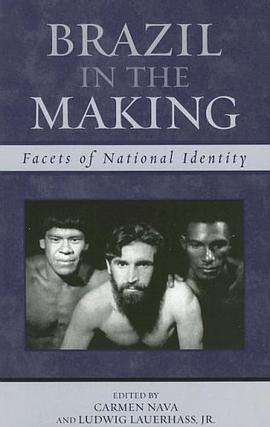
This innovative volume traces Brazil's singular character, exploring both the remarkable richness and cohesion of the national culture and the contradictions and tensions that have developed over time. What shared experiences give its citizens their sense of being Brazilian? What memories bind them together? What metaphors and stereotypes of identity have emerged? Which groups are privileged over others in idealized representations of the nation? The contributors-a multidisciplinary group of U.S. and Brazilian scholars-offer a fresh look at questions that have been asked since the early nineteenth century and that continue to drive nationalist discourse today. Their chapters explore Brazilian identity through an innovative framework that brings in seldom-considered aspects of art, music, and visual images, offering a compelling analysis of how nationalism functions as a social, political, and cultural construction in Latin America.
Brazil in the Making: A Journey Through the Shaping of a Nation This book embarks on an evocative and comprehensive exploration of Brazil's multifaceted identity, tracing the intricate threads that have woven together its present from the tapestry of its past. It is not a chronological history, nor a dry academic treatise, but rather a deeply immersive narrative that delves into the forces, both seen and unseen, that have sculpted this vast and vibrant South American giant. I. The Crucible of Origins: From Indigenous Roots to Colonial Imprints Our journey begins not with conquest, but with the deep, ancient pulse of the land itself. We will spend time understanding the intricate cosmologies and sustainable ways of life of the indigenous peoples who first inhabited this land. Their profound connection to the Amazon, the Pantanal, and the Atlantic rainforests laid the foundational understanding of this territory. Their knowledge of medicinal plants, agricultural practices, and social structures offered a framework for existence that predates European arrival. The book seeks to move beyond simplistic portrayals and offer a nuanced appreciation of their enduring legacies, their resistance, and the irreparable losses they endured. The arrival of the Portuguese in 1500 marked a seismic shift. This section will examine the initial interactions, the economic imperatives that drove colonial ambitions, and the establishment of a new social order. It will explore the establishment of sugar plantations, the brutal realities of the transatlantic slave trade, and the profound impact on both African societies and the evolving Brazilian population. We will look at the complex dynamics of power, the emergence of a distinct colonial culture influenced by Portuguese traditions, African resilience, and the continuing presence of indigenous communities. The exploitation of natural resources, from pau-brasil to precious metals, will be examined not just as economic activities, but as shaping forces that dictated patterns of settlement, social hierarchy, and environmental transformation. II. The Birth of a Nation: Independence, Empire, and the Struggle for Identity The transition from colony to independent nation is a pivotal chapter. This book will explore the complex political and social forces that led to Brazil’s declaration of independence in 1822. It will delve into the role of figures like Dom Pedro I, the establishment of the Brazilian Empire, and the unique position of a monarchy in a continent largely embracing republicanism. We will scrutinize the inherited structures of power and the persistence of deeply ingrained inequalities, particularly the continued reliance on slave labor, which cast a long shadow over the nascent nation. The Imperial period, spanning nearly seven decades, will be examined through its triumphs and its profound contradictions. We will explore the expansion of the Brazilian territory, the development of new economic frontiers, and the flowering of Brazilian arts and literature. Yet, this era is inseparable from the abomination of slavery. The book will not shy away from the moral and social consequences of this institution, the courage of abolitionists, and the eventual, hard-won emancipation in 1888. This section aims to understand how the very concept of "Brazilianness" began to form in the crucible of these societal transformations, marked by both immense progress and deep moral failings. III. The Republic and its Evolving Landscape: Modernization, Social Change, and Cultural Flourishing The proclamation of the Republic in 1889 ushered in a new era, yet the challenges of nation-building persisted. This part of the book will investigate the early years of the Old Republic, characterized by the dominance of agrarian oligarchies and the gradual, often uneven, process of industrialization. We will examine the waves of immigration from Europe and Asia, which brought new cultural influences and further diversified the Brazilian mosaic. The experiences of these new arrivals, their integration into society, and their contributions to the nation's development will be a significant focus. The 20th century witnessed dramatic political and social upheavals. The Estado Novo under Getúlio Vargas, the period of military dictatorship, and the eventual return to democracy are crucial turning points. This book will explore the ideologies that shaped these regimes, the impact of their policies on the lives of ordinary Brazilians, and the enduring quest for social justice and economic equality. We will also celebrate the extraordinary cultural achievements of this period, from the vibrant samba and bossa nova music to the revolutionary architecture of Oscar Niemeyer and the profound literary works of writers like Machado de Assis and Clarice Lispector. The book seeks to connect these cultural expressions to the broader social and political contexts from which they emerged. IV. Contemporary Brazil: Challenges, Resilience, and the Global Stage The contemporary landscape of Brazil is a complex and dynamic one. This final section will engage with the pressing issues that define Brazil today: its immense biodiversity and the critical challenges of environmental conservation, particularly in the Amazon; the persistent social inequalities and the ongoing struggle for inclusive development; the vibrant political scene and the challenges of governance; and Brazil's growing role on the international stage. Ultimately, "Brazil in the Making" is an invitation to understand Brazil not as a fixed entity, but as a perpetual process of becoming. It is a testament to the resilience of its people, the richness of its culture, and the enduring spirit of innovation and adaptation that continues to shape its destiny. It seeks to offer a nuanced and compelling portrait of a nation forged through struggle, diversity, and an unyielding drive towards its own future.