具体描述
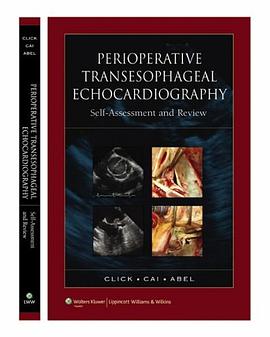
Written by three experts from the Mayo Clinic, this comprehensive question-and-answer review book is an excellent study guide for the Examination of Special Competence in Perioperative Transesophageal Echocardiography (PTEeXAM). The book contains case-based questions similar in format to those on the exam, extensive explanations, and numerous illustrations. Coverage begins with the basics, including ultrasound physics, principles of Doppler ultrasound, artifacts and pitfalls of imaging, quantitative echocardiography, equipment and safety, indications, contraindications, and complications, and normal anatomy and blood flow during the complete examination. Subsequent chapters cover a variety of clinical applications of transesophageal echocardiography during the perioperative period.
Perioperative Transesophageal Echocardiography: A Comprehensive Self-Assessment and Review Guide This guide serves as an invaluable resource for clinicians seeking to deepen their understanding and proficiency in perioperative transesophageal echocardiography (TEE). Designed for self-study and review, it meticulously covers the essential knowledge and practical skills required for accurate interpretation and application of TEE in the operating room and intensive care settings. Key Features and Content: The book is structured to provide a systematic and progressive learning experience, beginning with fundamental principles and advancing to complex clinical scenarios. Each section is crafted to reinforce learning through a variety of pedagogical approaches, ensuring comprehensive coverage without redundancy. Foundational Principles of Echocardiography: The initial chapters lay the groundwork by revisiting the core principles of ultrasound physics and their application in echocardiography. This includes a detailed exploration of: Ultrasound Generation and Propagation: Understanding how ultrasound waves are produced, their behavior in different tissues, and the impact of artifacts on image quality. Transducer Technology: Familiarization with the various types of TEE probes, their array configurations, and the specific advantages of each for different cardiac structures and views. Doppler Principles: A thorough review of spectral Doppler, color Doppler, and tissue Doppler imaging, emphasizing their physiological basis and clinical applications in assessing blood flow and myocardial function. Image Acquisition and Optimization: Practical guidance on obtaining high-quality TEE images, including probe manipulation, gain and depth adjustments, and strategies for mitigating common imaging challenges. Anatomy and Physiology of the Heart: A robust understanding of cardiac anatomy and physiology is paramount for accurate TEE interpretation. This section provides a detailed review, integrating anatomical descriptions with corresponding echocardiographic views: Cardiac Chambers and Valves: Comprehensive visualization and description of the right and left atria, right and left ventricles, and the aortic, mitral, tricuspid, and pulmonary valves in all standard TEE views. Great Vessels: Detailed assessment of the aorta (ascending, arch, descending), pulmonary artery, and their branches. Coronary Arteries and Myocardial Perfusion: Understanding the anatomical course of the coronary arteries and their surrogate visualization through Doppler techniques. Pericardium and Pleura: Assessment of the pericardial space and its relevance in diagnosing effusions and other abnormalities. Standard TEE Views and Imaging Planes: Mastering the standard TEE views is crucial for systematic cardiac assessment. This section offers a detailed guide to acquiring and interpreting each view: Transgastric Views: Including short-axis views of the left ventricle, papillary muscles, mitral valve, and ascending aorta, as well as long-axis views of the left ventricle and mitral valve. Mid-esophageal Views: Covering bicaval views, four-chamber views, two-chamber views, and the aortic valve views, all of which provide essential information about atrial and ventricular function, valve structure, and the great vessels. Posterior Views: Exploring views like the descending aorta and pulmonary artery views, important for assessing these structures and for interventional procedures. Quantitative Assessment and Hemodynamics: Moving beyond qualitative assessment, this section delves into the quantitative methods used to evaluate cardiac function and hemodynamics: Left Ventricular Function: Detailed guidance on calculating ejection fraction, stroke volume, cardiac output, and assessing systolic and diastolic function using various echocardiographic parameters. Right Ventricular Function: Assessment of RV size, systolic function (e.g., TAPSE, RV S'), and pulmonary artery pressures. Valvular Hemodynamics: In-depth explanation of how to quantify valvular stenosis and regurgitation using parameters like jet area, pressure gradients, effective regurgitant orifice area, and regurgitant volume. Intracardiac Shunts: Principles and echocardiographic techniques for detecting and quantifying atrial and ventricular septal defects. Clinical Applications in Perioperative Medicine: This is a cornerstone of the guide, focusing on the practical utility of TEE in various perioperative scenarios: Anesthesia for Cardiac Surgery: Comprehensive review of TEE's role in assessing pre-operative cardiac status, guiding anesthetic management, monitoring cardiac function during cardiopulmonary bypass, and evaluating the results of cardiac repair. Specific attention is given to: Aortic Valve Disease: Pre-operative assessment, intraoperative monitoring of valvular function and prosthesis performance. Mitral Valve Disease: Evaluation of mitral regurgitation and stenosis, assessment of annular dilation, and monitoring of mitral valve repair techniques. Coronary Artery Disease and Myocardial Ischemia: Intraoperative detection of regional wall motion abnormalities and assessment of myocardial viability. Congenital Heart Disease: TEE's role in diagnosing and managing complex congenital anomalies and palliative procedures. Cardiopulmonary Bypass Management: Monitoring for air embolism, assessment of ventricular function and filling pressures during bypass. Non-Cardiac Surgery: Exploration of TEE's utility in specific non-cardiac surgical contexts, such as: Sepsis and Septic Shock: Assessing cardiac function and fluid responsiveness. Pulmonary Embolism: Evaluating right ventricular strain. Management of Hypotension: Differentiating causes of hemodynamic compromise. Critical Care Settings: Applications in the intensive care unit, including assessment of cardiac tamponade, management of acute heart failure, and guiding hemodynamic resuscitation. Advanced Topics and Interventional Echocardiography: This section addresses more specialized areas and the increasing role of TEE in guiding interventional procedures: TEE Guidance for Structural Heart Interventions: Detailed descriptions of TEE's role in procedures such as transcatheter aortic valve replacement (TAVR), mitral valve repair and replacement (e.g., MitraClip), and atrial septal defect closure. 3D Echocardiography: Introduction to the principles and applications of three-dimensional TEE for improved anatomical visualization and quantitative assessment, particularly in valvular disease. Strain Imaging: Overview of myocardial strain analysis for detecting subtle abnormalities in myocardial function. Self-Assessment Questions and Case Studies: To facilitate learning and retention, the book incorporates a robust self-assessment component. This includes: Multiple-Choice Questions: Covering the theoretical aspects and clinical applications discussed in each chapter. Image Interpretation Exercises: Presenting representative TEE images with accompanying clinical vignettes, requiring the reader to identify abnormalities and formulate diagnoses. Case Studies: Detailed clinical scenarios that integrate imaging, patient history, and management decisions, allowing for comprehensive review and application of knowledge. This comprehensive guide is meticulously designed to equip individuals with the confidence and competence to effectively utilize perioperative transesophageal echocardiography, ultimately enhancing patient care in a dynamic clinical environment.