具体描述
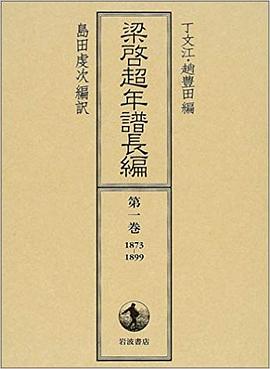
《梁启超年谱长编》第一卷(1873-1899):一窥近代中国思想巨擘的 formative years 《梁启超年谱长编》第一卷,以详实史料为基石, meticulous chronologically charting the nascent years of one of modern China's most influential intellectuals, Liang Qichao. From his birth in 1873 to the cusp of the new century in 1899, this volume meticulously reconstructs the formative experiences that sculpted his extraordinary intellect and propelled him onto the national stage. Far from being a mere biographical record, this work offers a profound window into the intellectual currents, societal upheavals, and personal struggles that shaped Liang Qichao into a pivotal figure in China's tumultuous transition from empire to republic. The narrative begins with Liang Qichao's humble origins in Xinhui, Guangdong province. This volume delves into his early education, a period characterized by rigorous classical training in the traditional Confucian curriculum. It meticulously details his precocious intellectual development, highlighting the texts that ignited his curiosity and the scholars who guided his formative thoughts. We witness the seeds of his later reformist fervor being sown amidst the intellectual hothouse of his youth, where the weight of tradition met the nascent stirrings of a changing world. The compilation meticulously traces his early academic achievements, including his successful examination performances, which foreshadowed his remarkable intellectual trajectory. A significant portion of the first volume is dedicated to Liang Qichao's crucial encounters with Kang Youwei. This pivotal relationship, meticulously documented, marked a turning point in Liang's intellectual and political awakening. The chronicle elaborates on their shared intellectual pursuits, their fervent discussions on the urgent need for reform, and their collaborative efforts to disseminate new ideas. The volume traces their initial involvement in reformist societies, their participation in petitions to the imperial court, and the nascent stages of their engagement with the burgeoning intellectual reform movement. Through a detailed examination of their correspondence and collaborative writings, this volume allows readers to understand the genesis of their shared vision for China's modernization. The emergence of the "One Hundred Days' Reform" looms large as a defining moment, and this volume provides an exhaustive account of Liang Qichao's active role in its conceptualization, advocacy, and ultimately, its tragic failure. The year 1898, a watershed moment in modern Chinese history, is explored in granular detail. The volume meticulously reconstructs the whirlwind of activity surrounding the Hundred Days' Reform, detailing Liang Qichao's direct involvement in drafting imperial decrees, his tireless efforts to promote new policies, and his passionate oratory that rallied support for the reformist cause. The subsequent crackdown by the conservative faction, the Guangxu Emperor's humiliation, and the tragic end of the reformist movement are chronicled with an unflinching eye for detail. The personal toll this event took on Liang Qichao is palpable, as the volume documents his immediate flight into exile, the looming threat of imperial retribution, and the profound sense of disillusionment that accompanied the reform's demise. This period of intense political engagement and subsequent exile provides a crucial backdrop for understanding Liang Qichao's evolving political philosophy and his strategic shift towards intellectual dissemination as a primary means of effecting change. The period immediately following the failure of the Hundred Days' Reform, leading up to 1899, is characterized by Liang Qichao's exile and his intensified efforts to galvanize reformist sentiment from abroad. This volume meticulously charts his movements, his arduous journeys, and his tireless efforts to connect with overseas Chinese communities. It details his prolific writing during this period, including his seminal essays and polemics that critiqued the Qing Dynasty's inadequacies and advocated for sweeping institutional change. The volume highlights his groundbreaking use of journalism and his establishment of influential periodicals, which became vital platforms for disseminating reformist ideas to a wider audience, both within China and across the diaspora. His writings during this period, deeply informed by his experiences and his growing understanding of Western political thought, laid the groundwork for his later philosophical contributions. Furthermore, this volume offers insights into Liang Qichao's intellectual evolution. It tracks his engagement with various philosophical traditions, both Eastern and Western. The texts he read, the ideas he debated, and the intellectual influences that shaped his thinking are carefully documented. We see his early grappling with issues of governance, education, and national identity, and how his understanding of these concepts evolved in response to China's mounting crises. The volume reveals his early embrace of constitutionalism and his initial explorations into ideas of popular sovereignty, all of which would become central tenets of his later thought. Beyond his intellectual and political endeavors, the first volume also offers glimpses into Liang Qichao's personal life. While the focus remains firmly on his public life and intellectual contributions, the compilation subtly weaves in details about his family, his travels, and the friendships that sustained him. These personal touches humanize the towering figure of Liang Qichao, making his intellectual journey all the more relatable and compelling. The meticulously researched accounts of his early relationships, his familial connections, and the personal challenges he faced during his formative years add depth and texture to the biographical narrative. In essence, the first volume of 《梁启超年谱长编》 serves as an indispensable resource for scholars and enthusiasts alike. It reconstructs, with unparalleled detail and scholarly rigor, the crucible in which a preeminent modern Chinese thinker was forged. It is a testament to the power of intellectual curiosity, the courage to challenge established norms, and the enduring spirit of reform in the face of immense adversity. This volume is not merely a chronicle of dates and events; it is a vibrant tapestry woven from the threads of personal ambition, intellectual awakening, and the seismic shifts that defined late imperial China, laying the essential groundwork for understanding the profound impact Liang Qichao would have on the trajectory of 20th-century Chinese thought and politics. It meticulously charts the evolution of his ideas, his strategic shifts in response to political realities, and his unwavering commitment to the idea of a modern, revitalized China.