

具体描述
Book Description
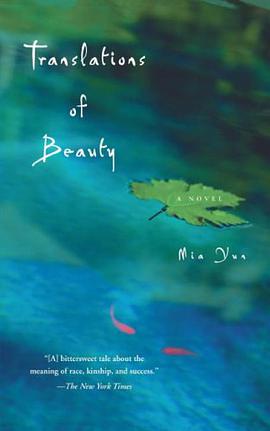
A deeply affecting and emotionally charged novel that explores the true meaning of beauty, family, home, and race, Translations of Beauty radiates with raw wit, heartache, and universal truths.
It not only reaffirms the unbreakable ties that bind all families but also lays bare the boundaries and pitfalls of the American dream.
Mia Yun, whose first novel was hailed by Kirkus Reviews as a superlative debut, maps the relationship of twin sisters Inah and Yunah from their early childhood in South Korea to growing up in Queens, New York. At the center of Translations of Beauty is the terrible childhood accident that disfigured Inah for life, and the overwhelming sadness and guilt Yunah feels at having been spared. It opens with Yunah, now twenty-eight, flying out to Italy to rescue Inah who, in her struggle to find her way, has drifted away from her family. Thrown together again after so much time, long-ago joys and heartaches are stirred, and the twins find their relationship tested as they are forced to confront unresolved issues.
It is the account of growing up in America as immigrant children, dealing with the painful reality of Inah's disfigured face and trying to find their individual identities while negotiating their relationship with each other; of their family's struggle to stay whole as years of collective struggles and colliding dreams and values take a toll on each of them and of its effort to find dignity amid the constant jockeying for respect, acceptance, and loyalty.
Peppered throughout this darkly poignant novel are colorful, vividly drawn, ethnically and socially diverse secondary characters: Uncle Shin, the loyal family man and avariciousbusinessman; Cousin Ki-hong, a rebellious KISS fan in his youth who gloats in domestic bliss as a married man; Auntie Minnie, an irrepressible, loud, and bawdy beautician; and, finally, Uncle Wilson, Aunt Minnie's African-American husband who divorces her to marry a woman of his own race.
Thought-provoking and uncommonly honest, this story of one Korean family's heartbreaking journey in America will resonate powerfully with every reader.
From Publishers Weekly
Yun's second novel is every bit the tale of an immigrant's child, struggling to please traditional parents while carving out a place in a strange new world. But the narrator of this story, Korean-born Yunah, is overshadowed less by memories of the homeland than by her twin sister, Inah, whose forceful personality and inner demons are the focus of Yunah's narrative. The mismatched twins-Inah sparkling and mischievous, Yunah quiet and observant-are four years old when an accident leaves Inah with a burn-scarred face. Their parents decide to emigrate from their small Korean village, hoping to provide better opportunities for Inah, and the family ends up in Flushing, Queens, "a stopover place on the way to the Real America." Flushing, however, becomes their permanent residence, with the twins' father unable to find well-paying work elsewhere. Meanwhile their mother becomes more demanding, pushing Inah to make up for what she sees as the impossibility of normal happiness. The stories of youth in Flushing alternate with Yunah's present-tense account of a visit to Italy to see Inah, now a tomboyish, defensive graduate school dropout traveling aimlessly around the world. At 28, the twins are still struggling to connect after years of resentment, though there are moments of clarity when Yunah begins to understand her tormented twin. The rambling episodes may leave the reader wishing for a more decisive narrative arc, more introspection from Yunah, or more than the familiar-sounding platitudes about the nature of immigrant life, unhappy families and finding one's own way. Still, the novel will have an appeal for readers with their own experiences of displacement, and the despair of two sisters for whom opportunity has festered into hopelessness is convincingly portrayed.
From Booklist
Yun's second novel, following House of the Winds (1998), is an insightful saga of the immigrant experience deepened by a guilt-defined relationship between twins. Born in Korea in 1973, Yunah and Inah are beautiful girls. After a tragic accident leaves Inah with permanent facial scarring, the family moves to America, hoping in vain to protect her from ridicule. Chapters alternate between flashbacks and the present, in which Inah and Yunah are traveling together in Italy after their mother sent Yunah to convince Inah, who inexplicably left her doctoral studies at Oxford, to come home. Inah has apparently become inured to the stares of strangers, but her peregrinations suggest an inability to face reality. Yunah's guilt over being the normal twin plagues her and keeps her from leaving home. In the cathartic weeks spent with her sister abroad, Yunah realizes she can no longer handle the "silent, stoic Inah" who has become "dead and unreadable." A memorable portrayal, imbued with Yun's poetic handling of this family's unfulfilled dreams and joyless compromises.
Deborah Donovan
Book Dimension :
length: (cm)21.6 width:(cm)13.5
作者简介
目录信息
读后感
评分
评分
评分
评分
用户评价
坦白说,我一开始拿到《Translations of Beauty》这本书时,并没有抱太大的期待。我以为它不过是又一本陈词滥调的艺术评论集。然而,当我翻开第一页,便立刻被它独特的魅力所吸引。作者的文笔,流畅而富有节奏感,仿佛一曲悠扬的乐章,将我带入一个全新的世界。他对待“美”的态度,既有学者的严谨,又不乏诗人的浪漫。我尤其欣赏他对于“失落之美”的探讨,那些曾经辉煌却最终湮灭的艺术形式,被作者以一种深情的笔触重新唤醒,让我为之扼腕,也为之惊叹。书中对于不同艺术门类之间界限的模糊化处理,更是打破了我固有的思维模式。他让我看到,音乐可以描绘色彩,绘画可以奏响旋律,舞蹈可以诉说故事。这种跨界的融合,正是人类创造力的极致体现。阅读这本书,让我重新审视了自己对于“美”的定义,也让我对人类的创造力和想象力有了更深的敬畏。它不仅仅是一本书,更像是一次心灵的旅行,一次对自我审美视野的拓宽。
评分读完《Translations of Beauty》这本书,我的脑海里仿佛被一场跨越时空的盛宴洗礼。与其说它是一本书,不如说是一扇扇窗,每一扇都通往一个截然不同的审美维度。我曾以为“美”是一个固定不变的范畴,但这本书彻底颠覆了我的认知。它并非枯燥地罗列名家名作,而是以一种极其新颖和富有感染力的方式,深入浅出地探讨了人类对美的感知是如何在不同文化、不同时代、甚至不同个体心中绽放的。书中那些精妙的比喻,像丝绸拂过肌肤的触感,又像雨后泥土的芬芳,让抽象的美学概念变得触手可及。我尤其惊叹于作者对细节的捕捉,无论是雕塑上岁月留下的痕迹,还是音乐中转瞬即逝的和弦,都被赋予了鲜活的生命。阅读的过程,更像是与一位博学而富有同情心的朋友进行一场深入的对话,他耐心引导我,让我重新审视那些我曾经习以为常的“美”,发现它们背后隐藏的复杂性与多样性。这本书教会我,美并非只存在于光鲜亮丽的表面,它也存在于不完美之中,存在于时间的沉淀里,存在于人类共同的情感共鸣之中。它让我不再匆忙地去定义美,而是学会去感受,去体会,去拥抱那些稍纵即逝的、却又足以触动灵魂的美好瞬间。
评分这是一本令人沉醉的书,读完之后,我感觉自己的世界观被悄然改变了。作者的写作风格有一种奇特的魔力,他能将最复杂的美学理论,用最简单、最诗意的语言表达出来。我曾一度认为,艺术理论是高不可攀的,只属于少数精英。但《Translations of Beauty》让我彻底打破了这种偏见。书中的例子包罗万象,从古希腊的雕塑到东方的水墨画,从古典音乐的交响到现代舞蹈的肢体语言,作者信手拈来,却又能将它们之间的内在联系展现得淋漓尽致。我最喜欢的是他对于“瞬间之美”的描绘,那些稍纵即逝的情感,那些转瞬即逝的画面,被作者捕捉并定格在文字中,让我仿佛亲身经历了那份美好。阅读的过程,就像是跟随作者在一条蜿蜒曲折的小径上漫步,时而柳暗花明,时而又深入幽谷,但每一步都充满惊喜。我不再仅仅是被动地接受信息,而是开始主动地思考,去辨析,去感受。这本书不仅拓展了我的知识边界,更重要的是,它激发了我内心深处对美的渴望和追求。
评分《Translations of Beauty》这本书,与其说是一本关于美的书,不如说是一本关于如何“看”美的书。作者以一种极其富有洞察力的方式,剖析了我们感知美的过程。他提醒我们,很多时候,我们所看到的美,并非事物的本来面目,而是我们自身期望和过往经验的投射。这种观点,让我对自己的审美习惯进行了深刻的反思。书中对于不同文化背景下,同一主题的不同“翻译”方式的对比,更是让我大开眼界。我曾以为,“美”是具有普适性的,但这本书让我明白,不同文化对美的定义和欣赏方式,存在着巨大的差异,而正是这种差异,构成了世界丰富多彩的审美图景。作者的文字,没有丝毫的炫耀,只有一种真诚的分享和引导。他就像一位经验丰富的向导,带领我们在人类文明的长河中,去寻找那些被时间打磨过的、闪耀着独特光芒的美的碎片。读完这本书,我感觉自己的目光变得更加敏锐,能够发现那些隐藏在平凡生活中的、微小的美好。
评分《Translations of Beauty》给我带来的震撼,是那种潜移默化、深远持久的。它并非以激昂的文字或是宏大的叙事来吸引读者,而是以一种温润如玉、内敛含蓄的风格,一点点渗透进我的内心深处。这本书像是一杯陈年的普洱,初尝微涩,细品却回甘无穷。我发现,我之前对某些艺术形式的理解,就像隔着一层薄雾,模糊不清。而这本书,就像清风拂过,拨开了迷雾,让我看到了事物的本质。作者在对不同文化背景下“美”的解读时,所展现出的那种跨越隔阂的同理心,令我动容。他不仅仅是介绍,更是仿佛亲身经历了那些文化的变迁,感受了那些艺术家的心路历程。我常常在阅读的过程中停下来,陷入沉思,回想自己过往的经历,那些曾经被我忽略或误解的美,突然有了新的阐释。书中的许多段落,我需要反复阅读,才能完全领会其中蕴含的深意。这是一种智力上的挑战,也是一种精神上的洗礼。它让我意识到,我们对美的认知,很大程度上受到自身成长环境和文化背景的塑造,而真正的“美”,或许是一种更普世、更深刻的存在,需要我们用心去发掘,用灵魂去共鸣。
评分竟然看了四年
评分竟然看了四年
评分竟然看了四年
评分竟然看了四年
评分竟然看了四年
相关图书















本站所有内容均为互联网搜索引擎提供的公开搜索信息,本站不存储任何数据与内容,任何内容与数据均与本站无关,如有需要请联系相关搜索引擎包括但不限于百度,google,bing,sogou 等
© 2026 book.quotespace.org All Rights Reserved. 小美书屋 版权所有