

具体描述
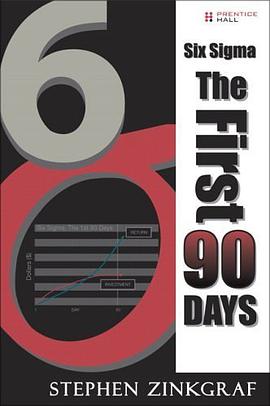
Start Six Sigma Fast—And Achieve Powerful Business Benefits Within Months This book offers leaders a proven turnkey approach to launching a Six Sigma initiative in 90 days and using it to transform your company within a year. Drawing on their experience with fifty Six Sigma programs at companies ranging from AlliedSignal to Motorola, Stephen A. Zinkgraf and his contributors show how to rapidly align people, strategy, processes, and customers in support of your initiative—and gain powerful momentum for success. You’ll walk through preparing for an enterprise-wide launch, executing it flawlessly, and establishing a foundation for achieving sustainable results over the long term. Zinkgraf’s techniques, roadmaps, and milestones can help you quickly launch any complex change initiative—even those unrelated to Six Sigma. Taken together, they offer a complete framework for driving and managing change: the #1 core competency for twenty-first century executives. Coverage includes Leading Six Sigma: roadmaps, milestones, and techniques for delivering fast, sustainable gains Effectively preparing, flawlessly executing, and extending your impact for years to come Identifying opportunities, building teams, choosing partners, defining metrics, managing risk, and much more Discovering best practices from over fifty successful launches: techniques that work with any large-scale change initiative Discover how to get dramatic business results from Six Sigma faster than you ever thought possible, and use Six Sigma to drive transformative change for years to come. Writing for executives and initiative leaders, Stephen A. Zinkgraf presents a high-speed methodology for linking Six Sigma to business strategy, planning and executing a flawless launch, aligning the entire enterprise behind performance improvement, and achieving powerful results in both the short and long term. Zinkgraf helped lead Larry Bossidy’s pioneering Six Sigma program at AlliedSignal—he and his team have participated in more than fifty Six Sigma launches. In this book, he reveals best practices for leading every step of the process. You’ll learn how to identify, prioritize, and charter breakthrough projects...choose the right partners... define roles...build and train teams...mitigate risks...implement effective metrics...and “evangelize” the organization. Then, after you’ve launched, Zinkgraf shows how to improve your program—and use HR, IT, and other business levers to extend your impact. Simply put, if you’re leading Six Sigma, this book’s Six Sigma roadmaps, milestones, and techniques represent the fastest route to the most business value. Master the lessons of the world’s best Six Sigma deployments Learn from the experiences of AlliedSignal, Motorola, 3M, and fifty other Six Sigma leaders Link Six Sigma directly to your balance sheet Set aggressive, measurable business goals—and achieve them Plan and execute a flawless launch—within 90 days! Define priorities, organize teams, choose partners, structure enterprise-wide deployments, and more Sustain Six Sigma for the long term Using a clearly defined leadership roadmap, align organization structure, compensation, succession planning, IT resources, and more Avoid the classic Six Sigma “failure modes” Why Six Sigma projects fail, and how to keep it from happening to you Preface xiii Acknowledgments xvii About the Author xix Contributors List xxi PARTI: PRE-LAUNCH 1 Chapter 1: Six Sigma—The Initiative, the Deployment, the Technology 3 Chapter 2: The True Nature of Six Sigma: The Business Model 17 Chapter 3: Six Sigma Launch Philosophy 37 Chapter 4: Getting Early Support: Selecting a Six Sigma Provider 55 Chapter 5: Strategy: The Alignment of External Realities, Setting Measurable Goals, and Internal Actions 69 Chapter 6: Defining the Six Sigma Program Expectations and Metrics 87 PART II: THE FIRST 90 DAYS 103 Chapter 7: Defining the Six Sigma Project Scope 105 Chapter 8: Defining the Six Sigma Infrastructure 117 Chapter 9: Committing to Project Selection, Prioritization, and Chartering 149 Chapter 10: Creating Six Sigma Executive and Leadership Workshops 185 Chapter 11: Selecting and Training the Right People 209 Chapter 12: Communicating the Six Sigma Program Expectations and Metrics 235 PART III POST-LAUNCH 253 Chapter 13: Creating the Human Resources Alignment 255 Chapter 14: Defining the Software Infrastructure: Tracking the Program and Projects 285 Chapter 15: Leading Six Sigma for the Long Term 303 Chapter 16: Reinvigorating Your Six Sigma Program 329 Appendix A: RFP Sample Format 357 Appendix B: About the Contributors 367 Index 371
作者简介
目录信息
读后感
评分
评分
评分
评分
用户评价
这本书在收尾部分的处理更是体现了作者的深思熟虑。它没有在第九十天戛然而止,而是提供了一个关于“持续改进的文化构建”的展望。作者强调,九十天只是一个开始,真正的胜利在于如何将这种追求卓越的思维模式内化为组织的DNA。他探讨了如何建立内部的“六西格玛人才梯队”,如何设计合理的激励机制来奖励那些发现和解决问题的团队,以及如何将基础的工具升级到更高级的价值流分析层面。这让我对这本书的长期价值有了更清晰的认识:它卖的不是一个短期解决方案,而是一种长期的、可持续的竞争优势。这种前瞻性的视角,让我相信这本书可以成为我书架上那本“常青树”式的参考资料,每当项目遇到瓶颈或者组织文化需要提振士气时,我都可以从中汲取新的灵感和坚定的信念。它提供的不仅仅是“如何开始”,更是“如何长久地走下去”。
评分这本书的结构布局设计得极其巧妙,它明显是围绕“时间轴”来构建内容的,这使得整个学习过程具有天然的逻辑推进性。从第一天的“心态准备”到第九十天的“固化成果”,每一阶段的任务划分都显得目标明确,毫不拖泥带水。我尤其欣赏作者为每个阶段设定的“里程碑检查点”,这就像是为一场马拉松设置了清晰的补给站,让人清楚地知道自己在哪儿,还需要多少努力才能到达下一阶段的关键目标。这种对“项目化管理”的深度融入,使得读者能够立刻将书中的建议映射到自己的工作环境中,并立即开始进行自我评估。它不是那种读完后束之高阁的书,而是像一本实时的行动手册。我发现自己经常翻到特定章节,对照当前手头的工作进度,来确定接下来的三周应该重点攻克哪个DMAIC步骤的关键工具。这种即时反馈和应用能力,是这本书最宝贵的价值所在,它真正实现了理论与实践的零距离对接。
评分在深入阅读的过程中,我开始意识到这本书的价值远超出了单纯的方法论介绍。它更像是一本关于“变革管理”的深度剖析。作者并未把六西格玛描述成一个纯粹的技术工具,而是着重强调了在推行过程中,如何处理组织内部的阻力、如何建立跨部门的合作机制,以及如何说服高层持续投入资源。我曾参与过一些大型流程改进项目,深知“人的因素”往往是最大的绊脚石。这本书恰恰在这一点上给予了非常深刻的洞察。它没有回避在实际操作中可能出现的政治角力和文化冲突,反而提供了一套行之有效的沟通策略,教你如何将数据转化为能够打动人心的故事。这种对“软技能”的关注,使得整本书的份量陡增,它让你明白,即使是最精密的流程改进,最终也需要通过有效的人际互动来实现。这绝对是一本写给那些想推动真正改变的人看的书,而不是只给那些想做报告的人看的。
评分这本书的封面设计实在太引人注目了,那种深沉的蓝色调配上简洁有力的白色字体,一下子就抓住了我的眼球。我平时对这类管理工具类的书籍通常持观望态度,总觉得它们要么过于理论化,要么就是空泛的口号堆砌。但《Six Sigma--The First 90 Days》这个书名本身就透露出一种强烈的实操性和时间紧迫感,这让我产生了强烈的阅读欲望。我期待它能提供一套清晰、可执行的路线图,尤其是在引入一个新的、强大的方法论时,前九十天无疑是决定成败的关键期。我希望这本书能像一个经验丰富的导师,手把手地指导我,如何快速地跨越理论学习的鸿沟,真正将六西格玛的精髓融入到日常运营的肌理之中。它不仅仅应该告诉我“是什么”,更重要的是要告诉我“怎么做”,而且是“在最短时间内怎么做”。封面给我的第一印象是专业、高效,带着一种不容置疑的权威感,这无疑为后续的阅读体验定下了高标准。我非常好奇,作者是如何将一个体系庞大、概念复杂的工具包,浓缩提炼成一个可量化的、九十天行动计划的。这种对执行力的强调,是吸引我拿起这本书的核心动力之一。
评分这本书的语言风格简直是一股清流,读起来完全没有那种传统管理书籍特有的晦涩和高高在上。作者的叙述方式非常平易近人,仿佛他不是在向一群高管汇报,而是在和一群初次接触这个概念的同事进行一次深入的、知无不言的午餐交流。大量的案例分析和图表穿插其中,让原本抽象的统计学概念变得具象化、可触摸。我特别喜欢作者在解释DMAIC(定义、测量、分析、改进、控制)流程时所用的类比手法,他总能找到与日常生活息息相关的场景来解释这些看似复杂的工具的内在逻辑。这种“去神秘化”的处理方式,极大地降低了初学者的心理门槛。它没有回避六西格玛的严谨性,但却用最口语化的方式将这些严谨的步骤包装起来,让人在不知不觉中就吸收了核心要点。这种润物细无声的教学法,比那种堆砌术语的教科书要有效得多。我感觉自己不是在学习一门理论,而是在掌握一种新的、解决问题的思维习惯。这种流畅的阅读体验,让我在通勤的碎片时间里也能保持高度的专注和兴趣。
评分 评分 评分 评分 评分相关图书



















本站所有内容均为互联网搜索引擎提供的公开搜索信息,本站不存储任何数据与内容,任何内容与数据均与本站无关,如有需要请联系相关搜索引擎包括但不限于百度,google,bing,sogou 等
© 2026 book.quotespace.org All Rights Reserved. 小美书屋 版权所有