

具體描述
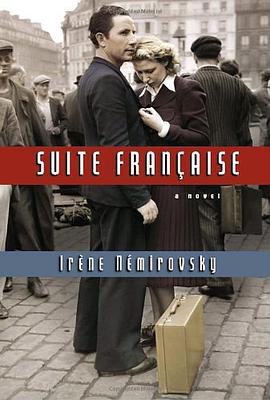
By the early l940s, when Ukrainian-born Irène Némirovsky began working on what would become Suite Française —the first two parts of a planned five-part novel—she was already a highly successful writer living in Paris. But she was also a Jew, and in 1942 she was arrested and deported to Auschwitz: a month later she was dead at the age of thirty-nine. Two years earlier, living in a small village in central France—where she, her husband, and their two small daughters had fled in a vain attempt to elude the Nazis — she’d begun her novel, a luminous portrayal of a human drama in which she herself would become a victim. When she was arrested, she had completed two parts of the epic, the handwritten manuscripts of which were hidden in a suitcase that her daughters would take with them into hiding and eventually into freedom. Sixty-four years later, at long last, we can read Némirovsky’s literary masterpiece
The first part, “A Storm in June,” opens in the chaos of the massive 1940 exodus from Paris on the eve of the Nazi invasion during which several families and individuals are thrown together under circumstances beyond their control. They share nothing but the harsh demands of survival—some trying to maintain lives of privilege, others struggling simply to preserve their lives—but soon, all together, they will be forced to face the awful exigencies of physical and emotional displacement, and the annihilation of the world they know. In the second part, “Dolce,” we enter the increasingly complex life of a German-occupied provincial village. Coexisting uneasily with the soldiers billeted among them, the villagers—from aristocrats to shopkeepers to peasants—cope as best they can. Some choose resistance, others collaboration, and as their community is transformed by these acts, the lives of these these men and women reveal nothing less than the very essence of humanity.
Suite Française is a singularly piercing evocation—at once subtle and severe, deeply compassionate and fiercely ironic—of life and death in occupied France, and a brilliant, profoundly moving work of art.
著者簡介
伊萊娜·內米洛夫斯基,1903年齣生於俄國基輔的一個烏剋蘭猶太銀行傢傢庭,十月革命後,她移居巴黎,憑藉其處女作小說《大衛·格德爾》(1929年)迎來瞭文學上的成功,緊接著,她又創作瞭小說《舞會》(1930年)。第二次世界大戰的巴黎大逃亡之後,她躲在摩萬的一個小鎮裏,後遭法國憲兵逮捕,1942年夏被殺害於奧斯維辛集中營。當時,她在十三歲的長女德尼斯帶著一口箱子東躲西藏,箱子裝著承載著痛苦的聖物:母親的遺稿——直至今天纔齣版的《法蘭西組麯》。
圖書目錄
讀後感
六月的巴黎,听上去很美。但运送炸弹的飞机正在逼近,这便是二战时的那个六月的巴黎。文字将我们从和平盛世拽进那段恐慌,作者伊莱娜留下这篇未曾结束的著作,和无数犹太人一样,死于集中营。这部手稿能幸存于世,本身就是个传奇故事。她的两个孩子寸步不离地守着这部手稿,继...
評分每一次看伊莱娜的作品都会让我感觉被一种深深的绝望压迫着,这种感觉在这一次更是久久无法散去。每一个伊莱娜笔下的人都有着被生活所扭曲后的真实,她可以将人性深处那种自私放大后以一种让人感觉无奈的方式呈现出来,就如同一件被磨破了美丽外衣的物件,将其内底的粗糙坦露在你...
評分尚未打开小说它的封面已经吸引了我,出于好奇多方询问,后经证实这是一张1939年法国大逃亡在火车站一对爱人相互依偎的照片,在男的眼神中充满了怨恨、仇火、警惕和无奈,女的则低垂着头相伴身前,整个画面说不出的一种离别之痛,营造了整部小说哀伤的氛围。作者伊莱娜以二战为...
評分在电影里,时常可以看到的战争场面永远是这样的:庞大的军队在前线不屈不挠地战斗,硝烟四起,炮火连绵炸裂了平坦的土地。一批战士倒下,又有一批冲了上来,他们拿起死人手里的枪,继续向敌人开火……导演们还会时不时地将镜头转向城镇农村,四处都是尖叫着奔跑着逃难的人群,...
評分二十岁以前,我可以直视别人的双眼,理直气壮地说:难道人生来不就是平等的吗?当我们在一样的天空下,坐在一样的大学课堂听同一个老师的声音,我们接收到的讯息都是一样的吧,尤其大多数人都有那样的一个从小一起到大的朋友,你们看上去旗鼓相当,身份相等。 我现在当...
用戶評價
A view of france at the beginning of the 2ND WORLD WAR
评分33
评分A view of france at the beginning of the 2ND WORLD WAR
评分33
评分A view of france at the beginning of the 2ND WORLD WAR
相關圖書











本站所有內容均為互聯網搜索引擎提供的公開搜索信息,本站不存儲任何數據與內容,任何內容與數據均與本站無關,如有需要請聯繫相關搜索引擎包括但不限於百度,google,bing,sogou 等
© 2025 book.quotespace.org All Rights Reserved. 小美書屋 版权所有