

具体描述
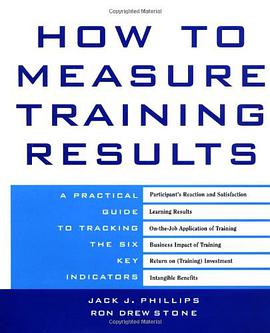
This book helps you quantify the results of training - and calculate its ROI. In today's environment of tighter budgets and accountability, stakeholders increasingly want to know the end results of training in organizations. What did a training program add to the organizations performance and the bottom line? Did it work? If so, why? And if not, what could have been done differently? "How to Measure Training Results" gives you the tools to answer these questions and many others. Built around the authors' ROI Process - a proven, systematic methodology for measuring and assessing the organizational impact of training programs - this hands-on resource will help you: develop evaluation and measurement processes for specific training programs; isolate the effects of training from other performance-improvement factors; analyze results and identify changes in behavior and business impact; identify the costs of a training program, and calculate its return on investment; use data-based feedback to improve effective training programs - and discontinue or improve ineffective programs; and, validate training programs by linking them to business performance measures. While training has too often been viewed as trivial by both employers and employees, today's stakeholders are demanding better linkage to business needs. Let "How to Measure Training Results" detail how you can specifically and accurately measure the results of any training program, then use that knowledge to construct a training program that provides proven value to concerned stakeholders - and long-term value to your organization. 'This book is written for training practitioners and for anyone who is interested in using practical evaluation techniques to assess, improve, and report on training programs and results. It provides techniques, tools, worksheets, and examples that you can use to follow a systematic process to plan and conduct credible evaluations of your training programs' - From the Introduction. Corporate training and performance improvement programs have become standard corporate fare in today's ultra-competitive business arena. But decision-makers who try to determine which programs are effective, and how to increase their overall effectiveness, generally find that methods for credible evaluation and improvement are a little tougher to come by. "How to Measure Training Results" addresses this problem head-on. Well-documented and timely, it outlines a five-level framework for scrutinizing the efficacy and success or your training programs from every angle, in the process determining which portions of the program should be enhanced, which should be downplayed or scrapped, and why. Written by two of today's most recognized and accomplished authorities on training performance measurement and improvement, "How to Measure Training Results" shows you how to precisely measure and review programs to arrive at concrete, bottom-line results. Its ROI Process helps you create a balanced evaluation by collecting, measuring, and reporting key indicators on a six-level continuum: Did participants feel that the program was valuable, and that they learned new skills? What did they actually learn? How were these lessons applied and implemented on the job? What was the business impact of the program? What was the tangible, measurable return on investment? And, did the program provide intangible benefits and, if so, what were they? Training today is too costly - and the results of ineffective training too far-reaching - to be left to chance. Use the real-world-proven tools, worksheets, and processes in "How to Measure Training Results" to take a dramatic leap forward in measuring the success of your training programs, and move to a new level of accountability, effectiveness, and measurable impact on your organization's ROI.
作者简介
目录信息
读后感
评分
评分
评分
评分
用户评价
老实说,我本来以为这又是一本充斥着商业术语和复杂统计模型的“高冷”书籍,没想到作者的叙述方式异常平易近人,带着一种资深顾问特有的那种务实和耐心。它成功地将那些晦涩难懂的评估科学,转化成了我们可以立即应用到日常管理中的具体步骤。最让我感到醍醐灌顶的是关于“归因难题”的讨论。在现实的商业环境中,绩效的提升往往是多种因素共同作用的结果——市场环境、产品改进、销售激励政策调整等等,如何准确地将这部分提升归功于我们精心设计的领导力培训呢?这本书提供了一系列实用的“隔离技术”,虽然不能保证百分之百的精确性,但它提供了一种结构化的方法来排除干扰因素,从而让你对培训效果的判断更加有理有据。我特别喜欢其中关于“软技能”衡量的案例分析,比如如何量化“团队协作能力”的提升,作者没有推荐那些虚无缥缈的指标,而是深入到具体的行为观察清单和360度反馈的权重调整上。对于像我这样,负责跨部门合作与流程优化的管理者来说,这本书提供的工具箱,远比我过去读过的任何一本关于“敏捷管理”的书籍都要来得实在和落地。它不是让你追逐完美的数字,而是让你学会为你的干预措施争取应有的信用。
评分这本书的文字风格带着一种历经沉淀的洞察力,没有夸张的承诺,只有扎实的经验分享和逻辑推演。我最欣赏的一点是它对“评估疲劳”问题的关注。很多企业在尝试衡量后,发现收集数据和制作报告的过程本身就成了另一个沉重的工作负担,反而降低了员工的学习积极性。作者巧妙地提醒我们,衡量的目标是为了提升,而不是为了惩罚或增加行政负担。因此,他们提出了一系列“轻量化”的评估策略,比如将关键的绩效指标嵌入到日常的业务报表中,而不是单独为培训效果设立一套复杂的、需要额外填写的问卷系统。这种“内嵌式”的衡量理念,极大地提高了数据收集的自然性和准确性。它真正体现了“度量即改进”的理念——如果衡量过程本身没有带来改进,那么这个衡量就是失败的。这本书成功地将“评估”从一个令人畏惧的、事后的审查环节,转变成了一个持续驱动业务优化的、前置性的战略工具。对于任何希望将培训投资转化为真正竞争优势的组织来说,这本书都是一本不可多得的指南。
评分这本书的价值不在于它提供了多少“标准答案”,而在于它系统性地挑战了我们行业内长期存在的惯性思维——即“培训做得好,绩效自然会提升”的这种信仰。我发现,很多时候我们都在对“学习体验”本身过度投资,而对“学习转移”到实际工作岗位上缺乏有效的机制。作者对此提出了非常尖锐的批评,他们把这种现象称为“仪式性学习”。我过去也犯过类似的错误,热衷于邀请那些知名的、能言善辩的讲师,让学员在会议室里听得如痴如醉,但回到工位上,一切照旧。这本书的重点在于强调“学习后的支持系统”的重要性,它详细论述了如何通过经理人的辅导、同伴互助小组以及将学习内容嵌入到日常工作流程中,来实现知识的固化和应用。这种从“单次事件”到“持续过程”的视角转换,是革命性的。此外,它对技术在评估中的应用也给出了非常中肯的建议,比如如何利用学习管理系统(LMS)的数据流来预测潜在的绩效风险,而不是仅仅用来记录谁完成了课程。这迫使我们重新审视LMS的定位,它不应该只是一个课程的“仓库”,更应该是一个持续反馈和改进的“传感器”。
评分这本书简直是为我们这些深陷“培训黑洞”的管理者量身定做的救星!我之前一直苦于无法清晰地向高层汇报我们投入大量资源进行的那些培训到底带来了哪些实实在在的改变。我们办了一场又一场的研讨会,请来了业内大牛,课程内容无可挑剔,可是一旦问及“投入产出比”(ROI)时,我们就只能含糊其辞,用一些模棱两可的满意度问卷数据来搪塞。这本书的切入点非常犀利,它没有过多纠缠于如何设计更吸引人的课程,而是直指核心——如何将学习行为转化为可衡量的业务成果。我尤其欣赏作者提出的那个三阶段评估框架,它清晰地指引我从最初的“学员参与度”逐步迈向最终的“对组织战略目标的实际贡献”。这不仅仅是教你做报表,更像是提供了一套全新的思维模式,让你在策划任何培训项目之初,就必须将“可测量性”作为设计的一部分,而不是事后的补救措施。它让我明白了,衡量不是目的,而是优化的工具,它迫使我重新审视那些看似“成功”的培训,是否真的解决了最初的问题。读完前几章,我立刻回去审视了我们上个月刚结束的销售技能提升项目,过去我只关注了学员通过率,现在我开始着手建立一个对照组,追踪他们实际的订单转化率变化,这种前瞻性的视角转变,价值无可估量。
评分我必须要说,这本书的深度和广度令人印象深刻。它不仅仅面向人力资源或培训部门的专业人士,对于业务部门的负责人,尤其是那些直接管理着大量需要技能提升的团队的领导来说,也是一本必读之作。它成功地搭建了一座沟通的桥梁,让原本语言不通的“培训圈”和“业务圈”能够使用共同的语言——即“可量化的业务影响”——进行对话。我特别赞赏作者对“模糊性”的处理方式。在真实世界中,我们很难找到完美的、控制变量的实验环境,很多衡量指标本身就是主观的。这本书没有要求我们陷入无休止的统计验证中,而是教我们如何在高风险决策中使用“合理的推定”和“可接受的误差范围”。它提供了一套务实的风险管理框架,告诉你什么时候需要更精确的数据,什么时候一个经过良好设计的定性访谈就足够了。这极大地减轻了我的工作压力,因为我不再需要为了一个完美的P值而浪费大量精力,而是可以将精力集中在那些对业务影响最大的关键绩效指标(KPIs)上。对于那些刚刚开始建立绩效衡量体系的新手来说,这本书就像一本详尽的“操作手册”,提供了从零开始构建评估模型的每一步指南,条理清晰,逻辑严密。
评分 评分 评分 评分 评分相关图书


















本站所有内容均为互联网搜索引擎提供的公开搜索信息,本站不存储任何数据与内容,任何内容与数据均与本站无关,如有需要请联系相关搜索引擎包括但不限于百度,google,bing,sogou 等
© 2026 book.quotespace.org All Rights Reserved. 小美书屋 版权所有