

具体描述
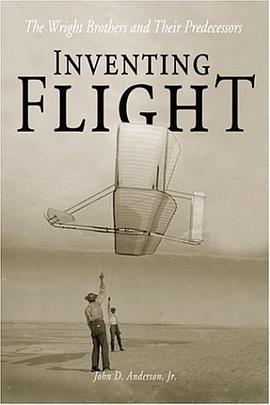
The invention of flight craft heavier than air counts among humankind's defining achievements. In this book, aviation engineer and historian John D. Anderson, Jr., offers a concise and engaging account of the technical developments that anticipated the Wright brothers' successful first flight on December 17, 1903. While the accomplishments of the Wrights have become legendary, we do well to remember that they inherited a body of aerodynamics knowledge and flying machine technology. How much did they draw upon this legacy? Did it prove useful or lead to dead ends? Beginning with the earliest attempts at flight, Anderson explains how Leonardo da Vinci first began to grasp the concepts of lift and drag which would be essential to the invention of powered flight. He describes the many failed efforts of the so-called "tower jumpers," from Benedictine monk Oliver of Malmesbury in 1022 to the eighteenth-century Marquis de Bacqueville. He tells the fascinating story of aviation pioneers such as Sir George Cayley, who in a stroke of genius first proposed the modern design of a fixed-wing craft with a fuselage and horizontal and vertical tail surfaces in 1799, and William Samuel Henson, a lace-making engineer whose ambitious "aerial steam carriage" was patented in 1842 but never built. Anderson describes the groundbreaking nineteenth-century laboratory experiments in fluid dynamics, the building of the world's first wind tunnel in 1870, and the key contributions of various scientists and inventors in such areas as propulsion (propellers, not flapping wings) and wing design (curved, not flat). He also explains the crucial contributions to the science of aerodynamics by the German engineer Otto Lilienthal, later praised by the Wrights as their "most important" predecessor. In telling the dramatic story of the Wright brothers' many experiments at Kitty Hawk as they raced to become the first in flight, Anderson shows how the brothers succeeded where others failed by taking the best of early technology and building upon it using a carefully planned, step-by-step experimental approach. (They recognized, for example, that it was necessary to become a skilled glider pilot before attempting powered flight.) With vintage photographs and informative diagrams to enhance the text, Inventing Flight will interest anyone who has ever wondered what lies behind the miracle of flight. "I have long thought that need exists for a book, suitable for undergraduates, that would tell the connected prehistory of the airplane from Cayley to the Wrights. In light of the recognized excellence of his technical textbooks (with their stimulating historical vignettes), I can't think of a better person than Professor Anderson for the job. He has the rare combination of technical and historical knowledge that is essential for the necessary balance. Inventing Flight will be a welcome addition to undergraduate classrooms."--Walter G. Vincenti, Stanford University
作者简介
目录信息
读后感
评分
评分
评分
评分
用户评价
这部关于早期航空史的著作,无疑是一部史诗般的杰作。作者以其渊博的学识和细腻的笔触,将我们带回了那个充满梦想与未知的时代。开篇便以恢弘的叙事手法,描绘了人类对天空的无限向往,从古老的传说到达芬奇的草图,历史的脉络清晰可见,引人入胜。书中对于莱特兄弟的刻画尤其深刻,不仅仅是技术层面的创新,更展现了他们那种近乎偏执的毅力和面对无数次失败时的坚韧。文字如同老电影的胶片,在眼前缓缓展开,那些早期的木质和布料构造的飞行器,充满了那个时代特有的粗犷与浪漫。我仿佛能闻到北卡罗来纳州基蒂霍克海滩上咸湿的空气,感受到每一次引擎的轰鸣和螺旋桨带来的不稳定颠簸。作者对历史细节的考据之严谨令人赞叹,引用的文献和私人信件为这个故事增添了无与伦比的真实感和温度。它不仅仅是一部技术史,更是一部关于人类突破极限、敢于挑战不可能的勇气颂歌。
评分这本书的阅读体验,像是在参与一场精心策划的、跨越世纪的智力探险。我尤其欣赏作者处理叙事节奏的方式,它绝非平铺直叙的年代编年史。相反,它将不同的发明家群体——欧洲大陆上的探索者、美国中西部的小作坊主——巧妙地穿插对比,形成了多声部合唱的效果。这种结构处理使得原本可能枯燥的技术发展曲线变得富有戏剧张力。每一次技术瓶颈的出现,都伴随着紧张的心理博弈和截然不同的解决方案的碰撞,读起来酣畅淋漓。对于那些非专业读者而言,作者对空气动力学原理的阐释也十分到位,没有陷入晦涩的数学公式中,而是通过生动的比喻和实际的案例,让复杂的概念变得易于理解和消化。可以说,作者成功地架起了一座桥梁,连接了科学的严谨与文学的魅力,让“飞行”这个主题焕发出了全新的生命力。合上书页时,我感受到的不仅是知识的满足,更是一种智识上的愉悦和启发。
评分坦白说,我原本对这类偏重“发明家传记”的作品抱持着一丝审慎的态度,总担心会落入歌颂英雄主义的俗套。然而,这部作品彻底颠覆了我的预期。它非常诚实地呈现了早期航空领域的混乱、嫉妒与商业竞争的阴暗面。作者没有美化那些先驱者,而是将他们描绘成有血有肉、充满缺陷的普通人——他们也会犯错,也会互相指责,也会被名利所诱惑。这种对“神话”的祛魅,反而让这段历史显得更加可信和动人。特别是关于专利权纠纷和资金链断裂的描述,让读者深刻体会到,伟大发明的背后,往往是无数次现实的拉扯和妥协。这种批判性的视角,使得全书的论述更加厚重和成熟,它探讨的远不止是“如何飞起来”,更是关于创新如何在一个不成熟的工业环境中生存和发展的问题。
评分读完这部作品,我产生了一种强烈的、想要重新审视“进步”定义的冲动。作者通过详尽的记录,展现了“发明”并非一蹴而就的线性过程,而是充满了迂回、重复乃至倒退的漫长马拉松。最令我震撼的是,书中描述了许多被后世遗忘的天才,他们的理论和设计在当时甚至比最终成功的方案更具前瞻性,却因为时代的技术限制或资金匮乏而湮没无闻。这本书巧妙地平衡了对“成功者”的聚焦与对“失败者”的铭记。它教会我们,历史往往偏爱那些恰好在正确时间点完成关键突破的人,而那些在黑暗中摸索的先行者,他们的贡献虽不容磨灭,却常常被喧嚣的胜利掩盖。这是一部充满人文关怀的史书,它提醒我们,每一次划时代的飞跃,都是无数无名者汗水与智慧的集体结晶。
评分这本书的装帧设计和排版风格也值得一提,它体现了一种对历史文本的敬意。纸张的质地略带粗粝感,墨色沉稳,阅读起来非常舒适,减少了眼睛的疲劳。书中穿插的那些早期设计草图、专利文件拓印和珍贵的老照片,质量极高,清晰可辨。这些视觉材料与文字的配合堪称完美,它们不是简单的插图,而是历史的直接证据,为文字描述提供了强有力的佐证。当我看到那些早期机翼的结构图时,我能更直观地理解为什么早期的飞行尝试充满了危险性。每一次翻阅,都像是在文物馆里进行一次细致的考察。对于那些热衷于收藏和研究一手史料的爱好者来说,这本书的影像资料价值本身就值得收藏。它让阅读变成了一种多感官的体验,远超一般传记作品的范畴。
评分 评分 评分 评分 评分相关图书

















本站所有内容均为互联网搜索引擎提供的公开搜索信息,本站不存储任何数据与内容,任何内容与数据均与本站无关,如有需要请联系相关搜索引擎包括但不限于百度,google,bing,sogou 等
© 2026 book.quotespace.org All Rights Reserved. 小美书屋 版权所有