
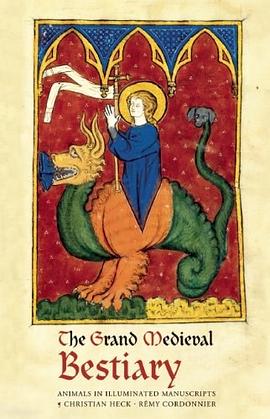

具体描述
As the 587 colorful images in this magnificent volume reveal, animals were a constant -- and delightful -- presence in illuminated manuscripts throughout the Middle Ages. Many proto-zoological illustrations, of great charm but variable accuracy, are found in the bestiaries, or compendiums of animal lore, that were exceedingly popular in the twelfth and thirteenth centuries. But animals are depicted in every other sort of illuminated manuscript as well, from the eighth-century Echternach Gospels, with its geometrically schematized symbols of the Evangelists, to the early fifteenth-century Tres Riches Heures du Duc de Berry, with its famously naturalistic scenes of peasant and aristocratic life.
In his insightful opening chapters, the noted art historian Christian Heck explains that the prevalence of animals in illuminated manuscripts reflects their importance in medieval thought, an importance due in part to the agricultural society of that age, in which a variety of species--and not just docile pets--were the daily companions of man. Animals also had a greater symbolic significance than they do today: in popular fables, such as those of Reynard the Fox, they held up a mirror to the follies of mankind, and on the religious plane, they were understood as an integral part of God's creation, whose attributes and behaviors could be taken as clues to His plan of salvation.
The main part of the book explores the complex and fascinating iconography of the individual creatures most frequently depicted by medieval miniaturists. It is arranged in the manner of a proper bestiary, with essays on one hundred animals alphabetized by their Latin names, from the "alauda," or lark, whose morning song was thought to be a hymn to Creation, to the "vultur," which enjoyed a certain respect due to its impressive appearance, but whose taste for carrion also made it a symbol of the sinner who indulges in worldly pleasures. The selection includes a number of creatures that would now be considered fantastic, including the griffin, the manticore, and of course the fabled unicorn, tamable only by a gentle maiden.
Not merely a study of art history, The Grand Medieval Bestiary uses a theme of timeless interest to present a panorama of medieval life and thought that will captivate even the most sophisticated modern reader.
作者简介
目录信息
读后感
评分
评分
评分
评分
用户评价
这本书的封面设计简直就是艺术品!厚重的纸张,精美的烫金工艺,还有那副栩栩如生的中世纪风格插画,让人一眼就爱上。还没翻开书页,我就已经能感受到它沉甸甸的分量和 darin所蕴含的丰富内容。触感温润,翻页时沙沙作响,仿佛穿越了时空,回到了那个遥远的年代。我特别喜欢封面左下角那个小小的、精心绘制的徽章,它仿佛是本书作者送给读者的第一个小礼物,充满了神秘感和探险的邀请。书的装帧也非常牢固,一看就是可以翻阅很久、值得珍藏的精品。我已经在我的书架上为它腾出了最显眼的位置,它绝对是我的收藏中的一颗璀璨明珠。我迫不及待地想要深入了解它所描绘的奇幻世界,感受那些古老生物的魅力。
评分老实说,我抱着一种非常好奇的心态开始阅读这本书的。我一直对中世纪的传说和神话非常着迷,尤其是那些关于巨龙、独角兽、狮鹫之类的奇幻生物。这本书的标题《Grand Medieval Bestiary》立刻就吸引了我,我脑海中立刻浮现出那些古老的抄本,里面记录着人们对未知世界的想象和敬畏。我喜欢那种能够带我进入另一个维度的书籍,让我暂时忘却现实的烦恼,沉浸在奇妙的幻想之中。这本书的排版非常用心,文字清晰易读,并且留白恰到好处,让人阅读起来不至于感到疲惫。我非常欣赏这种注重细节的出版理念,它能够极大地提升读者的阅读体验。我期待在这本书中找到那些我从未听闻过的奇特生物,以及它们在中世纪人们心中的地位和象征意义。
评分作为一个对细节有着极度追求的读者,我必须说这本书在资料的严谨性上做得非常出色。虽然是一本关于奇幻生物的书籍,但作者似乎花了大量的时间去考证和梳理那些传说和记载的来源。我能够感受到作者在文字背后付出的巨大努力,他不仅仅是简单地罗列生物,而是试图去理解它们为何会在那个时代出现,以及它们如何在中世纪的文化中扮演了重要的角色。这种严谨的态度让我对这本书的信任度倍增,我能够放心地沉浸在其中,而不用担心被误导。我喜欢那种能够让我不断思考和学习的书籍,而这本书无疑就属于这一类。我发现自己常常在阅读过程中,会主动去搜索一些相关的历史资料,这让我觉得这本书的价值远远超出了我的预期。
评分这本书的语言风格非常独特,带着一种古老而庄严的韵味。它不像我们现在常见的通俗读物那样轻快活泼,而是充满了仪式感和历史的厚重感。我常常在阅读时,会不自觉地放慢语速,细细品味每一个词语的含义,仿佛在聆听一位智者在低语。作者的叙述方式非常引人入胜,他能够将枯燥的生物描述变得生动有趣,并且巧妙地融入了当时的文化背景、民间传说甚至是科学认知(虽然是那个时代的认知)。我尤其喜欢作者在描述生物习性时所使用的比喻,它们往往非常贴切,又带着一丝奇幻色彩。这让我感觉自己不仅仅是在了解生物,更是在体验那个时代的思想和情感。这本书不仅仅是一本书,它更像是一扇窗,让我得以窥见中世纪人们的精神世界。
评分这本书给我带来的最深刻的感受,是一种莫名的“亲切感”。尽管书中所描绘的生物大多是虚构的,但作者通过细致入微的笔触,将它们刻画得如此真实,仿佛它们就生活在我们身边。我常常在阅读某个生物的描述时,会联想到现实生活中的某种动物,或者某种情感,这种奇妙的联结让我觉得这本书不仅仅是关于“奇幻”的,更是关于“人性”的。我发现自己能够从这些古老的传说中,找到一些与自己内心深处的共鸣。这是一种非常奇妙的体验,让我觉得这本书能够触及到我灵魂深处的东西。它让我重新审视了自己对世界的认知,也让我对那些古老的神话和传说有了更深的理解和敬意。这本书不仅仅是一次阅读,更是一次精神上的洗礼。
评分 评分 评分 评分 评分相关图书








本站所有内容均为互联网搜索引擎提供的公开搜索信息,本站不存储任何数据与内容,任何内容与数据均与本站无关,如有需要请联系相关搜索引擎包括但不限于百度,google,bing,sogou 等
© 2026 book.quotespace.org All Rights Reserved. 小美书屋 版权所有