
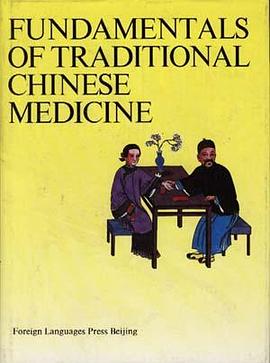

具体描述
Fundamentals of Traditional Chinese
Medicine
This book systematically describes
the fundamental theories of Tradi-
tional Chinese Medicine (TCM).
It outlines the basic concepts and
theories of TCM, such as yin-yang,
the five elements, qi(vital energy),
blood and body fluids, pathogenesis,
pathology, the four diagnostic tech-
niques, the eight guiding principles,
differentiation of syndromes and ge-
neral rules of prevention and treat-
ment.
Shuai Xuezhong, the author and
translator of the book, is an associate
professor and director of the English-
TCM Teaching and Research Section
at the Hunan College of Traditional
Chinese Medicine.
作者简介
目录信息
1. GENERAL INTRODUCTION
1-1 Formation and development of the theoretical system of TCM
1-2 The materialistic and dialectical outlook in the theoretical system of TCM
1-2-1 The materialistic outlook
1-2-1-1 The human body is formed by qi between heaven and earth
1-2-1-2 Mutual dependence of xing (body) and shen (spirit)
1-2-1-3 The prevention and treatment of disease
1-2-2 The dialectical outlook
1-3 Chief featnres of TCM
1-3-1 The holistic concept
1-3-1-1 The body is an integral whole
1-3-1-2 The unity of man and nature
1-3-2 Bianzheng and lunzhi (planning treatment according to diagnosis)
2. YIN AND YANG, FIVE ELEMENTS (PHASES)
2-1 The yin-yang theory
2-1-1 Chief contents of the yin-yang theory
2-1-1-1 Opposition and restraint of yin and yang
2-1-1-2 Interdependence of yin and yang
2-1-1-3 Kinetic equilibrium between yin and yang
2-1-1-4 Intertransformation of yin and yang
2-1-2 Application of the yin-yang theory
2-1-2-1 Tissues and structures of the body
2-1-2-2 Physiological functions of the body
2-1-2-3 Pathological processes of the body
2-1-2-4 Diagnosis
2-1-2-5 Treatment
2-2 The five-element theory
2-2-1 Chief contents of the five-element theory
2-2-1-1 Characteristics of the five elements
2-2-1-2 Classification according to the five elements
2-2-1-3 The interrelationship of the five elements
2-2-2 Application of the five-element theory in TCM
2-2-2-1 The physiological functions of the five yin viscera and their relation
2-2-2-2 The influence of pathological changes of the five yin viscera
2-2-2-3 Application of the five-element theory in diagnosis and treatment
3. VISCERAL SYMPTOMS
3-1 The five yin viscera
3-1-1 The heart
3-1-1-1 Main physiological functions of the heart
3-1-1-2 Relation of the heart to the emotions, body fluids, tissues and sense organs
Appendix: Pericardium
3-1-2 The lung
3-1-2-1 Main physiological functions of the lung
3-1-2-2 Relation of the lung to the emotions, body fluids, tissues and sense organs
3-1-3 The spleen
3-1-3-1 Chief physiological functions of the spleen
3-1-3-2 Relation of the spleen to the emotions, body fluids, tissues and sense organs
3-1-4 The liver
3-1-4-1 Chief physiological functions of the liver
3-1-4-2 Relation of the liver to the emotions, body fluids, tissues and sense organs
3-1-5 The kidney
3-1-5-1 Chief physiological functions of the kidney
3-1-5-2 Relation of the kidney to the emotions, body fluids, tissues and sense organs
Appendix: Mingmen (the vital portal)
3-2 The six yang viscera
3-2-1 The gallbladder
3-2-2 The stomach
3-2-2-1 Digestion
3-2-2-2 The stomach is concerned with communication and descendence and its qi is
normal when it descends
3-2-3 The small intestine
3-2-3-1 The small intestine is concerned with reception and digestion of food
3-2-3-2 The function of the small intestine is to differentiate the purified (nutrients)
from the turbid (waste)
3-2-4 The large intestine
3-2-5 The bladder
3-2-6 The triple energizer
3-2-6-1 Governing qi
3-2-6-2 The passage through which body fluids pass
3-2-6-3 Location of the upper, middle and lower energizers and their physiological
characteristics
3-3 Unusual organs
3-3-1 Thebrain
3-3-2 The uterus
3-4 Relation between yin and yang viscera
3-4-1 Relation among the five yin viscera
3-4-1-1 Relation between the heart and lung
3-4-1-2 Relation between the heart and spleen
3-4-1-3 Relation between the heart and liver
3-4-1-4 Relation between the heart and kidney
3-4-1-5 Relation between the lung and spleen
3-4-1-6 Relation between the lung and liver
3-4-1-7 Relation between the lung and kidney
3-4-1-8 Relation between the liver and spleen
3-4-1-9 Relation between the liver and kidney
3-4-1-10 Relation between the spleen and kidney
3-4-2 Relation of the six yang viscera
3-4-3 Relation between the five yin and six yang viscera
3-4-3-1 Relation between the heart and small intestine
3-4-3-2 Relation between the lung and large intestine
3-4-3-3 Relation between the spleen and stomach
3-4-3-4 Relation between the liver and gallbladder
3-4-3-5 Relation between the kidney and bladder
4. Ql (VITAL ENERGY), XUE (BLOOD) AND JIN-YE (BODY FLUIDS)
4-1 Qi (vital energy)
4-1-1 Basic concept
4-1-2 Formation
4-1-3 Physiological functions
4-1-3-1 The promoting action
4-1-3-2 The warming action
4-1-3-3 The protecting action
4-1-3-4 The controlling action
4-1-3-5 Activities of qi
4-1-4 Movement of qi
4-1-5 Distribution and classification of qi
4-1-5-1 Primordial qi
4-1-5-2 Chest qi
4-1-5-3 Nutritional qi
4-1-5-4 Defensive qi
4-2 Blood
4-2-1 Basic concept
4-2-2 Formation
4-2-3 Function
4-2-4 Circulation
4-3 Bodyfluids
4-3-1 Basic concept
4-3-2 Formation, distribution and excretion
4-3-3 Function
4-4 Interrelation of qi, blood and body fluids
4-4-1 Relation between qi and blood
4-4-1-1 Qi can generate blood
4-4-1-2 Qi can promote blood circulation
4-4-1-3 Blood as the carrier of qi
4-4-2 Relation between qi and body fluids
4-4-2-1 Qi can generate body fluids
4-4-2-2 Qi can transform body fluids
4-4-2-3 Qi controls body fluids and body fluids in turn carry qi
4-4-3 Relation between blood and body fluids
5. MERIDIANS AND THEIR COLLATERALS
5-1 The concept of the meridian and the formation of its system
5-1-1 Concept of the meridian system
5-1-2 Formation of the meridian system
5-2 Twelve regular meridians
5-2-1 Names
5-2-2 Direction, connection, distribution, relation and sequence
5-2-2-1 Direction and connection
5-2-2-2 Distribution
5-2-2-3 Relationship between the meridians
5-2-2-4 Sequence of flow of qi and blood in the meridian
5-2-3 Course
5-2-3-1 Lung Meridian of Hand-taiyin (L)
5-2-3-2 Large Intestine Meridian of Hiand-yangming (LI)
5-2-3-3 Stomach meridian of foot-yangming (S)
5-2-3-4 Spleen Meridian of Foot-taiyin (Sp)
5-2-3-5 Heart Meridian of Hand-shaoyin (H)
5-2-3-6 Small Intestine Meridian of Hand-taiyang (SI)
5-2-3-7 Bladder Meridian of Foot-taiyang (B)
5-2-3-8 Kidney Meridian of Foot-shaoyin (K)
5-2-3-9 Pericardium Meridian of Hsiad-jueyin (P)
5-2-3-10 Triple Energizer Meridian of fland-shaoyang (TE)
5-2-3-11 Gallbladder Meridian of Foot-shaoyang (G)
5-2-3-12 Liver Meridian of Foot-jueyin (Liv)
5-3 Eight extra meridians
5-3-1 Governor Vessel Meridian (GV)
5-3-1-1 The course
5-3-1-2 Main function
5-3-2 Conception Vessel Meridian (CV)
5-3-2-1 The course
5-3-2-2 Main function
5-3-3 Strategical Vessel Meridian
5-3-3-1 The course
5-3-3-2 Main function
5-3-4 Girdle Vessel Meridian
5-3-4-1 The course
5-3-4-2 Main function
5-3-5 Mobility Vessel Meridians of Yin and Yang
5-3-5-1 The course
5-3-5-2 Main function
5-3-6 Regulating Vessel Meridians of Yin and Yang
5-3-6-1 The course
5-3-6-2 Main function
5-4 Branches of the twelve meridians, large collateral msridians, musculofascia (or
musculotendinous) meridians and cutaneous areas of meridians
5-4-1 Branches of the twelve meridians
5-4-1-1 Physiological function
5-4-1-2 The course
5-4-2 Large collateral meridians
5-4-2-1 Physiological function
5-4-2-2 Locations
5-4-3 Musculofascia (or musculotendinous) meridians
5-4-3-1 Physiological function
5-4-3-2 Distribution
5-4-4 Cutaneous areas of meridian
5-5 Physiology of meridians and application of the meridian theory
5-5-1 Physiological functions
5-5-1-1 Communicating the exterior of the body with the interior, the upper with
the lower and connecting with the viscera and organs
5-5-1-2 Promoting qi and blood circulation and nourishing the viscera and tissues
5-5-1-3 The inducing and conducting actions
5-5-1-4 Regulating the balance
5-5-2 Application of the meridian theory
5-5-2-1 Pathological process
5-5-2-2 Guiding diagnosis and treatment
6.THE CAUSE OF DISEASE
6-1 The cause of disease
6-1-1 The six excesses
6-1-1-1 Wind occurs chiefly in spring but may appear in every season
6-1-1-2 Cold
6-1-1-3 Summer-heat
6-1-1-4 Damp
6-1-1-5 Dryness
6-1-1-6 Fire (intense heat)
6-1-2 Pestilential factors
6-1-3 Internal injuries by the seven emotions
6-1-3-1 Relation between the seven emotions and qi and blood in the viscera
6-1-3-2 Characteristics of the seven emotions and disease mechanism
6-1-4 Improper diet, fatigue and lack of physical exercise
6-1-4-1 Improper diet
6-1-4-2 Fatigue and lack of physical exercise
6-1-5 External injuries
6-1-6 Tan-yin (phlegm and excess exudates) and congealed blood
6-1-6-1 Tan-yin
6-1-6-2 Congealed blood
6-2 Principles of occurrence and change of disease
6-2-1 Anti-pathogenic and pathogenic factors and the onset of disease
6-2-1-1 Deficient anti-pathogenic factor as a cause of disease
6-2-1-2 The pathogenic factor
6-2-1-3 The anti-pathogenic factor
6-2-2 The environment and invasion of disease
6-2-2-1 The external environment and invasion of disease
6-2-2-2 The internal environment and invasion of disease
7. PATHOGENESIS
7-1 Flourishing and decline of anti-pathogenic and pathogenic factors
7-1-1 Flourishing and decline of anti-pathogenic and pathogenic factors and their
deficiency and excess
7-1-2 Flourishing and decline of pathogenic and anti-pathogenic factors and
transformation of disease
7-1-2-1 Anti-pathogenic factor conquering pathogenic factor
7-1-2-2 Pathogenic factor conquering anti-pathogenic factor
7-2 Dishamony between yin and yang
7-2-1 Relative flourishing of yin or yang
7-2-1-1 The absolute excess of yang
7-2-1-2 The absolute excess of yin
7-2-2 The absolute decline of yin or yang
7-2-2-1 The absolute decline of yang
7-2-2-2 The absolute decline of yin
7-2-3 Interrelationship of yin and yang
7-2-3-1 Deficient yin affecting yang
7-2-3-2 Deficient yang affecting yin
7-2-4 Disharmony of yin and yang
7-2-4-1 Excess yin hindering yang
7-2-4-2 Excess yang hindering yin
7-2-5 Depletion of yin and yang
7-2-5-1 Depletion of yang
7-2-5-2 Depletion of yin
7-3 Abnormality of qi and blood
7-3-1 Abnormal qi
7-3-1-1 Deficient qi
7-3-1-2 Abnormal movement of qi
7-3-2 Abnormal blood
7-3-2-1 Blood deficiency
7-3-2-2 Congealed blood
7-3-2-3 Blood heat
7-3-3 Dysfunction of the relationship between qi and blood
7-3-3-1 Stagnant qi and blood
7-3-3-2 Inability of qi to control blood
7-3-3-3 Exhaustion of qi associated with severe hemorrhage
7-3-3-4 Deficient qi and blood
7-3-3-5 Hypofunction of qi and blood in nourishing meridians
7-4 Abnormal body fluid metabolism
7-4-1 Insufficiency of body fluids
7-4-2 Distribution, excretion and obstruction of body fluids
7-4-3 Disharmony between body fluids, qi and blood
7-4-3-1 Relation of body fluids and obstruction of qi
7-4-3-2 Exhaustion of qi associated with body fluids
7-4-3-3 Exhaustion of body fluids and dryness of blood
7-4-3-4 Consumed body fluids and congealed blood
7-5 "Five endogenous pathogens"
7-5-1 Wind qi moving internally
7-5-1-1 Transformation of liver yang into wind
7-5-1-2 Wind symptom produced by extreme heat
7-5-1-3 Wind symptom produced by deficient yin
7-5-1-4 Wind symptom produced by deficient blood
7-5-2 Internal cold
7-5-3 Internal dampness (also called endogenous damp)
7-5-4 Dryness caused by consumed body fluids
7-5-5 Internal fire
7-6 Pathogenesis of meridians
7-6-1 Relative excess and deficient qi and blood in the meridians
7-6-2 Adverse qi and blood in the meridians
7-6-3 Obstruction of qi and blood circulation in the meridians
7-6-4 Failure of qi and blood in the meridians
7-7 Pathogenesis of zang-fu (viscera)
7-7-1 Disharmony between yin and yang, qi and blood of the five yin viscera
7-7-1-1 Disharmony between yin and yang, qi and blood of the heart
7-7-1-2 Disharmony between yin and yang, qi and blood of the lung
7-7-1-3 Disharmony between yin and yang, qi and blood of the spleen
7-7-1-4 Disharmony between yin and yang, qi and blood of the liver
7-7-1-5 Disharmony between yin and yang, qi and blood of the kidney
7-7-2 Disorder of the six yang viscera
7-7-2-1 Disorder of the gallbladder
7-7-2-2 Disorder of the stomach
7-7-2-3 Disorder of the small intestine
7-7-2-4 Disorder of the large intestine
7-7-2-5 Disorder of the urinary bladder
7-7-2-6 Hypofunction of the triple energizer qi
7-7-3 Dysfunction of the unusual organs
7-7-3-1 Dysfunction of the brain
7-7-3-2 Dysfunction of marrow and bone
7-7-3-3 Dysfunction of blood vessels
7-7-3-4 Dysfunction of the uterus
8. FOUR TECHNIQUES OF DIAGNOSIS
8-1 Inspection
8-1-1 Examination of the body
8-1-1-1 Inspection of shen (Spirit)
8-1-1-2 Inspection of complexion
8-1-1-3 Examination of the body stature
8-1-1-4 Inspection of body stature and movement
8-1-2 Inspection of the local body
8-1-2-1 Evaluation of the head and hair
8-1-2-2 Inspection of the eye
8-1-2-3 Inspection of the ear
8-1-2-4 Inspection of the nose
8-1-2-5 Inspection of the lips, teeth and throat
8-1-2-6 Inspection of the skin
8-1-3 Inspection of the tongue
8-1-3-1 Relation between the tongue and viscera
8-1-3-2 Tongue diagnosis
8-1-3-3 Relation between the tongue proper and its coating
8-1-3-4 Clinical significance of tongue diagnosis
8-1-3-5 Notes on tongue diagnosis
8-1-4 Observation of excreta
8-1-4-1 Sputum and saliva
8-1-4-2 Vomit
8-1-4-3 Stools
8-1-4-4 Urine
8-1-5 Observation of the veinules of the infant's index finger
8-1-5-1 Techniques for observing the finger's veinules
8-1-5-2 Observing the small superficial veinules of the finger
8-2 Auscultation-olfaction
8-2-1 Auscultation
8-2-1-1 Speech
8-2-1-2 Respiration
8-2-1-3 Cough
8-2-1-4 Hiccup and eructation
8-2-2 Olfaction
8-3 Inqniry
8-3-1 Inquiry into the patient's general condition
8-3-2 Inquiry into the patient's past history and lifestyle
8-3-3 Inquiry into the patient's family and medical history
8-3-4 Inquiry into the disease process
8-3-5 Inquiry into present symptoms
8-3-5-1 Chills and fever
8-3-5-2 Sweating
8-3-5-3 Inquiry into pain
8-3-5-4 Sleep
8-3-5-5 Diet and appetite
8-3-5-6 Stools and urine
8-3-5-7 Menstrual flow and vaginal discharge
8-3-5-8 Children
8-4 Palpation
8-4-1 Taking the patient's pulse
8-4-1-1 The principle of the formation of pulse indications and clinical
significance of taking pulse
8-4-1-2 Location of palpation and pulse
8-4-1-3 Ways of taking pulse
8-4-1-4 Normal pulse indications
8-4-1-5 Abnormal pulse and its indications
8-4-1-6 Compound pulse and its indications
8-4-1-7 Diagnosis in accordance with pulse and symptoms
8-4-2 Palpation of certain areas of the body
8-4-2-1 Method and significance
8-4-2-2 Contents
11-2-2 Reinforcing the anti-pathogenic factor and eliminating the pathogenic
factor
11-2-2-1 Reinforcing the anti-pathogenic factor and eliminating the pathogenic
factor
11-2-2-2 The pninciple of reinforcing the anti-pathogenic factor and eliminating
the pathogenic factor
11-2-3 Regulating yin and yang
11-2-3-1 Reducing a relative excess
11-2-3-2 Reinforcing a relative decline
11-2-4 Regulating the function of the viscera
11-2-5 Regulating the relation between qi and blood
11-2-6 Treatment of a disease according to season, environment and individual
constitution
11-2-6-1 Treatment of a disease according to the season
11-2-6-2 Treatment of a disease according to the geographical environment
11-2-6-3 Treatment of a disease according to the individual
11-2-7 Application of the general rules of treatment
11-2-7-1 Application of the eight principal therapies
11-2-7-2 Application of the eight principal therapies in coordination
· · · · · · (收起)
读后感
评分
评分
评分
评分
用户评价
我必须强调这本书在逻辑推导上的强大说服力,这才是它真正让我信服的地方。它没有采用那种“信我者得永生”的灌输模式,而是每一步论断都建立在坚实的逻辑链条之上。例如,在论证某一治法有效性时,作者会先列出相关的生理基础,然后引用古代文献佐证其历史沿革,最后再通过现代生物学的角度进行类比说明,将三者完美地融为一体。这种多维度的论证方式,极大地增强了读者对所学知识的内在认同感,让人不仅仅是“知道”,而是真正理解“为什么会这样”。这种严谨性,让我在学习过程中,总能清晰地看到知识点之间的内在联系,而不是零散的碎片。每次遇到不理解的地方,回溯前文,总能找到清晰的逻辑起点,这对于培养独立思考的能力来说,是无价的财富。
评分这本书的结构布局严谨得像是一座精心设计的迷宫,每层递进都恰到好处,引导着读者的思维不断深入。它不是简单地罗列知识点,而是构建了一个完整的认知框架。开篇部分对宏观理论的梳理,如同搭建了宏伟的地基,奠定了全局的视野。接着,在具体的技术层面,作者非常巧妙地将理论与实践的脉络清晰地划分开来,让人可以根据自己的侧重点进行选择性深入。我特别欣赏它对细节的层次化处理——大框架讲完后,会用加粗或者斜体来突出那些关键的、必须牢记的节点,而那些次要的、作为拓展阅读的内容则被巧妙地安排在章节末尾的“延伸思考”部分。这种分层的结构,使得这本书既可以作为快速入门的工具书,也可以作为系统研究的参考典籍。无论你是想快速了解某个概念,还是想追本溯源探究其发展脉络,都能在这个结构中找到清晰的路径,不会迷失在浩如烟海的知识点里。
评分这本书的装帧设计着实让人眼前一亮,那种古朴典雅的格调,仿佛让人一下就穿越回了那个青瓦白墙的年代。封面选用的纸张质地很有分量,触感温润,墨色的纹理设计得恰到好处,既不显得老气横秋,又透着一股沉稳的书卷气。内页的排版也看得出设计者的用心,字号大小适中,行距留白拿捏得当,即便是长时间阅读也不会感到眼睛疲劳。尤其是那些插图部分,无论是对经络穴位的描绘,还是对草药形态的写实,都极为精细,线条流畅,色彩搭配既符合传统审美,又兼顾了现代读者的视觉习惯。拿到手上翻阅时,那种纸张摩擦发出的轻微声响,都让人感觉这不仅仅是一本知识的载体,更像是一件值得珍藏的艺术品。装订非常牢固,即使经常翻动核心章节进行比对,也不担心会散页。总而言之,从触感到视觉,这本书在物理形态上已经为高质量的阅读体验打下了坚实的基础,让人在接触内容之前,就已经对它充满了敬意和期待。
评分这本书的语言风格简直就是一场酣畅淋漓的知识盛宴,完全没有一般科普读物那种干巴巴、故作高深的腔调。作者显然是一位深谙传播之道的大家,他懂得如何用最直白、最贴近生活的比喻来阐释那些听起来玄奥晦涩的理论。比如,在讲解“气”的运行规律时,他没有直接抛出复杂的概念,而是用“像河流一样流动,像呼吸一样自然”来作比,一下子就让抽象的东西变得可感可知。更难能可贵的是,行文中那种旁征博引的功力令人叹服,时不时会穿插一些古代医家的轶事或者生活中的小故事,使得阅读过程充满了趣味性和人情味。读起来一点也不觉得枯燥,反而像是在听一位学识渊博的长者,慢条斯理、深入浅出地分享他毕生的经验。这种娓娓道来的叙事方式,极大地降低了初学者的心理门槛,让人在不知不觉中就接受了大量的专业信息,真正做到了“润物细无声”的教育效果。
评分对于实践操作层面的指导,这本书的处理方式简直是教科书级别的细致入微,展现了作者极高的职业素养。在描述具体的辨识或操作方法时,它摒弃了模糊不清的描述,而是大量运用了带有明确量化标准的参考系。举例来说,对于某些需要体感的判断,作者会给出非常具体的参照物——比如“这个脉象的力度,大约相当于轻触一根羽毛与按实一个鸡蛋之间的感觉”,这种描述非常形象且易于操作者把握。而且,书中对于常见误区和“陷阱”的提醒也极其到位,总是会提前指出“初学者最容易在这个环节出错,原因在于……”这样的警示语,仿佛有一位经验丰富的前辈实时在耳边指导。这种预判读者困难并提前设置“路标”的做法,极大地提高了学习效率,减少了因错误实践而产生的挫败感,让学习者能够更自信、更准确地将书本知识转化为实际的技能。
评分 评分 评分 评分 评分相关图书








本站所有内容均为互联网搜索引擎提供的公开搜索信息,本站不存储任何数据与内容,任何内容与数据均与本站无关,如有需要请联系相关搜索引擎包括但不限于百度,google,bing,sogou 等
© 2026 book.quotespace.org All Rights Reserved. 小美书屋 版权所有